
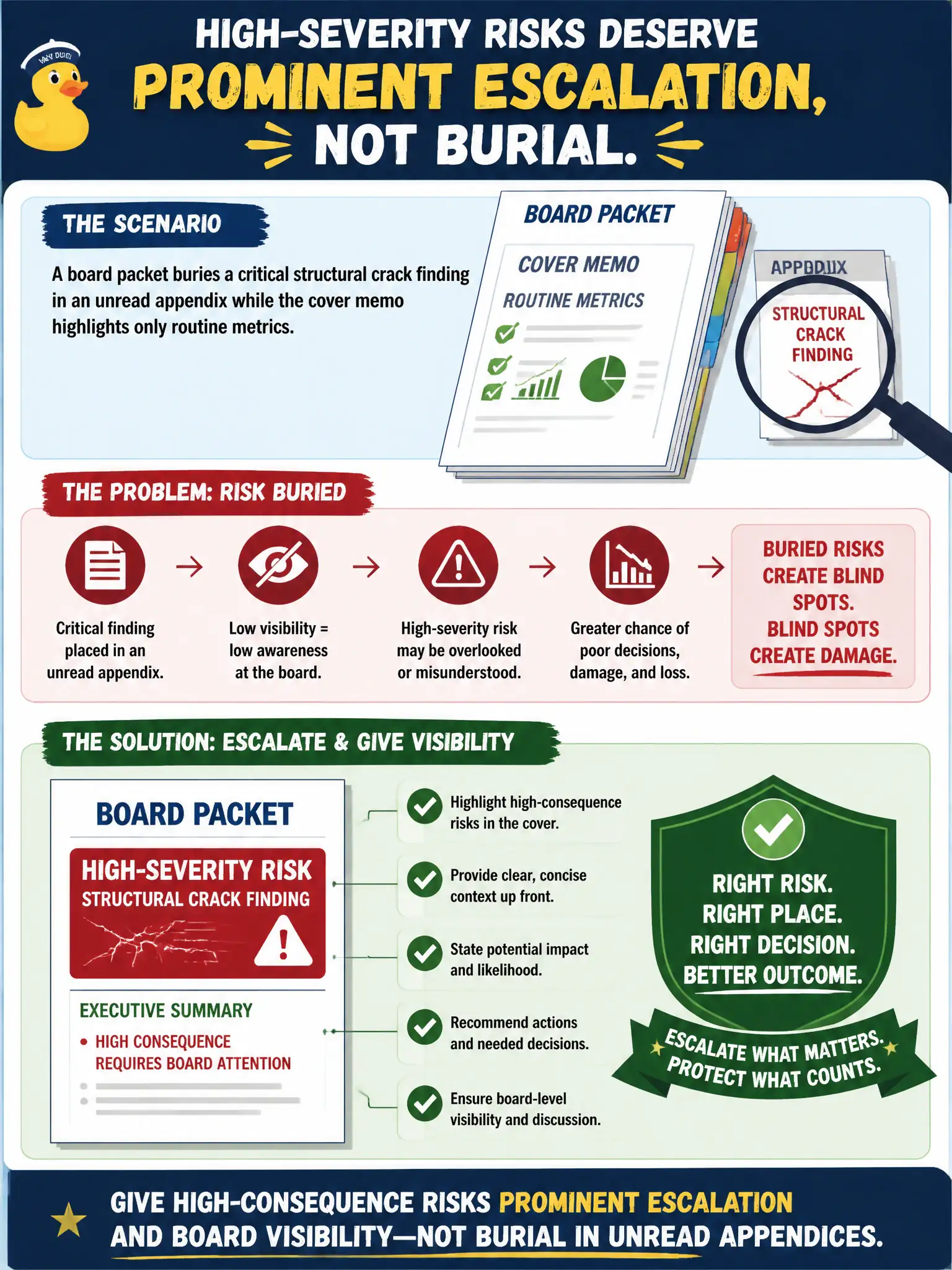
A board packet buries a critical structural crack finding in an unread appendix while the cover memo highlights only routine metrics. How should high-severity risks be escalated?
Select an answer to reveal the explanation.
Short Explanation
If the smoke alarm is buried under laundry, nobody hears it. High-severity stuff needs the front page, not the fine print nobody opens. Put critical risks where decision-makers will actually see them.
Full Explanation
High-consequence findings such as a critical structural crack need prominent escalation and board visibility. Burying them in an unread appendix while the cover memo celebrates routine metrics undermines governance risk oversight for public buildings. Keeping severe items in appendices to keep agendas short trades calm optics for unmanaged life-safety exposure. Sending the finding only to facilities and never to governance withholds fiduciary information. Waiting for an engineer lawsuit before elevating the issue is indefensible delay. Exam caveat: severity-based escalation and visibility beat agenda comfort and burial tactics. Operational check: define board-packet rules that force high/critical risks onto the main memo with plain-language consequence and recommended action, require acknowledgment in minutes, and audit the next packet to ensure no critical facility finding lives only in an appendix. Pair the escalation with an interim public-safety control such as closure, shoring, or restricted access owned by facilities. In municipal practice, record the rationale in the risk procedure or committee minutes so future staff apply the same rule under budget pressure. Re-validate the control after the next seasonal peak or org-chart change to confirm the civic pathway still works as designed.