
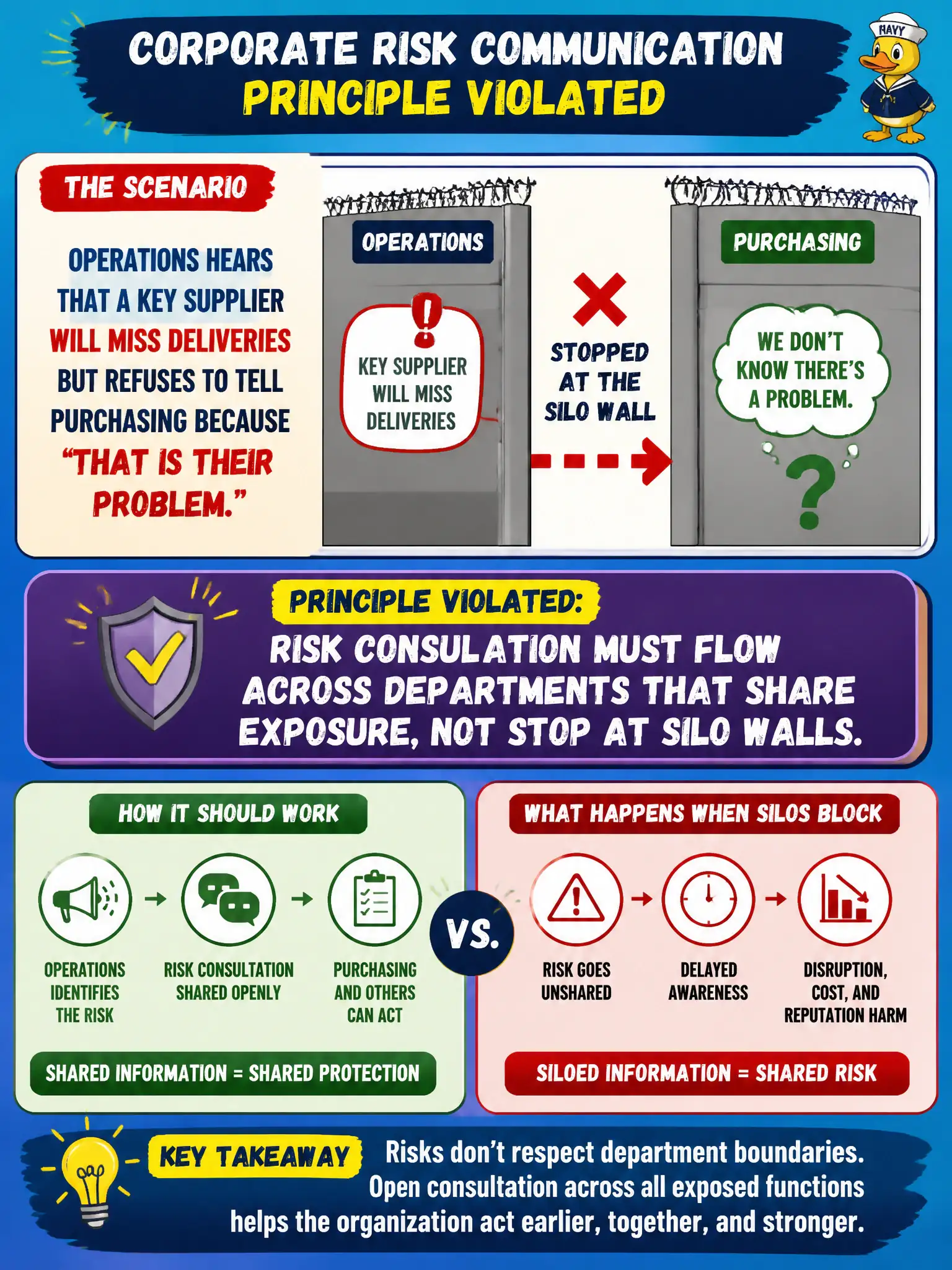
Operations hears that a key supplier will miss deliveries but refuses to tell purchasing because 'that is their problem.' What corporate risk-communication principle is violated?
Select an answer to reveal the explanation.
Short Explanation
Imagine the left hand knowing the bridge is out and not telling the right hand that still plans to drive across. Shared exposure means shared warning. Supplier delay hits both ops and purchasing, so the heads-up has to cross the silo.
Full Explanation
Corporate risk consultation must cross departments that share exposure. When operations learns a key supplier will miss deliveries but withholds the news from purchasing as "their problem," silo walls break the consultation principle and leave inventory, service levels, and budget owners unable to treat the threat. Routing supplier delay warnings only to the CEO to avoid panic creates a bottleneck and starves the teams that must replan. Informing purchasing only after inventory hits zero is reactive. Declaring supplier risks purely commercial and never part of risk consultation excludes a core external exposure from the civic risk system. Exam caveat: cross-functional consultation is required when exposures are shared; silo stoppage is the failure mode. Operational check: add a mandatory notify list on supplier-disruption triggers (operations → purchasing → finance/risk), require a same-day register update when a key civic supplier slips, and verify the next tabletop shows purchasing received the warning before stockout. In municipal practice, record the rationale in the risk procedure or committee minutes so future staff apply the same rule under budget pressure. Re-validate the control after the next seasonal peak or org-chart change to confirm the civic pathway still works as designed.