
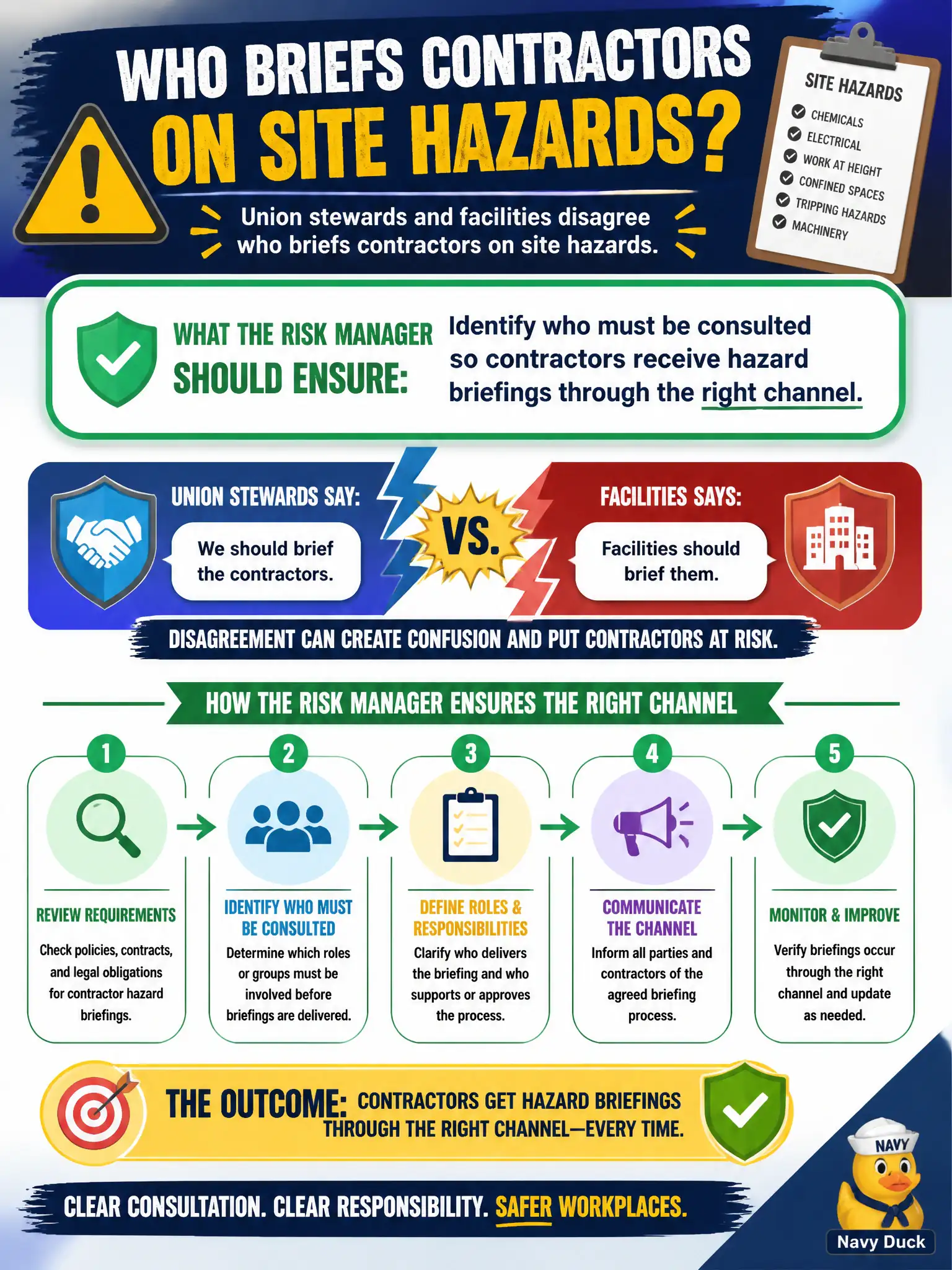
Union stewards and facilities disagree who briefs contractors on site hazards. What should the risk manager ensure?
Select an answer to reveal the explanation.
Short Explanation
Contractors walking onto a site without a hazard briefing is a gap with steel-toed boots. The risk manager's job is to lock who consults whom so the briefing actually happens through the right channel. Argument without a named path leaves people exposed.
Full Explanation
Contractors need site hazard briefings through a clearly identified consultation channel. When union stewards and facilities disagree who briefs contractors, the risk manager must identify who must be consulted and who delivers the briefing so civic sites do not admit crews without orientation. Letting each contractor invent a briefing so neither group consults abandons host control. Skipping briefings during prolonged disagreements extends unprotected exposure. Briefing only after an incident has occurred is purely reactive. Exam caveat: clarify consultation roles for third-party briefings; process ambiguity is itself a risk. Operational check: name the briefing owner (for example facilities with union safety consultation as required), put the rule in the contractor onboarding checklist, require a signed briefing record before work starts, and audit one active job for a completed form. Escalate unresolved role conflicts to the risk committee within a fixed number of days rather than leaving the gate open. In civic practice, keep the same vocabulary in board minutes, toolbox talks, and the live register so department heads do not reintroduce casual synonyms after training. Re-check the concept during the next quarterly risk review against one real municipal example so the distinction stays operational rather than slogan-only.