
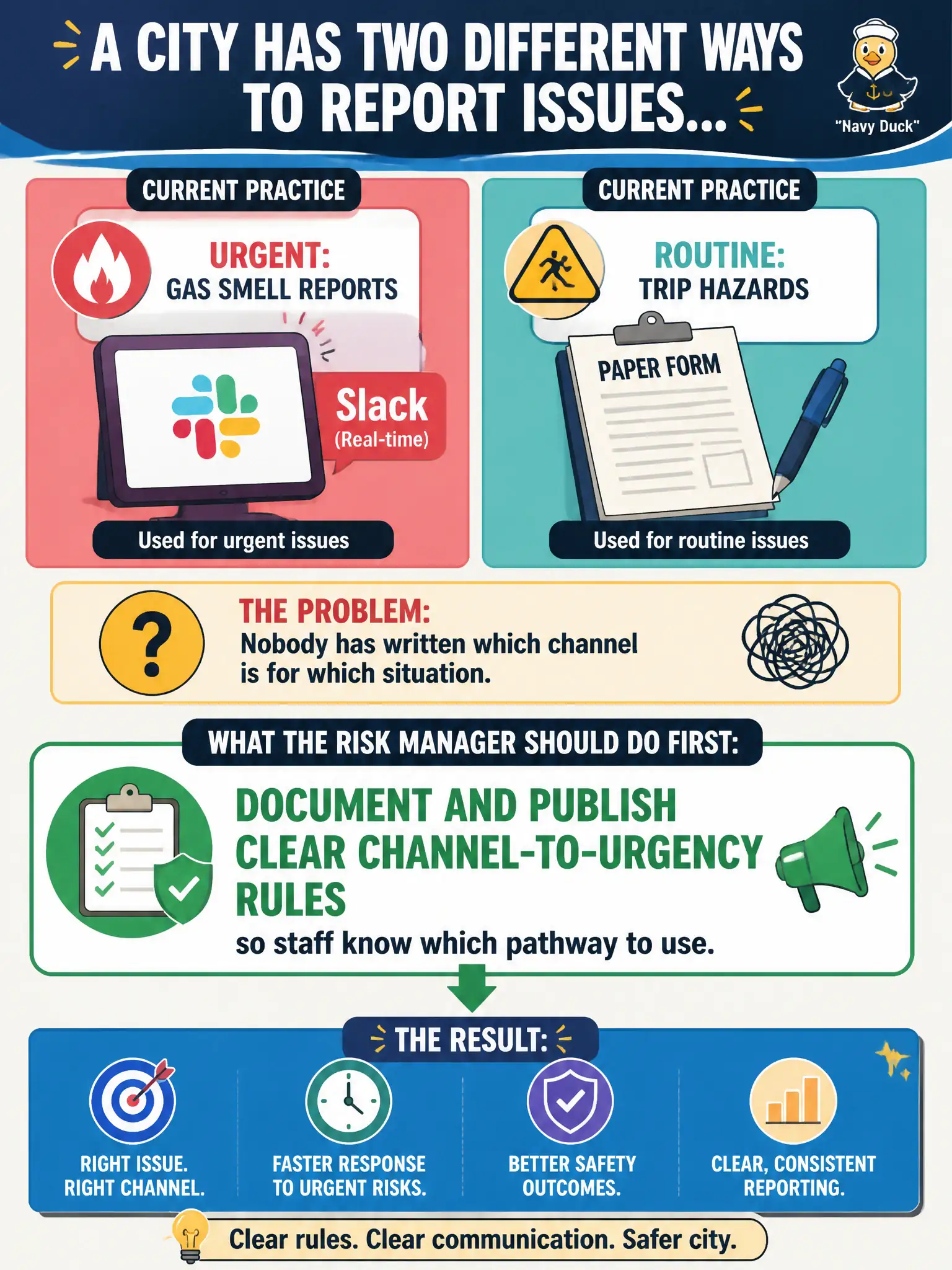
A city uses Slack for urgent gas-smell reports and paper forms for routine trip hazards, but nobody has written which channel is for which situation. What should the risk manager do first?
Select an answer to reveal the explanation.
Short Explanation
Picture two fire alarms and no sign saying which one means evacuate. People will guess wrong when it matters. Urgency and routine need labeled pathways, not vibes. Write down which channel is for what and make sure everyone can find it.
Full Explanation
Urgent gas-smell reports and routine trip-hazard reports need different pathways. When a city mixes Slack for urgent events with paper forms for routine hazards but never documents which channel applies when, staff invent inconsistent routes and severe issues can land in the wrong inbox. The risk manager should first document and publish clear channel-to-urgency rules so everyone knows which pathway to use. Forcing every hazard—urgent or routine—through paper forms alone may help audits on paper while delaying life-safety response. Deleting Slack to stop unofficial paths removes a fast channel without solving the missing rules. Leaving channel choice informal and training only new hires verbally fails retention and night-shift coverage. Exam caveat: communication design questions reward explicit channel-to-urgency mapping over one-channel absolutism or informality. Operational check: publish a one-page civic reporting matrix (symptom → channel → expected response time → backup if unanswered), post it beside radios and on the intranet, and run a drill that a gas odor hits the urgent path while a trip hazard hits the routine path. In municipal practice, record the rationale in the risk procedure or committee minutes so future staff apply the same rule under budget pressure. Re-validate the control after the next seasonal peak or org-chart change to confirm the civic pathway still works as designed.