
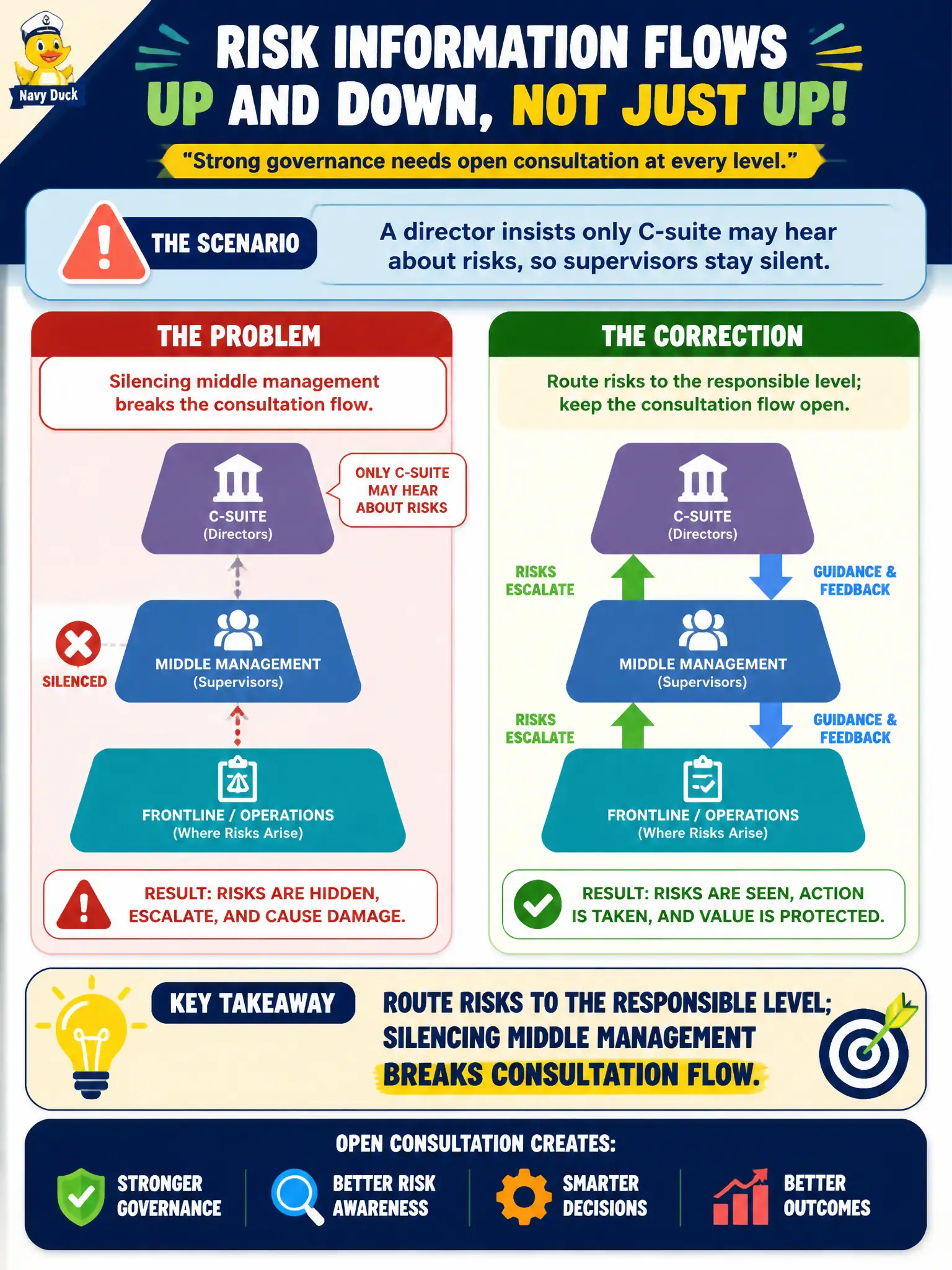
A director insists only C-suite may hear about risks, so supervisors stay silent. Which correction is needed?
Select an answer to reveal the explanation.
Short Explanation
Supervisors are the sensors on the shop floor — mute them and the C-suite hears late or never. Risks should go to the level that can act, including middle management in the consult chain. Silence is not a control; it is a blindfold.
Full Explanation
Risks should be routed to the responsible level that can assess and treat them. Silencing supervisors so only the C-suite hears risks breaks consultation flow, removes shop-floor sensors, and delays action in municipal operations. Keeping supervisors permanently silent concentrates information where it may arrive late. Allowing supervisors to hear risks only after executives already closed the issue makes middle management ornamental. Treating middle managers as optional listeners with no escalation or treatment role contradicts how cities actually fix hazards. Exam caveat: multi-level consultation—including middle management—is the sound pattern; executive-only audiences for all risks are a trap. Operational check: rewrite the escalation SOP to list which severityity tiers stop at supervisor/manager versus which require director or executive notice, train supervisors to log and act within their band, and sample recent reports to ensure they were not auto-forwarded only to executives while local owners stayed dark. In civic practice, keep the same vocabulary in board minutes, toolbox talks, and the live register so department heads do not reintroduce casual synonyms after training. Re-check the concept during the next quarterly risk review against one real municipal example so the distinction stays operational rather than slogan-only.