
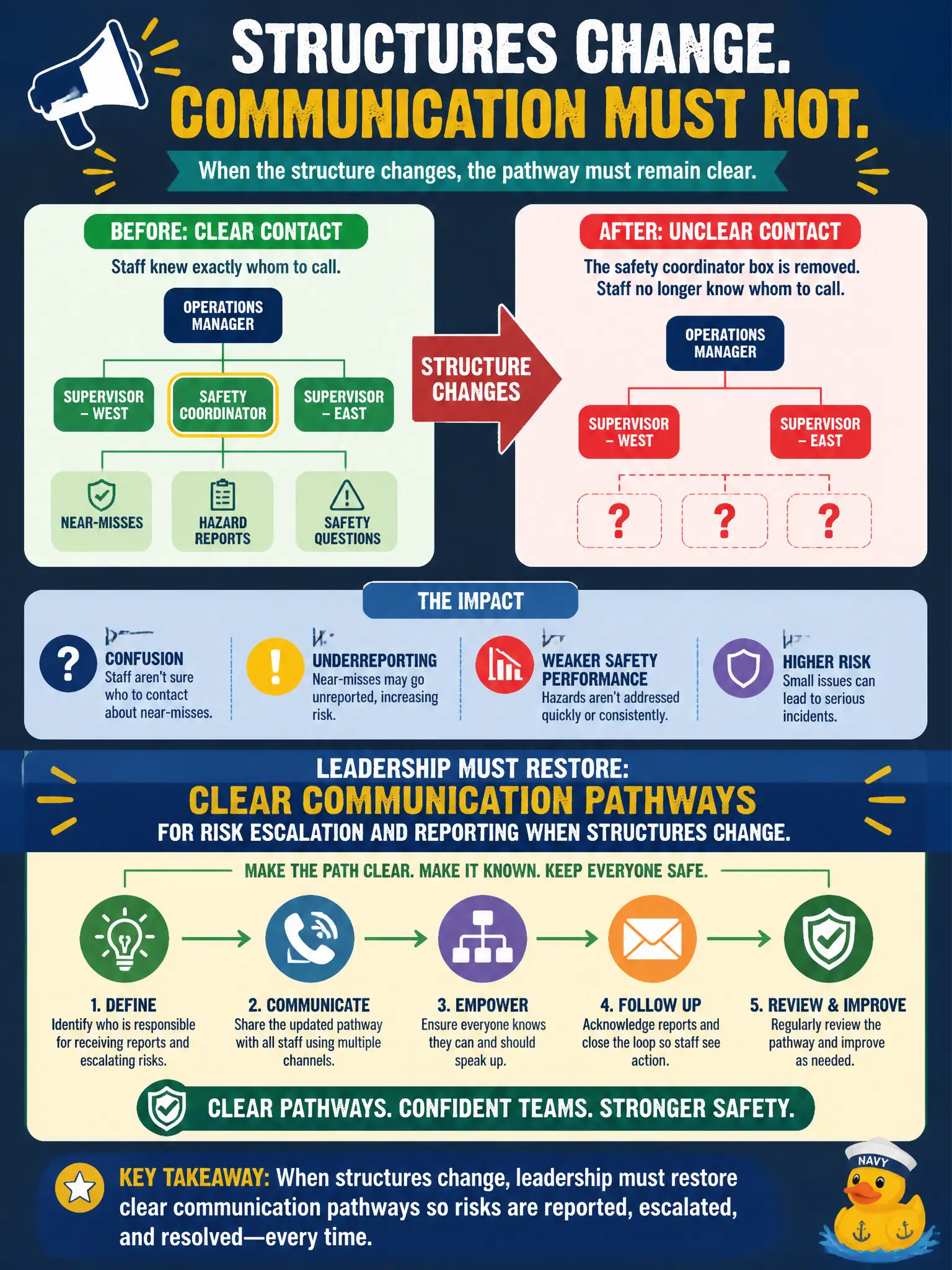
A new org chart removes the safety coordinator box; staff no longer know whom to call about near-misses. What must leadership restore?
Select an answer to reveal the explanation.
Short Explanation
Delete the safety coordinator box and you also delete the phone number people remembered. When charts change, leadership has to redraw who gets the near-miss call — clearly and right away. Pathways beat empty boxes.
Full Explanation
When reorganization removes the safety coordinator box, staff lose a remembered reporting destination for near-misses. Leadership must restore clear communication pathways for risk escalation and reporting whenever structures change—new names, new inboxes, new on-call trees—so civic reporting does not stall. Declaring that near-misses need not be reported until lost-time injury occurs deletes leading indicators. Relying only on anonymous suggestion boxes reviewed yearly is too slow and too vague for operational hazards. Making reporting optional solely during annual performance reviews likewise fails timeliness. Exam caveat: structure changes require explicit pathway redesign; org-chart deletion without replacement is a communication failure. Operational check: within one week of any org-chart change, publish the new near-miss contact path on the intranet and breakroom posters, run a five-minute huddle in each affected unit, and send a test report to confirm delivery to the acting owner. Update after-hours contacts at the same time. In civic practice, keep the same vocabulary in board minutes, toolbox talks, and the live register so department heads do not reintroduce casual synonyms after training. Re-check the concept during the next quarterly risk review against one real municipal example so the distinction stays operational rather than slogan-only.