
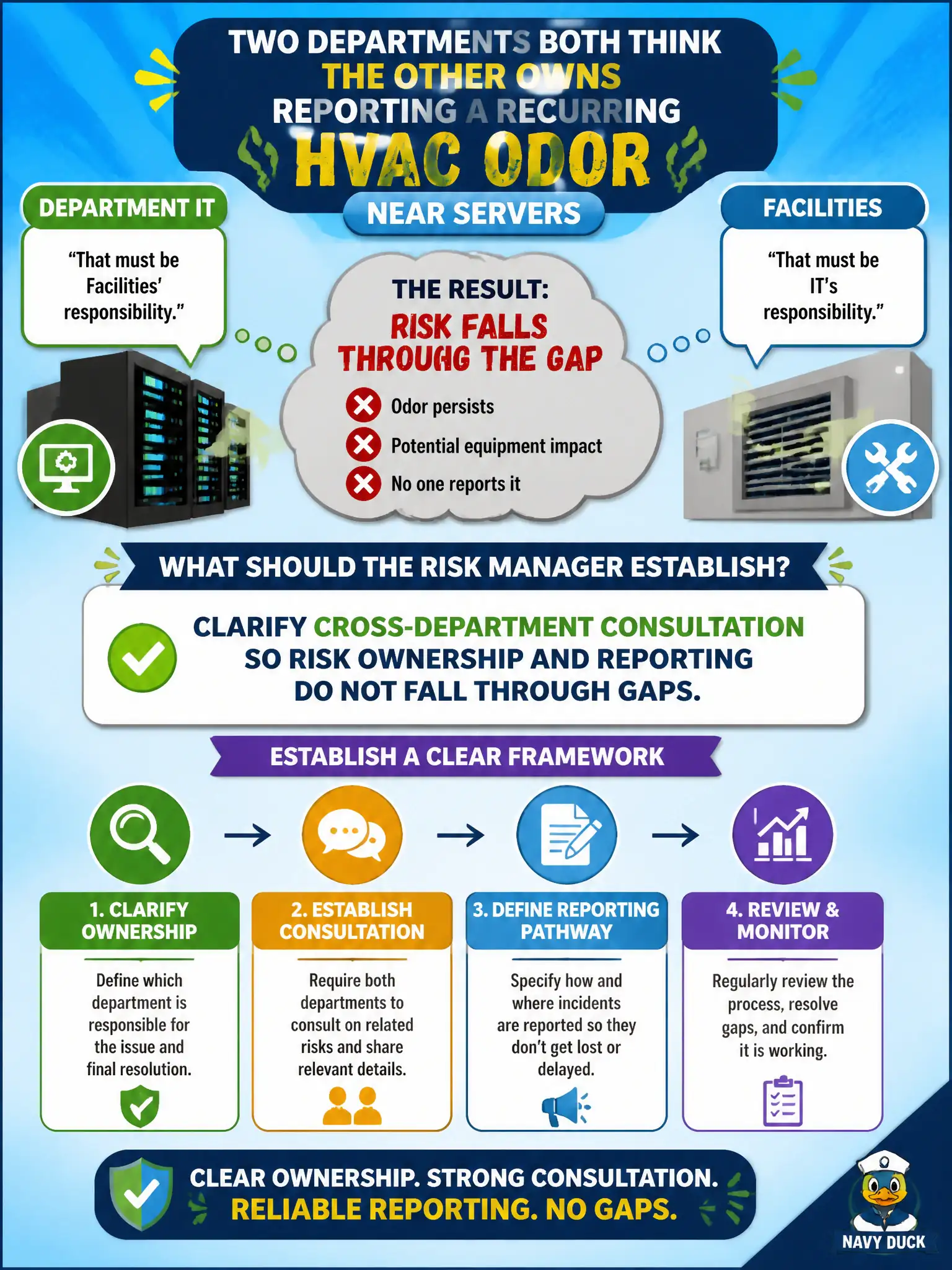
Two departments both think the other owns reporting a recurring HVAC odor near servers. What should the risk manager establish?
Select an answer to reveal the explanation.
Short Explanation
When two teams point at each other, the odor keeps cooking next to the servers. Spell out who consults whom and who owns the report so nothing drops between the desks. Clear handoffs beat polite finger-pointing.
Full Explanation
When two departments each assume the other owns a recurring HVAC odor near servers, the exposure continues while accountability gaps widen. The risk manager should clarify cross-department consultation so ownership and reporting paths are explicit and nothing falls between facilities and IT. Leaving ownership ambiguous so either side can deny responsibility after failure is the failure mode to prevent. Assigning reporting only to temporary contractors who are not on either roster removes durable ownership. Silencing both departments until an outage "proves" blame is reactive and harmful to civic services that depend on those servers. Exam caveat: consultation and clear ownership across silos are tested communication competencies. Operational check: name a primary owner and a consulting partner for the odor/server row, set a response-time SLA, add both to the escalation roster, and verify the next odor report creates one ticket both teams can see. Close the loop in the risk committee minutes so the gap cannot reopen quietly. In civic practice, keep the same vocabulary in board minutes, toolbox talks, and the live register so department heads do not reintroduce casual synonyms after training. Re-check the concept during the next quarterly risk review against one real municipal example so the distinction stays operational rather than slogan-only.