
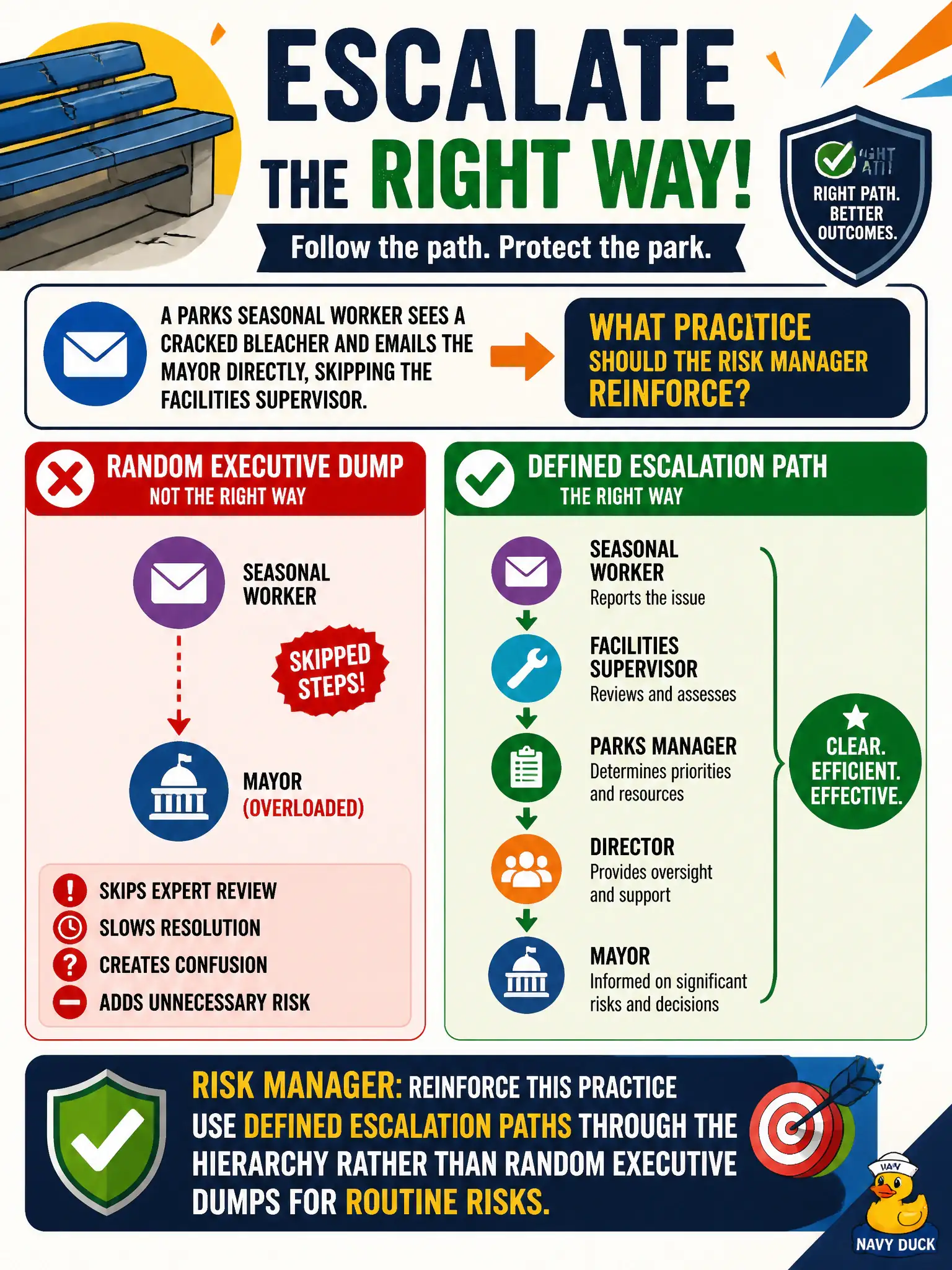
A parks seasonal worker sees a cracked bleacher and emails the mayor directly, skipping the facilities supervisor. What practice should the risk manager reinforce?
Select an answer to reveal the explanation.
Short Explanation
Skipping straight to the mayor is like calling the fire chief about a burnt-out lightbulb — loud, but the wrong rung on the ladder. Routine hazards should climb the defined path so facilities can act fast. Save the top for when the chain truly needs it.
Full Explanation
Routine physical hazards such as cracked bleachers should escalate through defined supervisory and facilities pathways so the people who can close, repair, and document the condition act quickly. Emailing the mayor directly for a routine parks defect bypasses the hierarchy, creates noise for elected officials, and can slow the repair owner who never saw the ticket. Encouraging every near-miss to go straight to elected officials maximizes visibility at the cost of workable triage. Banning seasonal workers from reporting until permanent staff verify hazards suppresses early warning. Requiring mayoral approval before any supervisor may close a bleacher invents a bottleneck that increases public exposure. Exam caveat: defined escalation paths beat executive dumping for routine risks; life-safety emergencies may still use urgent channels per SOP. Operational check: publish a one-page parks escalation ladder (seasonal → supervisor → facilities → risk/leadership for severity thresholds), train seasonals at orientation, and test with a tabletop that a cracked bleacher reaches facilities without a mayoral inbox dump. Audit whether closed bleachers are logged the same day. In civic practice, keep the same vocabulary in board minutes, toolbox talks, and the live register so department heads do not reintroduce casual synonyms after training. Re-check the concept during the next quarterly risk review against one real municipal example so the distinction stays operational rather than slogan-only.