
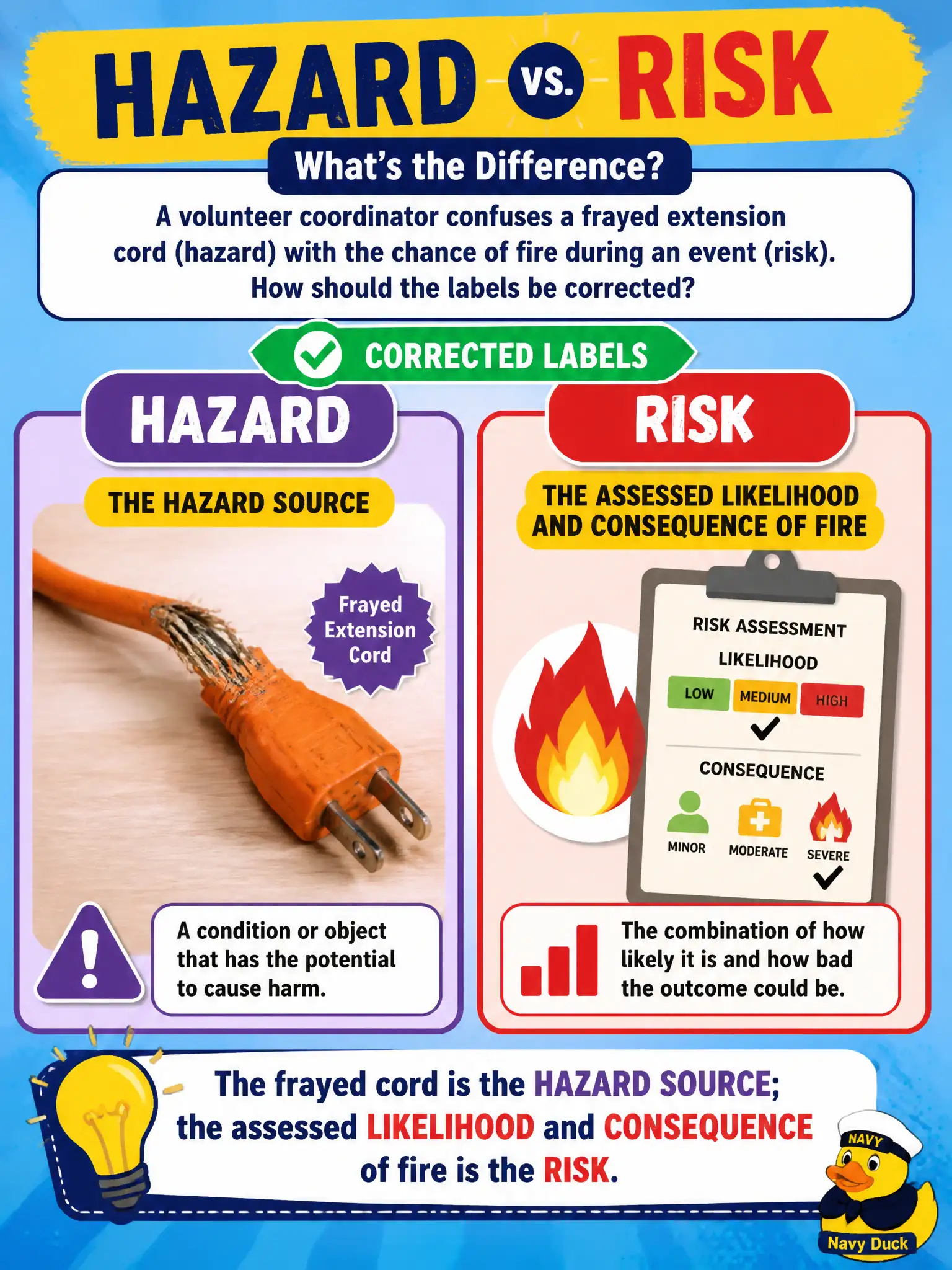
A volunteer coordinator confuses a frayed extension cord (hazard) with the chance of fire during an event (risk). How should the labels be corrected?
Select an answer to reveal the explanation.
Short Explanation
The frayed cord is the hazard — the spark-waiting source. The chance of fire and how bad that fire would be for the event is the risk you are sizing up. Keep those labels straight and the briefing makes sense.
Full Explanation
A frayed extension cord is the hazard—the source that can ignite or shock. The risk is the assessed likelihood and consequence of fire or injury during the volunteer event relative to safety and continuity objectives. Collapsing both labels into synonyms prevents clear treatment (replace the cord) versus residual discussion after controls. Calling the fire chance the hazard and the cord residual risk reverses definitions. Limiting hazards to chemicals so electrical cords are always "pure risk" invents an arbitrary substance test. Exam caveat: physical source = hazard; likelihood×consequence of the unwanted event = risk. Operational check: at the next civic event setup, tag the cord as a hazard on the checklist, score fire/injury likelihood and consequence before and after replacement or removal, and file the residual rating with the volunteer coordinator. Use the same two-label language in the post-event debrief so seasonal staff keep the distinction straight. In civic practice, keep the same vocabulary in board minutes, toolbox talks, and the live register so department heads do not reintroduce casual synonyms after training. Re-check the concept during the next quarterly risk review against one real municipal example so the distinction stays operational rather than slogan-only.