
Someone argues only private corporations need CRMC-style skills. Which rebuttal is correct?
Select an answer to reveal the explanation.
Short Explanation
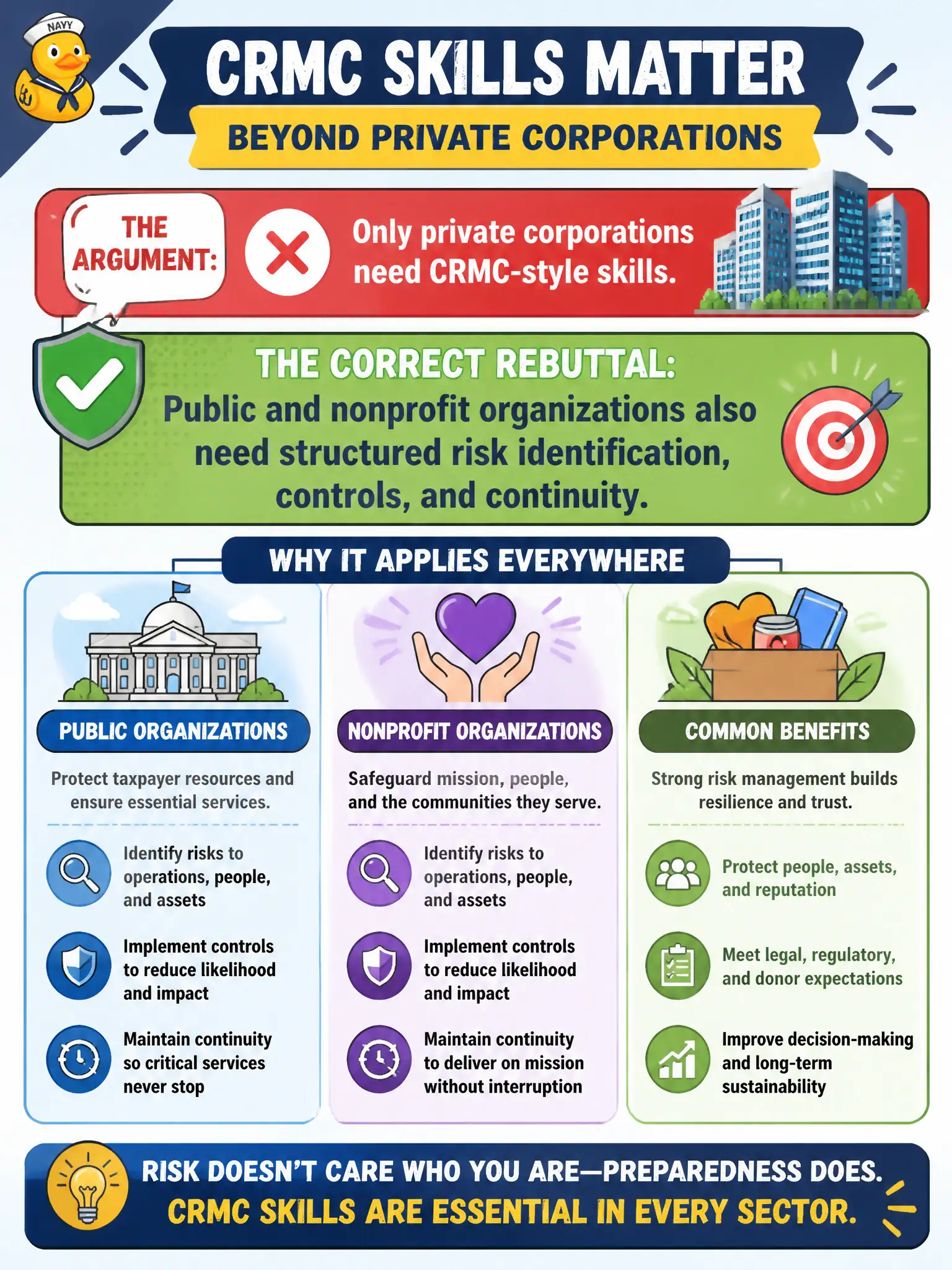
Cities and nonprofits still run fleets, hold data, and serve people who get hurt when things go wrong. Structured identify-control-continuity skills are not a private-sector exclusive. Public and nonprofit shops need that playbook too.
Full Explanation
Public and nonprofit organizations need structured risk identification, controls, and continuity just as private firms do. Cities run fleets, hold sensitive data, manage facilities open to the public, and face service interruptions that harm residents. Exempting public agencies because "taxpayers absorb all losses" ignores duty of care, budget limits, and political accountability. Claiming nonprofits never face continuity or information threats is false. Restricting hazard identification to private firms while telling civic staff to rely on informal judgment alone denies tools that improve consistency and oversight. Exam caveat: CRMC-style skills transfer across sectors; public/nonprofit applicability is expected. Operational check: cite the city or nonprofit risk policy applicability clause covering public entities, run one full identify-evaluate-treat cycle on a civic service risk, and present results to the board or council committee using the same structured language private programs use. Retire any talking point that "only corporations need this." In civic practice, keep the same vocabulary in board minutes, toolbox talks, and the live register so department heads do not reintroduce casual synonyms after training. Re-check the concept during the next quarterly risk review against one real municipal example so the distinction stays operational rather than slogan-only.