
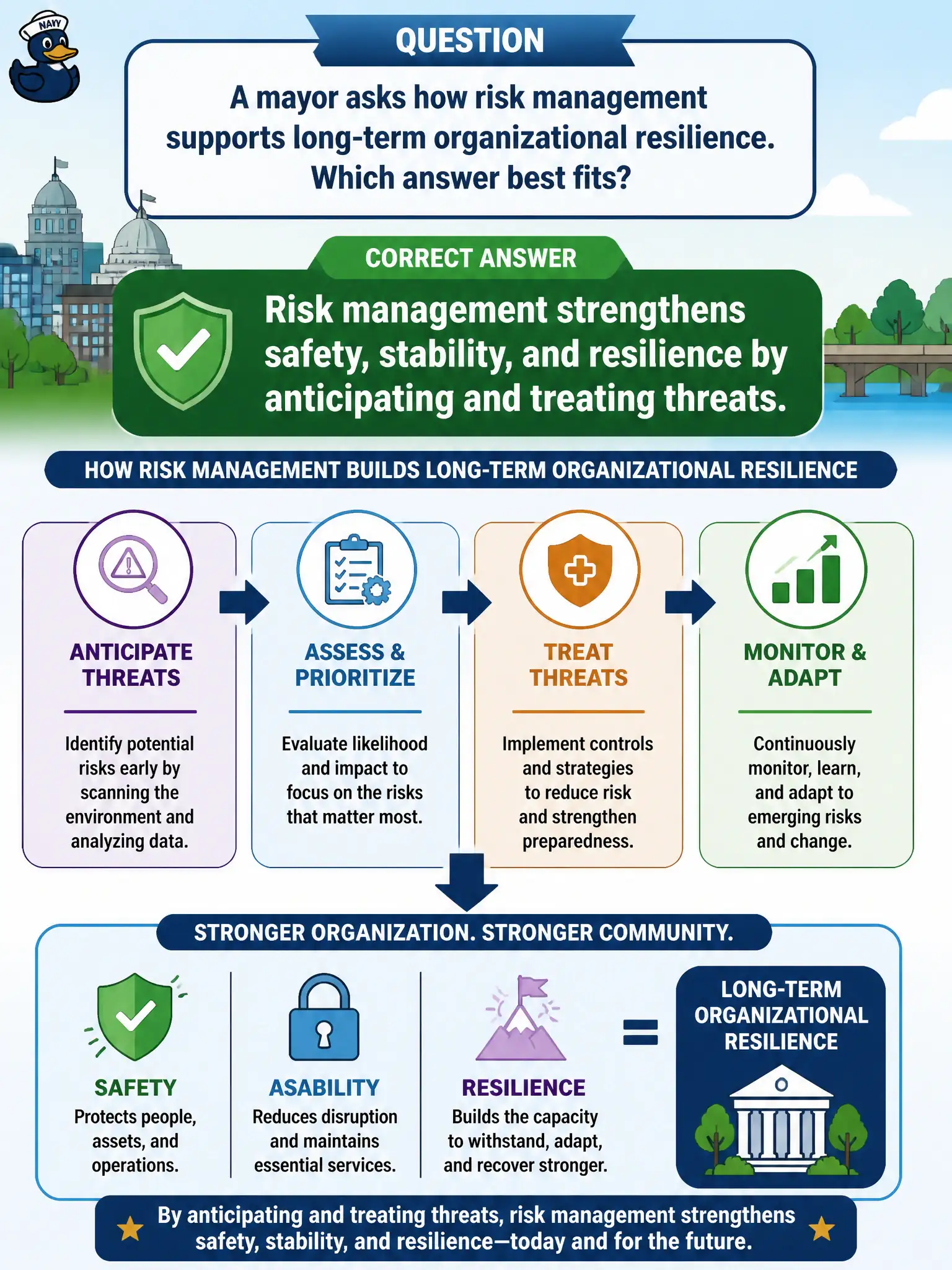
A mayor asks how risk management supports long-term organizational resilience. Which answer best fits?
Select an answer to reveal the explanation.
Short Explanation
Resilience is like a well-braced bridge — it still faces storms, but the structure was built with those loads in mind. Anticipating threats and treating them early is how risk management adds that bracing. Safer, steadier operations are the payoff the mayor is asking about.
Full Explanation
Risk management strengthens organizational safety, stability, and resilience by anticipating threats and applying treatments before disruptions cascade through civic services. Resilience is not purchased merely by raising deductibles; financing choices do not replace controls, redundancy, and continuity plans. Claiming risk work weakens resilience by diverting staff from service delivery misunderstands prevention as pure overhead—unplanned outages divert far more capacity. Parking long-term resilience solely in election planning divorces governance cycles from operational risk practice. Exam caveat: resilience answers should emphasize anticipation and treatment, not insurance deductibles or political calendars alone. Operational check: pick one critical city service, list the top threats to continuity, confirm at least one preventive control and one recovery step exist, and time a tabletop for the next quarter. Record how risk treatments (not only larger deductibles) improve the service's ability to withstand and recover from disruption for residents. In civic practice, keep the same vocabulary in board minutes, toolbox talks, and the live register so department heads do not reintroduce casual synonyms after training. Re-check the concept during the next quarterly risk review against one real municipal example so the distinction stays operational rather than slogan-only.