
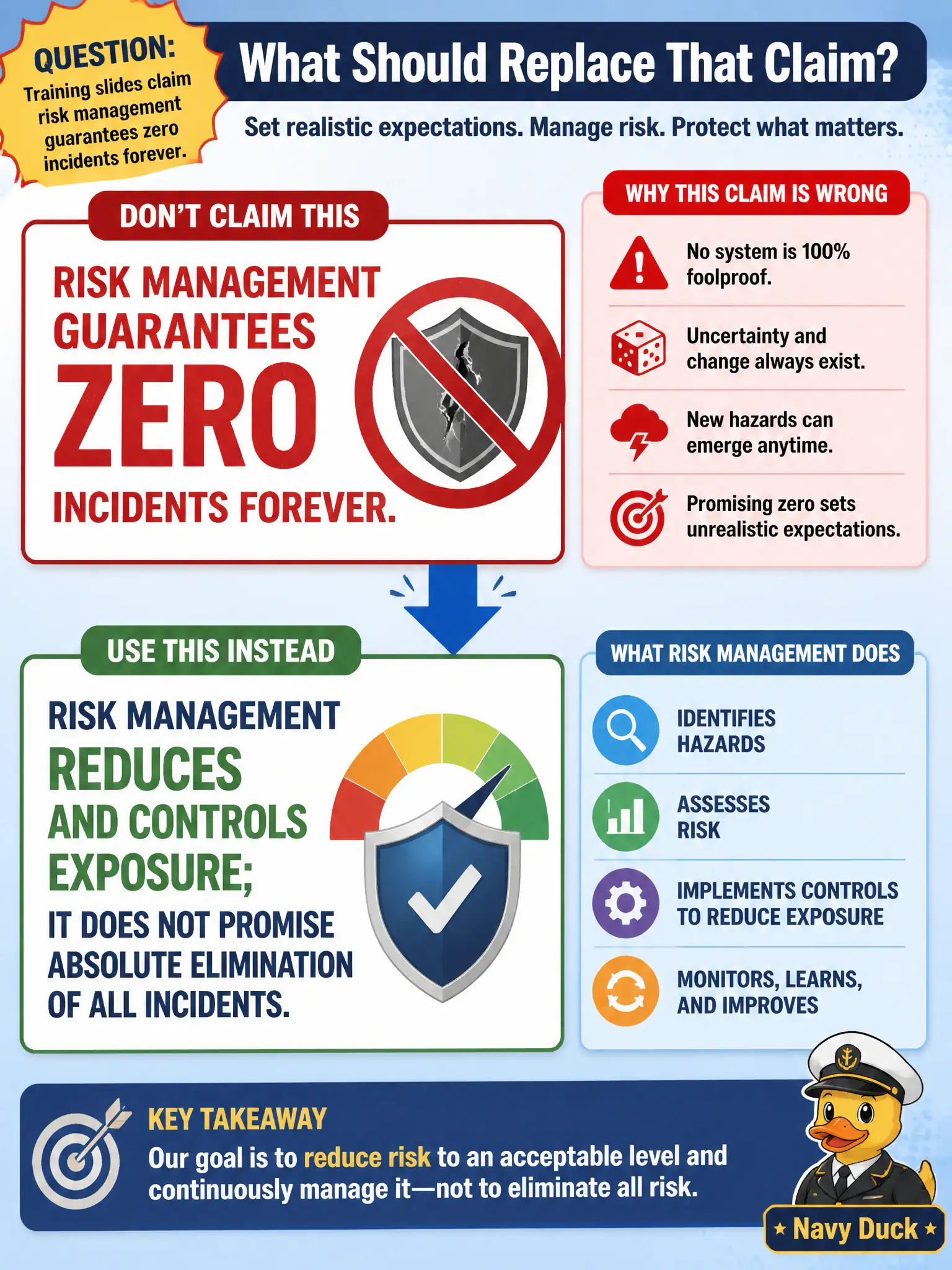
Training slides claim risk management guarantees zero incidents forever. What should replace that claim?
Select an answer to reveal the explanation.
Short Explanation
Nobody can promise the weather will never throw a curveball again. Risk management shrinks the odds and softens the hit — it does not hand out lifetime "nothing bad ever happens" warranties. Swap the guarantee for honest reduce-and-control language.
Full Explanation
Risk management reduces and controls exposure; it does not guarantee absolute elimination of all incidents. Weather, human error, cascading failures, and novel threats can still produce events even in mature civic programs. Training that promises zero incidents forever sets an impossible standard and discourages honest reporting when something slips through. Claiming zero incidents if every control is documented once confuses paperwork with ongoing effectiveness. Treating the program as a failure unless a permanent zero-incident record is achieved punishes learning cultures. Guaranteeing zero incidents whenever insurance limits exceed a dollar threshold confuses financing with prevention. Exam caveat: reduction and control language is correct; absolute guarantees are distractors. Operational check: replace any "zero forever" slide with measurable leading and lagging targets (near-miss reporting rate, severity reduction, restore-time objectives), brief leadership that residual risk remains after treatment, and document acceptance or further action for one residual item on the municipal register. Re-train facilitators to avoid guarantee wording. In civic practice, keep the same vocabulary in board minutes, toolbox talks, and the live register so department heads do not reintroduce casual synonyms after training. Re-check the concept during the next quarterly risk review against one real municipal example so the distinction stays operational rather than slogan-only.