
A finance chair thinks market stock swings are irrelevant because the city is not publicly traded — yet vendor price shocks still hit the budget. What point should the risk manager make?
Select an answer to reveal the explanation.
Short Explanation
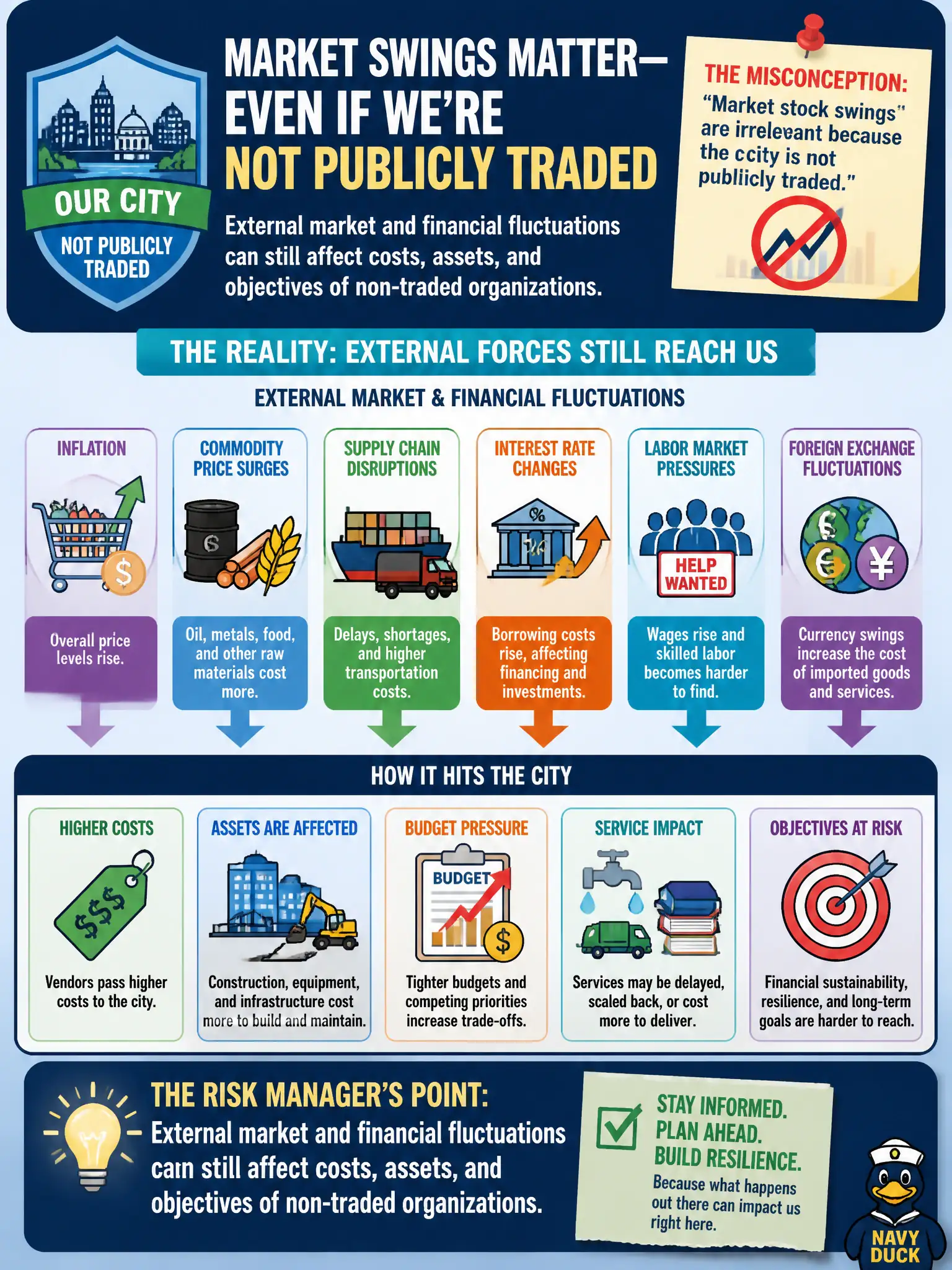
Not owning stock does not put a force field around the budget. When asphalt, chemicals, or software jump in price because markets moved, the city's objectives still feel it. External financial noise can shake non-traded shops just fine.
Full Explanation
External market and financial fluctuations affect non-traded civic organizations through vendor prices, commodity costs, interest on leases or debt, asset values, and budget objectives even when the city issues no equity. Vendor price shocks after asphalt, chemicals, or software markets move are classic external financial pressures on municipal plans. Claiming only equity charts matter so share-free cities have no external financial risk confuses portfolio risk with cost and funding risk. Calling vendor shocks purely internal and never linked to external markets ignores the price transmission path. Asserting statutory insulation from all supplier cost changes is factually overbroad and operationally dangerous for budget risk registers. Exam caveat: expect recognition that market/financial externalities hit governments via costs and funding, not only via stock tickers. Operational check: add an external price-volatility note to the next capital or materials risk review (for example fuel or treatment chemicals), cite a recent index or bid swing, and link a mitigation such as alternative suppliers, inventory buffers, or contingency lines. Confirm finance and the operating department share that register row rather than treating market moves as "someone else's" problem.