
Staff say risk management is only for after accidents happen. How should the risk manager correct that view?
Select an answer to reveal the explanation.
Short Explanation
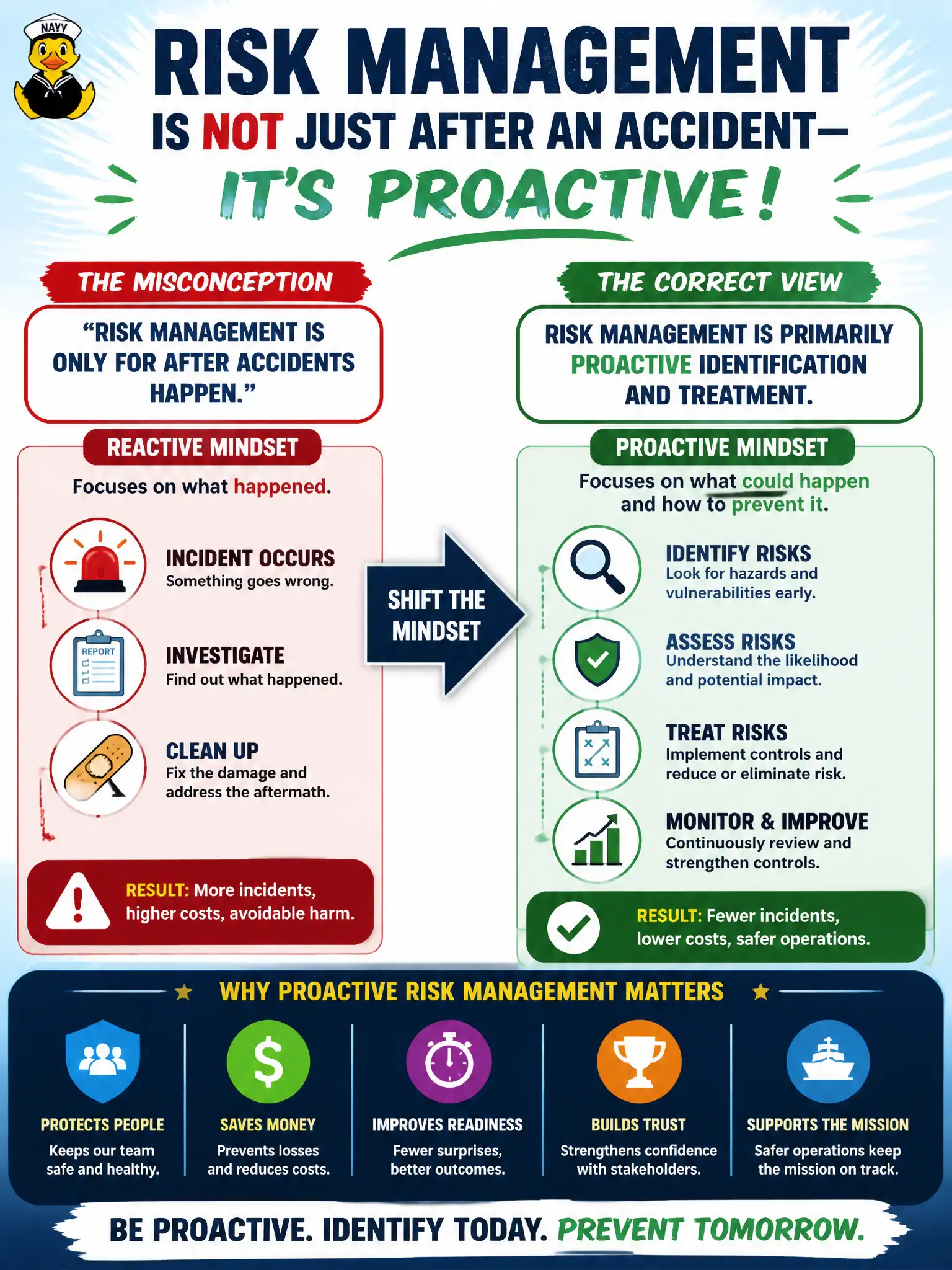
Waiting until someone gets hurt is like fixing the roof only after the living room floods. Good risk work looks ahead — spot the leaky spots, put treatments in place, and keep ops from taking the hit. Cleanup still matters, but it is not the whole job.
Full Explanation
Risk management is primarily proactive: identify exposures, evaluate them, select treatments, and monitor performance so harm is reduced before accidents define the agenda. Treating the program as only post-accident documentation abandons prevention, near-miss learning, and continuity design that civic operations require. Agreeing that documentation after accidents is the sole purpose locks the city into a lagging posture. Limiting work to claims adjusters who arrive once losses are finalized outsources learning and removes line supervisors from day-to-day control ownership. Treating near-misses as optional and starting the process only at recordable injuries throws away leading indicators that parks, public works, and facilities teams should escalate. Exam caveat: stems that contrast proactive identification/treatment with cleanup-only mindsets expect the proactive answer. Operational check: require one near-miss or hazard card per crew per week into the municipal pathway, review whether treatments were assigned before any claim file opened, and report the leading-indicator count beside lagging injury metrics to leadership. Adjust the SOP if staff still wait for recordables before speaking up.