
A parks director wants one sentence for council on why the city needs a risk manager at all. Which statement best captures the purpose?
Select an answer to reveal the explanation.
Short Explanation
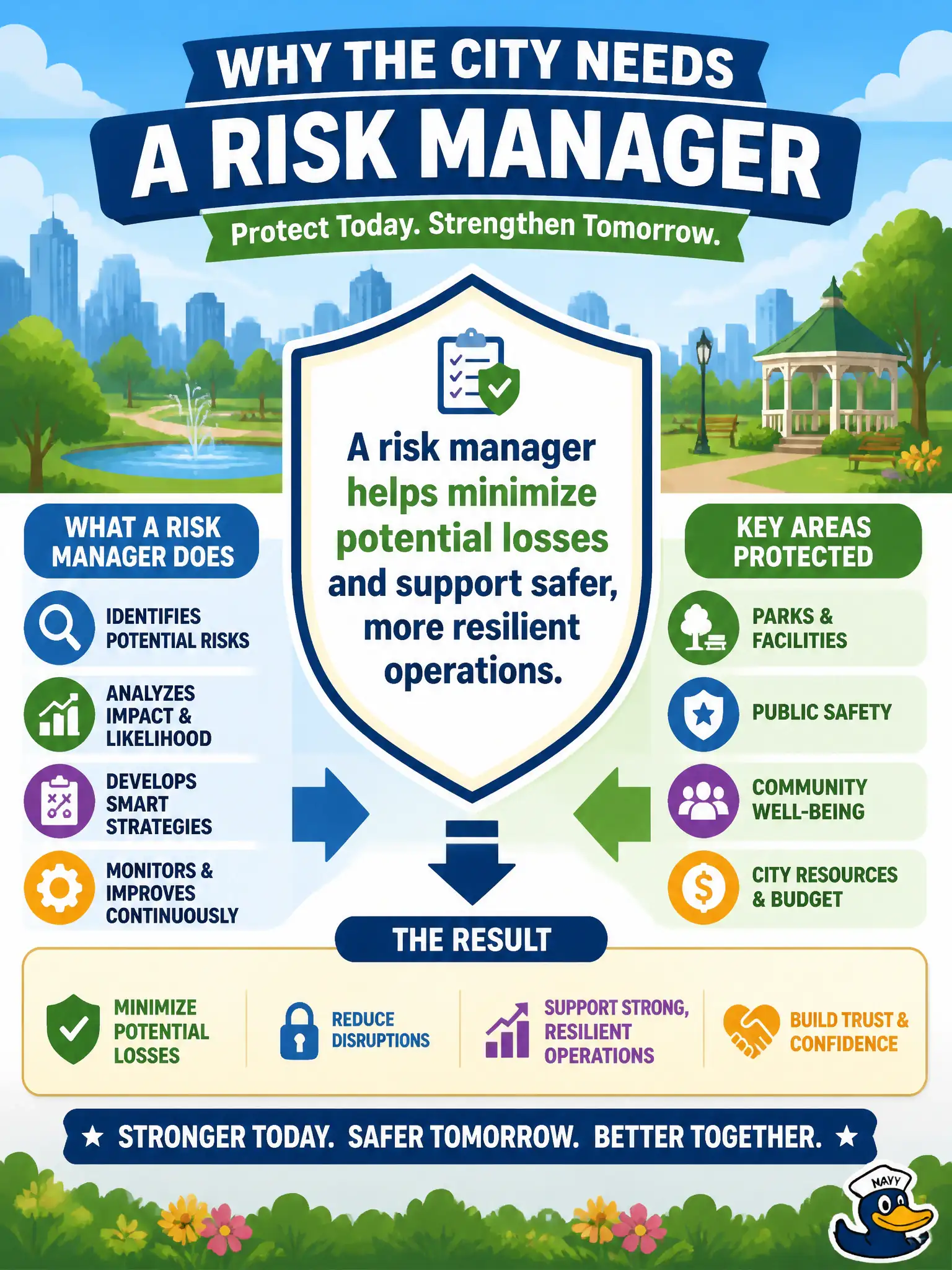
Think of a risk manager like a scout ahead of the trail crew — spotting trip hazards before someone falls, not just filling out paperwork after the tumble. The job is to shrink losses and keep operations safer and steadier. That one-liner is what council usually needs to hear.
Full Explanation
The purpose of a municipal risk manager is to help the organization minimize potential losses and support safer, more resilient operations across parks, facilities, finance, and service delivery—not merely to process paperwork after harm occurs. That purpose statement fits council briefings because it ties the role to protecting people, assets, continuity, and public trust. Framing the job as mainly denying insurance claims is adversarial and incomplete; claims handling is one downstream activity, not the mission. Replacing department heads for every safety decision after an incident confuses advisory and control ownership with line authority and arrives too late for prevention. Conditioning the role on issuing publicly traded bonds invents a private-market trigger that does not apply to ordinary civic agencies. Exam caveat: purpose questions reward proactive loss minimization and resilience language over claim denial, post-incident takeover, or capital-market prerequisites. Operational check: draft a one-sentence parks or public-works charter line that names anticipation, treatment, and continuity support, then confirm it appears in the risk program charter and the next council orientation packet. Ask one frontline supervisor whether that sentence matches how they actually escalate hazards so the civic purpose is operational, not decorative.