
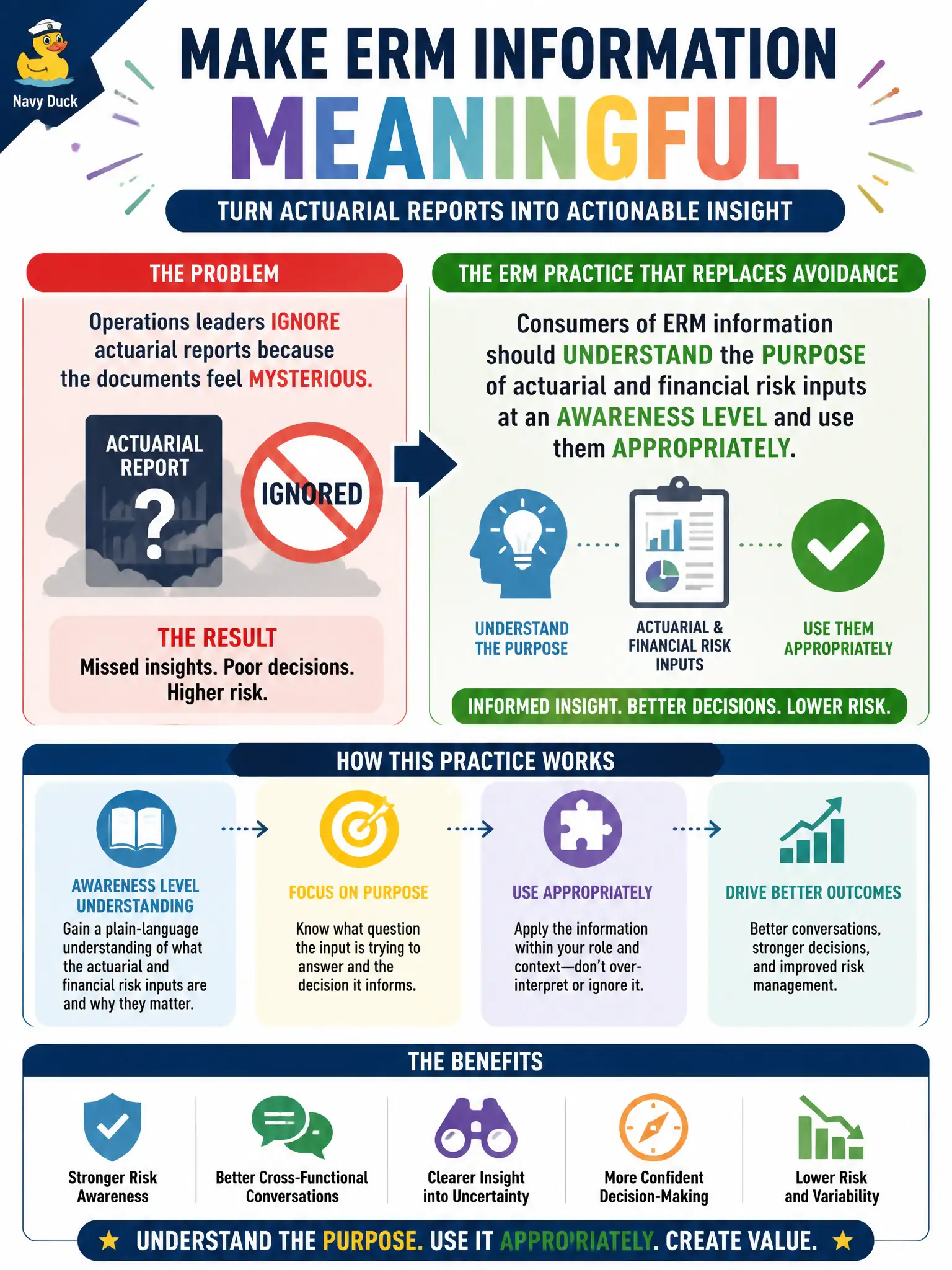
Operations leaders ignore actuarial reports because the documents feel mysterious. What ERM practice should replace that avoidance?
Select an answer to reveal the explanation.
Short Explanation
You do not need to become an actuary—you need the punchline: what the numbers say about funding and loss potential. Avoiding the report because it looks dense leaves money-side risk flying blind.
Full Explanation
ERM integrates specialist inputs rather than discarding them. At awareness depth, operations leaders should understand the purpose of actuarial and financial risk inputs and use them appropriately—not avoid reports because they feel mysterious. Consumers of ERM information need enough literacy to ask informed questions and apply summaries to decisions.
Forbidding ops leaders from reading actuarial material and allowing only auditors to open those files creates harmful silos. Discarding mysterious reports without summary because complexity equals irrelevance throws away decision-relevant analysis. Letting actuarial inputs replace all operational risk registers once received overcorrects by erasing operational risk content.
Exam caveat: awareness-level understanding and appropriate use beat avoidance or total replacement. CRMC emphasizes informed consumption of specialty inputs.
Operational check: provide a plain-language briefing on what actuarial reports mean for ops decisions; pair summaries with operational risk views; schedule joint review sessions; stop the practice of shelving reports unread. Offer a short awareness briefing that translates actuarial outputs into decision questions operations can use. File attendance so avoidance cannot be excused as lack of access.