
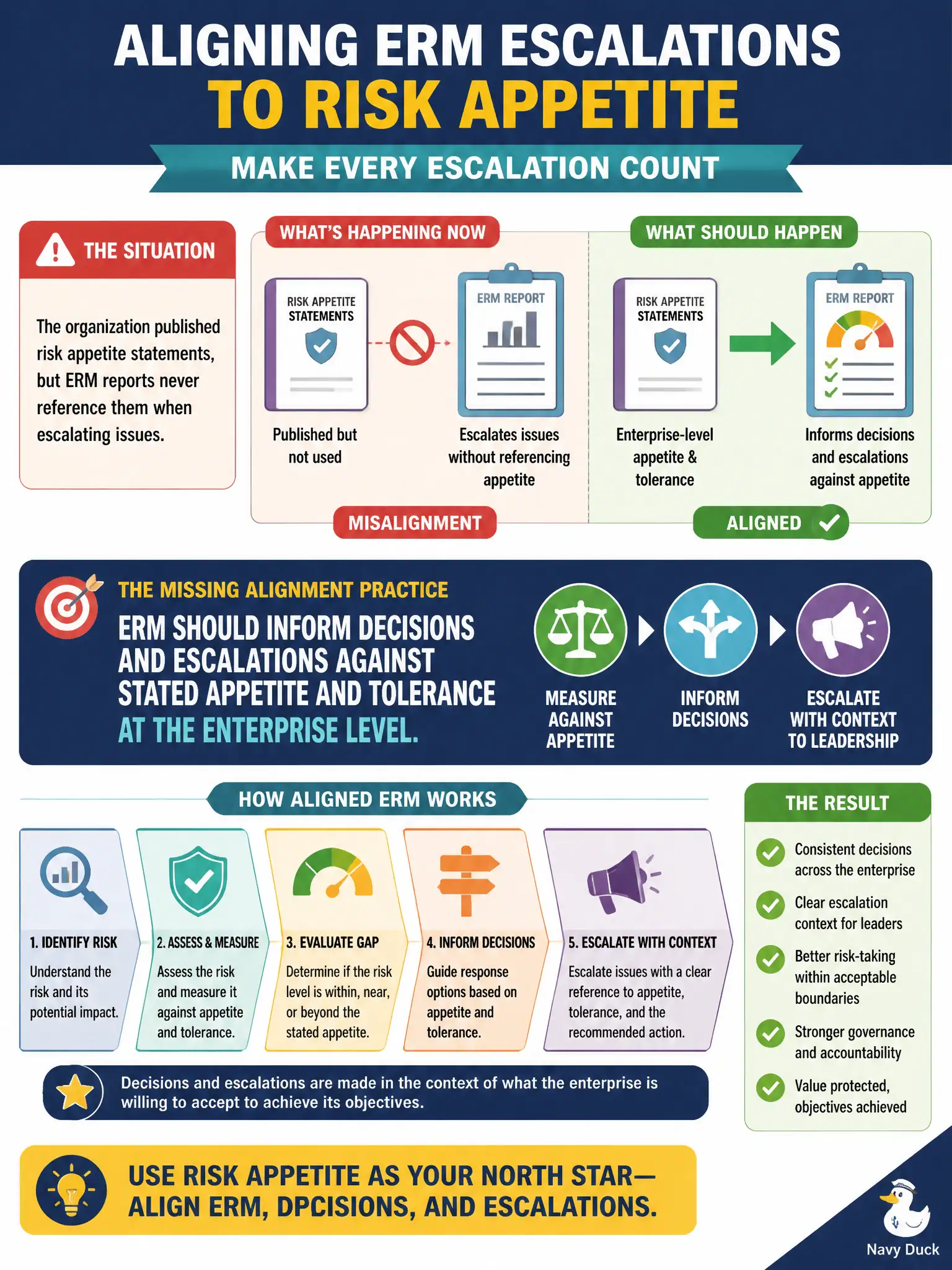
The organization published risk appetite statements, but ERM reports never reference them when escalating issues. What alignment practice is missing?
Select an answer to reveal the explanation.
Short Explanation
Appetite without reporting is a diet plan you never check. When issues come up, ERM should say whether you are still inside the lines you already wrote—or blowing past them.
Full Explanation
Risk appetite and tolerance statements guide how much risk the enterprise is willing to take and when escalation is required. Publishing appetite but never referencing it when escalating issues leaves ERM reports unanchored from stated boundaries. ERM should inform decisions and escalations against stated appetite and tolerance at the enterprise level so civic leaders see breaches as governed exceptions.
Treating appetite statements as ceremonial and unfit to influence operational escalation wastes governance work. Avoiding appetite language in ERM reporting to remain “objective” falsely opposes objectivity to stated risk boundaries. Restricting appetite interpretation to insurers alone outsources internal governance.
Exam caveat: appetite without escalation use is documentation theater. CRMC expects appetite-informed decisions.
Operational check: add appetite/tolerance references to escalation templates; flag breaches in ERM reports; verify a sample escalation cites the relevant statement; brief committees on using appetite as a decision anchor. Embed appetite and tolerance references in escalation tickets and committee minutes templates. Sample escalations quarterly for missing appetite citations and remediate training where gaps appear.