
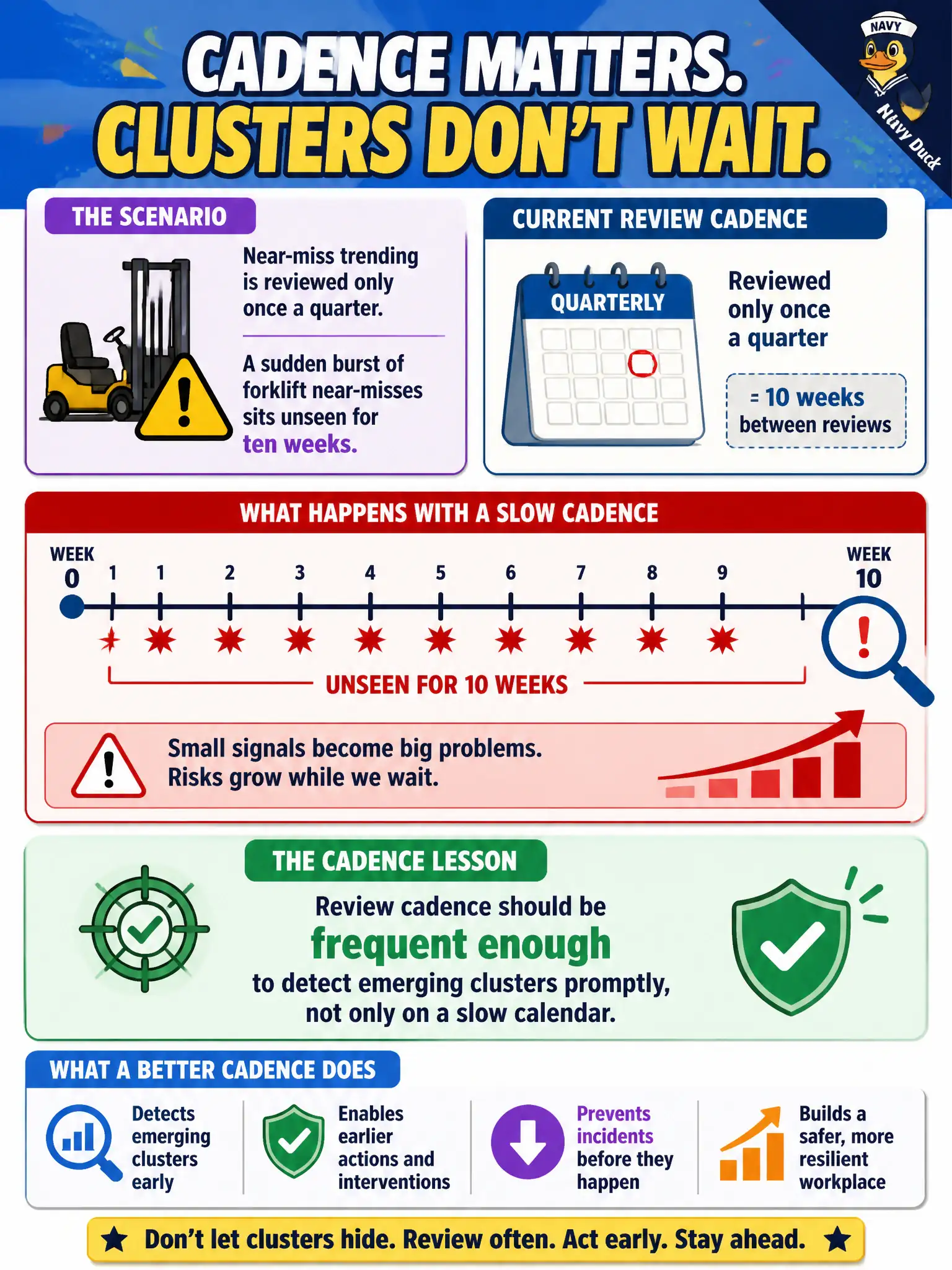
Near-miss trending is reviewed only once a quarter. A sudden burst of forklift near-misses sits unseen for ten weeks. What cadence lesson applies?
Select an answer to reveal the explanation.
Short Explanation
A cluster waiting ten weeks is like smoke alarms that only chirp once a season. Cadence has to be tight enough that a forklift near-miss streak lights up while you can still fix the aisle—not after the quarterly meeting.
Full Explanation
Identification and continuous improvement rely on timely analysis. Infrequent trending can miss rapidly forming clusters. When near-miss trending is reviewed only quarterly and a burst of forklift near-misses sits unseen for ten weeks, the cadence lesson is that review frequency should detect emerging clusters promptly—not only on a slow calendar that is convenient for meetings.
Assuming quarterly reviews are always sufficient because clusters never form faster than a quarter contradicts common operational reality. Preferring ten-week lags to “protect staff from overreacting” delays response while exposure accumulates. Logging forklift near-misses only annually to reduce dashboard noise discards leading indicators municipal safety programs need.
Exam caveat: cadence must match signal speed. Slow calendars can hide fast clusters.
Operational check: set near-miss review cadence appropriate to operations (often weekly or biweekly for high-activity shops); alert on threshold bursts between formal meetings; investigate the forklift cluster immediately; adjust staffing, traffic routes, or training based on findings. Define burst thresholds that page a safety lead between formal meetings when forklift or similar near-miss counts spike. Do not wait for the next quarterly slide deck to notice clusters.