
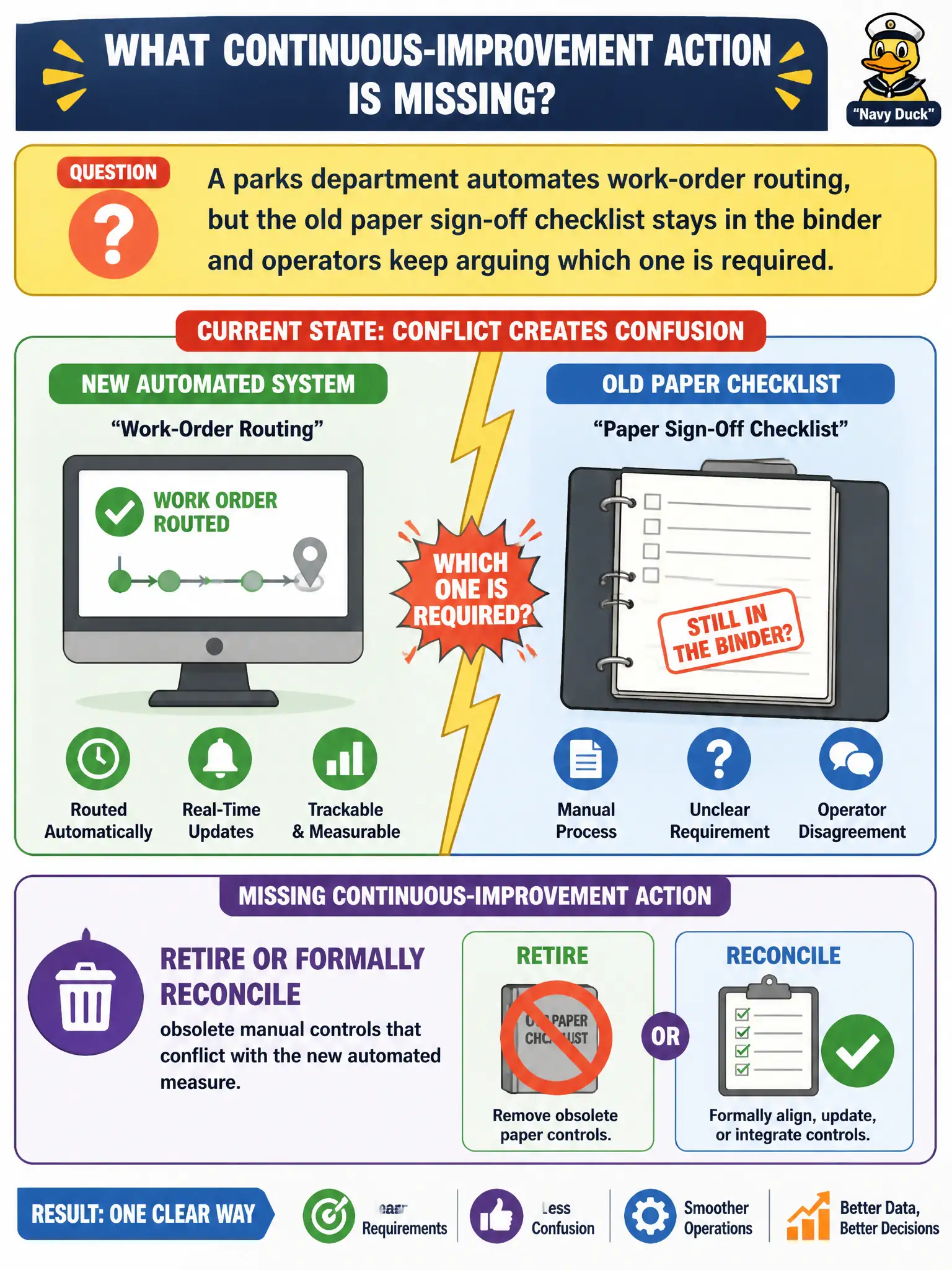
A parks department automates work-order routing, but the old paper sign-off checklist stays in the binder and operators keep arguing which one is required. What continuous-improvement action is missing?
Select an answer to reveal the explanation.
Short Explanation
Automation is great until the ghost of the old checklist starts haunting the crew. Continuous improvement means retiring or reconciling the obsolete control so people are not stuck following two contradictory playbooks.
Full Explanation
When processes are automated, improvement work includes removing or formally updating obsolete manual controls that conflict with the new measure. A parks department that automates work-order routing while leaving the old paper sign-off checklist active creates dual requirements and operator conflict. Retiring or formally reconciling obsolete manual controls restores a single authoritative path for civic operations.
Adding a third parallel checklist so both paper and automated paths remain forever increases confusion. Deleting automation to return to paper solely to end arguments abandons beneficial process change instead of reconciling documentation. Ignoring the conflict because automation “always overrides” any written procedure without documentation leaves procedures and practice misaligned for auditors and staff.
Exam caveat: process change requires control reconciliation. Parallel obsolete manuals are a continuous-improvement failure mode.
Operational check: inventory paper checklists that overlap automated routing; formally retire or revise each; communicate the single required path; verify operators follow the reconciled procedure in a sample of work orders. Issue a single controlled procedure ID for work-order routing after reconciliation and remove obsolete paper forms from binders. Confirm operators can name the one required path in a quick field check.