
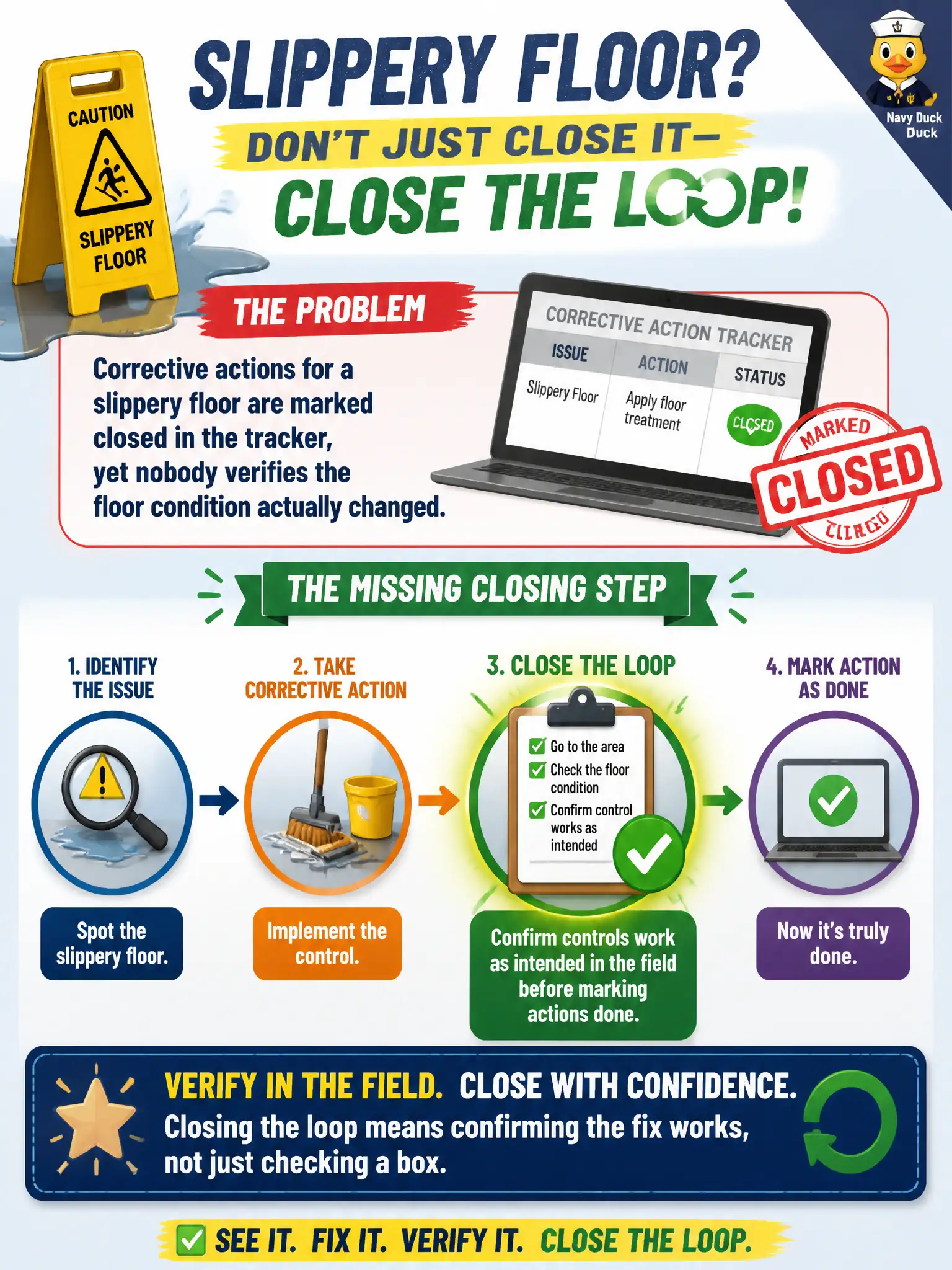
Corrective actions for a slippery floor are marked closed in the tracker, yet nobody verifies the floor condition actually changed. What closing step is missing?
Select an answer to reveal the explanation.
Short Explanation
Checking a box is not the same as a dry, safe floor. Close the loop—look, test, confirm—then call it done. Paper victories do not stop real slips.
Full Explanation
Effectiveness verification ensures corrective actions produce the intended risk reduction in the field. Marking slippery-floor corrective actions closed in a tracker without confirming floor condition changed confuses administrative closure with control effectiveness. Closing the loop by confirming controls work as intended before marking actions done is the missing continuous-improvement step.
Treating paper closure as sufficient if a work order number was assigned values workflow hygiene over outcomes. Skipping verification because the same contractor always invoices for floor work assumes vendor billing equals hazard elimination. Auto-closing tracker items after thirty days regardless of floor condition optimizes aging metrics while leaving citizens and staff exposed.
Exam caveat: closed ≠ verified effective. CRMC improvement items test field confirmation of corrective actions.
Operational check: require field verification evidence (photo, inspection note, slip-resistance check as appropriate) before closure; sample recently closed actions; reopen any without proof the condition changed. Build verification fields into the corrective-action tracker so closure is blocked without field confirmation. Sample closed slippery-surface actions each month for evidence quality.