
An annual facility review uses the same checklist every year and never flags new lithium battery storage. What identification refresh is needed?
Select an answer to reveal the explanation.
Short Explanation
Last decade’s checklist will not catch this decade’s battery room. New chemistries bring new fire and storage hazards—refresh the list or you walk past them smiling. Identification methods age; update them.
Full Explanation
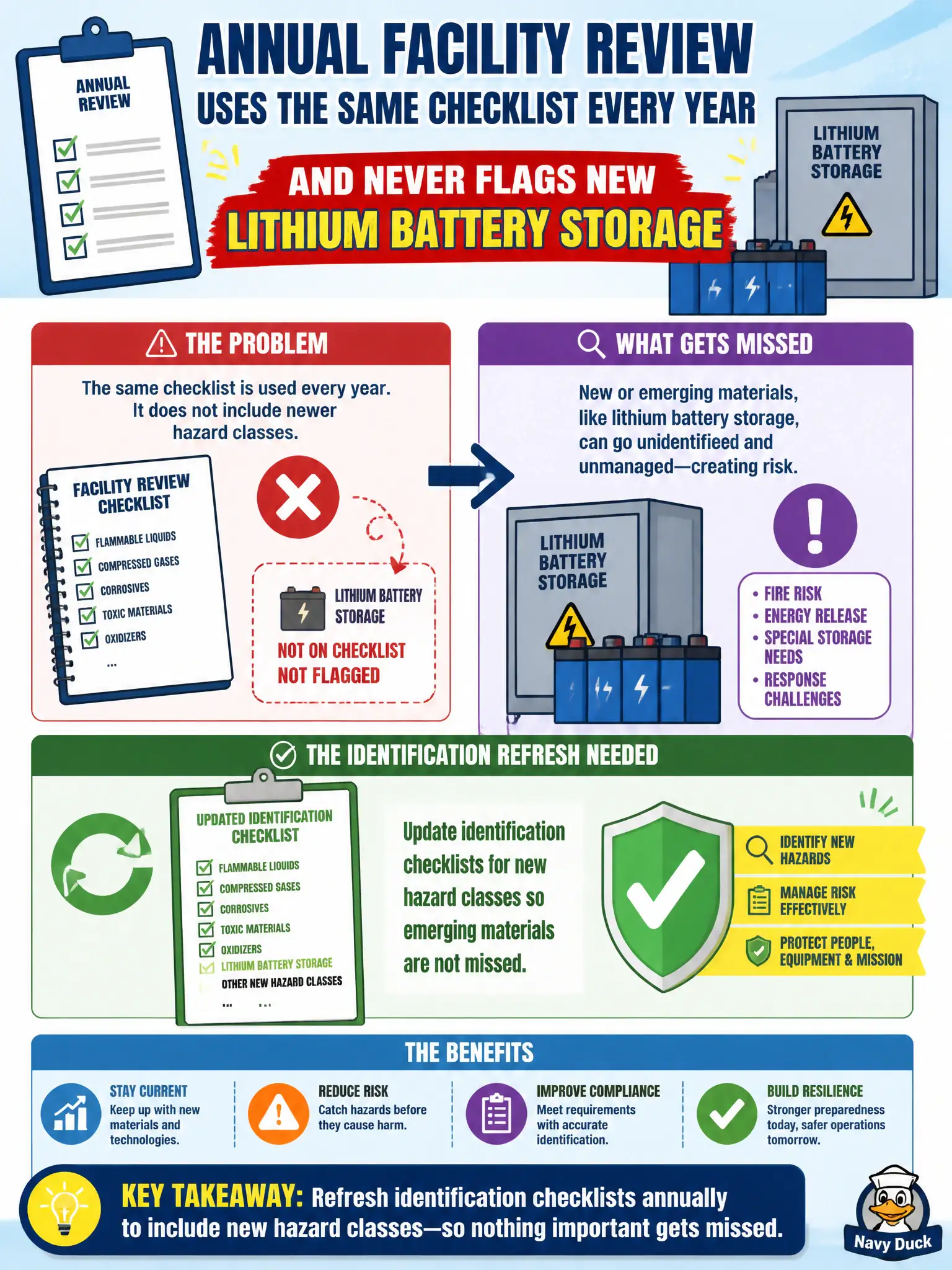
Hazard identification tools must evolve with operations. New materials such as lithium battery storage may not appear on decades-old checklists even when the building footprint is unchanged. Updating identification checklists for new hazard classes so emerging materials are not missed is the refresh annual facility reviews need in civic facilities.
Keeping static checklists forever because changing them confuses auditors prioritizes checklist familiarity over hazard coverage. Assuming lithium batteries are covered automatically under any legacy “electrical” checkbox can miss thermal runaway and storage-specific controls. Claiming annual reviews need not mention new materials if the footprint is unchanged confuses floor area with hazard inventory.
Exam caveat: checklist currency is part of identification quality. New energy-storage and material classes are common update triggers.
Operational check: revise facility review checklists to include lithium battery storage and other emerging classes; train reviewers; inspect current storage locations; open corrective actions for gaps found. Version facility checklists annually with an emerging-hazards addendum reviewed by safety and facilities jointly. Lithium storage and similar classes should appear as explicit line items, not implied footnotes.