
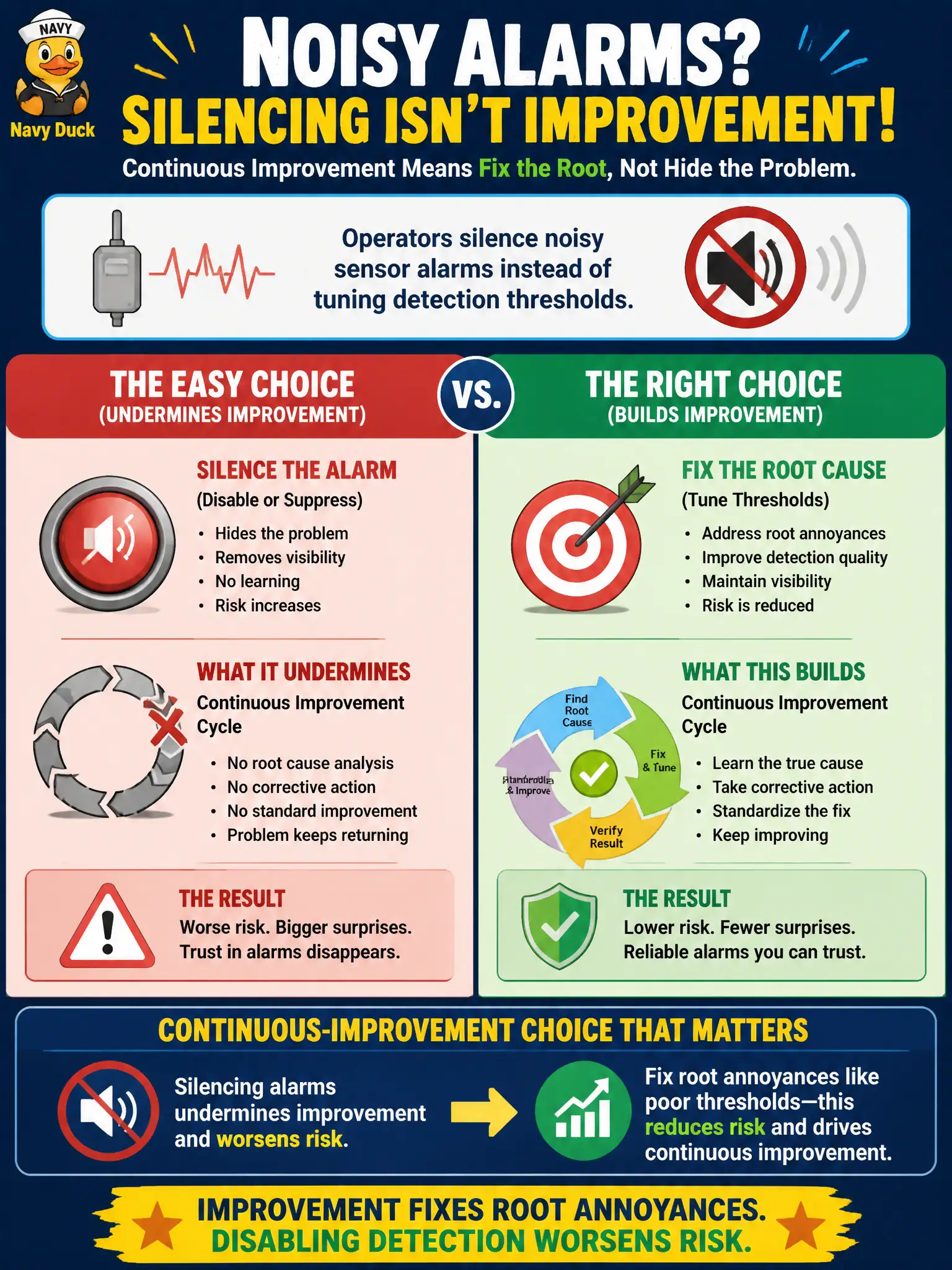
Operators silence noisy sensor alarms instead of tuning detection thresholds. What continuous-improvement choice does this undermine?
Select an answer to reveal the explanation.
Short Explanation
Muting the smoke alarm because it chirps is how kitchens burn. Fix the threshold or placement—do not kill the warning. Annoyance is a design problem, not a reason to go dark.
Full Explanation
Alarm fatigue often stems from poorly calibrated detection rather than excess caution. Operators who silence noisy sensor alarms instead of tuning thresholds undermine continuous improvement by disabling detection that should be fixed at the root. Improvement should address poor thresholds and signal quality; disabling detection worsens risk for municipal processes that rely on those sensors.
Silencing alarms permanently as the preferred fix when false positives annoy staff removes the protective function. Disabling detection if operators promise to watch more carefully substitutes unreliable vigilance for engineered monitoring. Interpreting noisy sensors as proof the control is already too strong and should stay muted misdiagnoses calibration problems as over-control.
Exam caveat: fix detection quality; do not normalize mute-as-policy. CRMC continuous-improvement items often contrast threshold tuning with disabling controls.
Operational check: analyze false-positive drivers; retune thresholds or sensing placement with competent approval; verify alarms remain audible/active; audit for muted or bypassed sensors during walkthroughs. Require engineering or competent-person approval before alarm setpoints change, and forbid mute-as-standing-practice. Re-enable detection as soon as tuning work completes.