
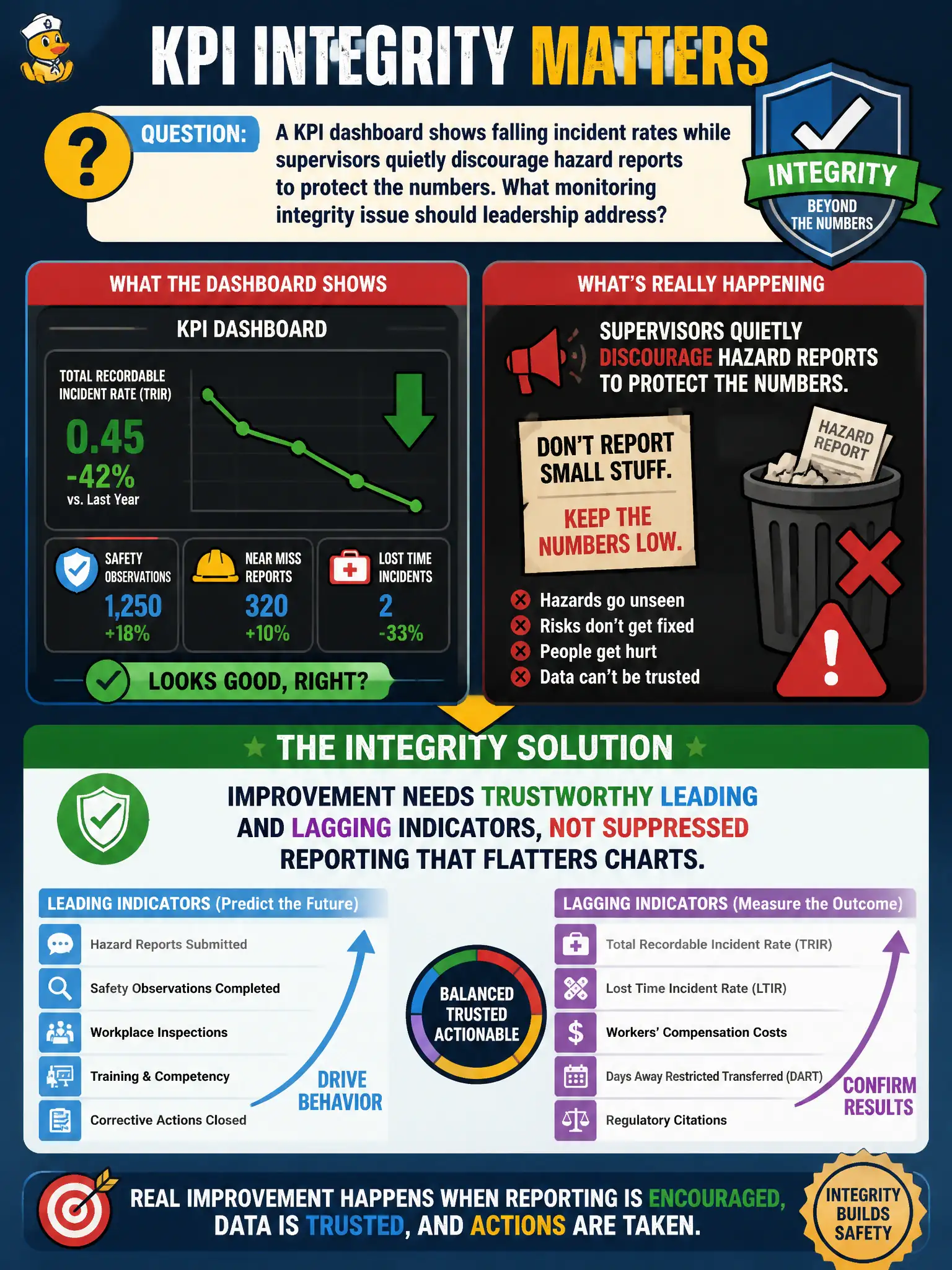
A KPI dashboard shows falling incident rates while supervisors quietly discourage hazard reports to protect the numbers. What monitoring integrity issue should leadership address?
Select an answer to reveal the explanation.
Short Explanation
A quiet dashboard can mean fewer injuries—or fewer people brave enough to speak up. If bosses punish reports to make the KPI pretty, you are flying blind. Honest signals beat flattering silence.
Full Explanation
Monitoring quality depends on accurate inputs. Discouraging hazard reports can artificially improve lagging incident charts while degrading leading-indicator visibility. When a KPI dashboard shows falling incident rates while supervisors quietly suppress hazard reports to protect the numbers, leadership must insist that improvement needs trustworthy leading and lagging indicators—not suppressed reporting that flatters charts.
Treating falling incident charts as automatic proof of improving risk regardless of reporting culture ignores gaming and underreporting. Accepting suppressed hazard reports because lagging KPIs look favorable to the board prioritizes appearance over learning. Ignoring leading indicators such as hazard reports when lagging injuries decline abandons early warning precisely when culture may be silencing it.
Exam caveat: indicator integrity beats indicator cosmetics. Suppressed reporting is a monitoring failure, not a success story.
Operational check: track hazard-report volume alongside incident rates; investigate sudden drops in reporting; prohibit retaliation for good-faith reports; brief the board on both leading and lagging measures with culture caveats. Pair every lagging incident chart with a leading reporting-volume indicator and investigate inverse movements. Celebrate hazard reporting that prevents harm rather than punishing the appearance of more reports.