
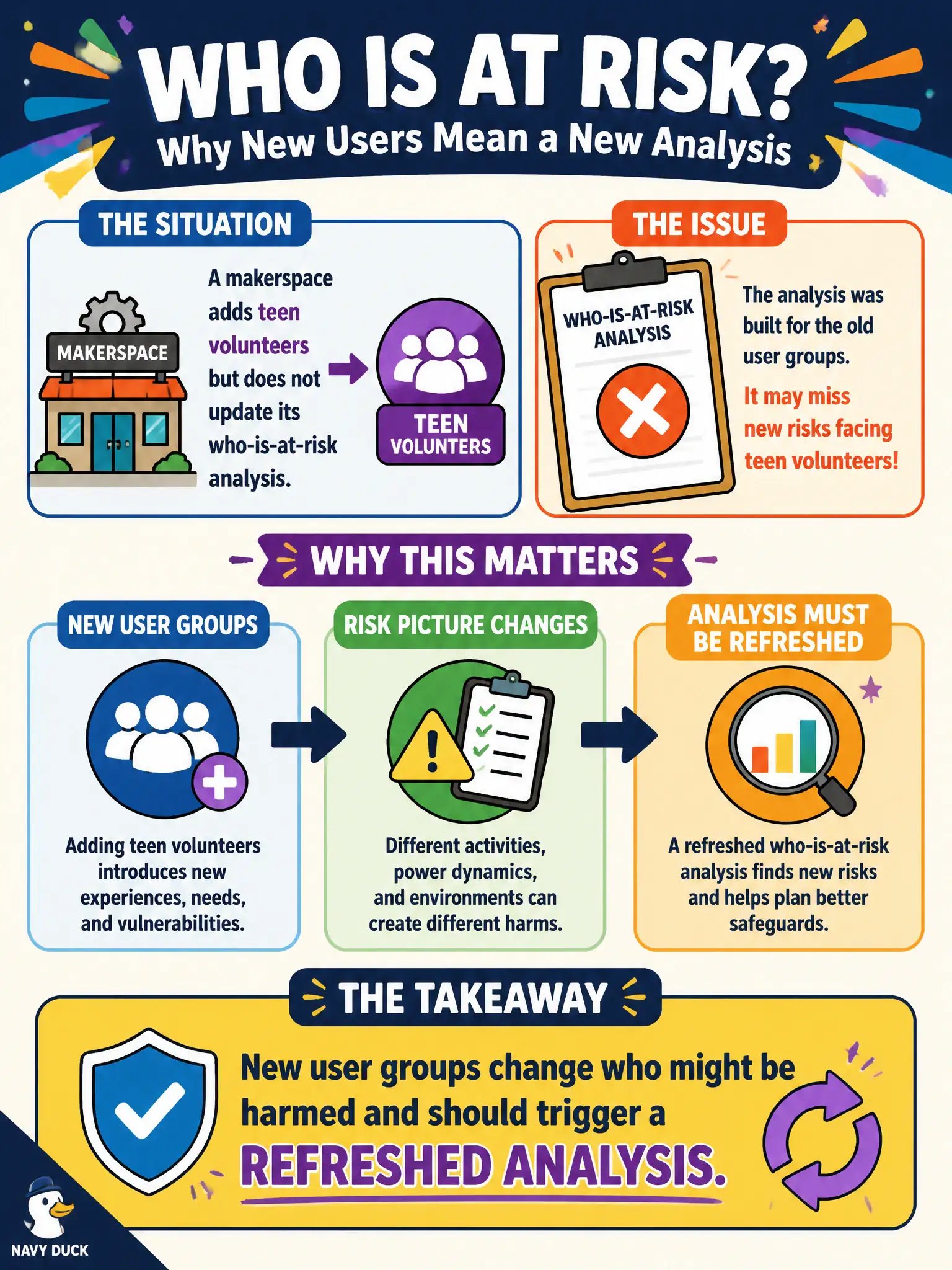
A makerspace adds teen volunteers but does not update its who-is-at-risk analysis. What identification update is required?
Select an answer to reveal the explanation.
Short Explanation
New faces mean new vulnerability profiles. Teens around power tools are not the same population you assessed for seasoned adults. When the crowd changes, rewrite who might get hurt.
Full Explanation
Introducing new populations—such as minors, visitors, or contractors—alters who might be harmed and often changes exposure severity and control needs. When a makerspace adds teen volunteers but does not update its who-is-at-risk analysis, the required identification update is to refresh analysis because new user groups change who might be harmed. Civic volunteer programs especially must account for age and experience differences.
Assuming teen volunteers inherit adult risk ratings automatically under volunteer handbooks ignores developmental and supervision differences. Claiming who-is-at-risk analysis never changes when tools stay in the same room freezes identification to layout and forgets people. Limiting worksheets to paid employees only excludes material exposed populations common in municipal makerspaces.
Exam caveat: population change is an identification trigger. Same tools ≠ same at-risk groups.
Operational check: update who-might-be-harmed to include teen volunteers; adjust supervision, training, and access controls; document residual risks; rebrief staff before teens begin using equipment. Before teen or other new volunteer cohorts start, update training matrices and access rules to match the refreshed who-is-at-risk analysis. Do not reuse adult-only briefings without review.