
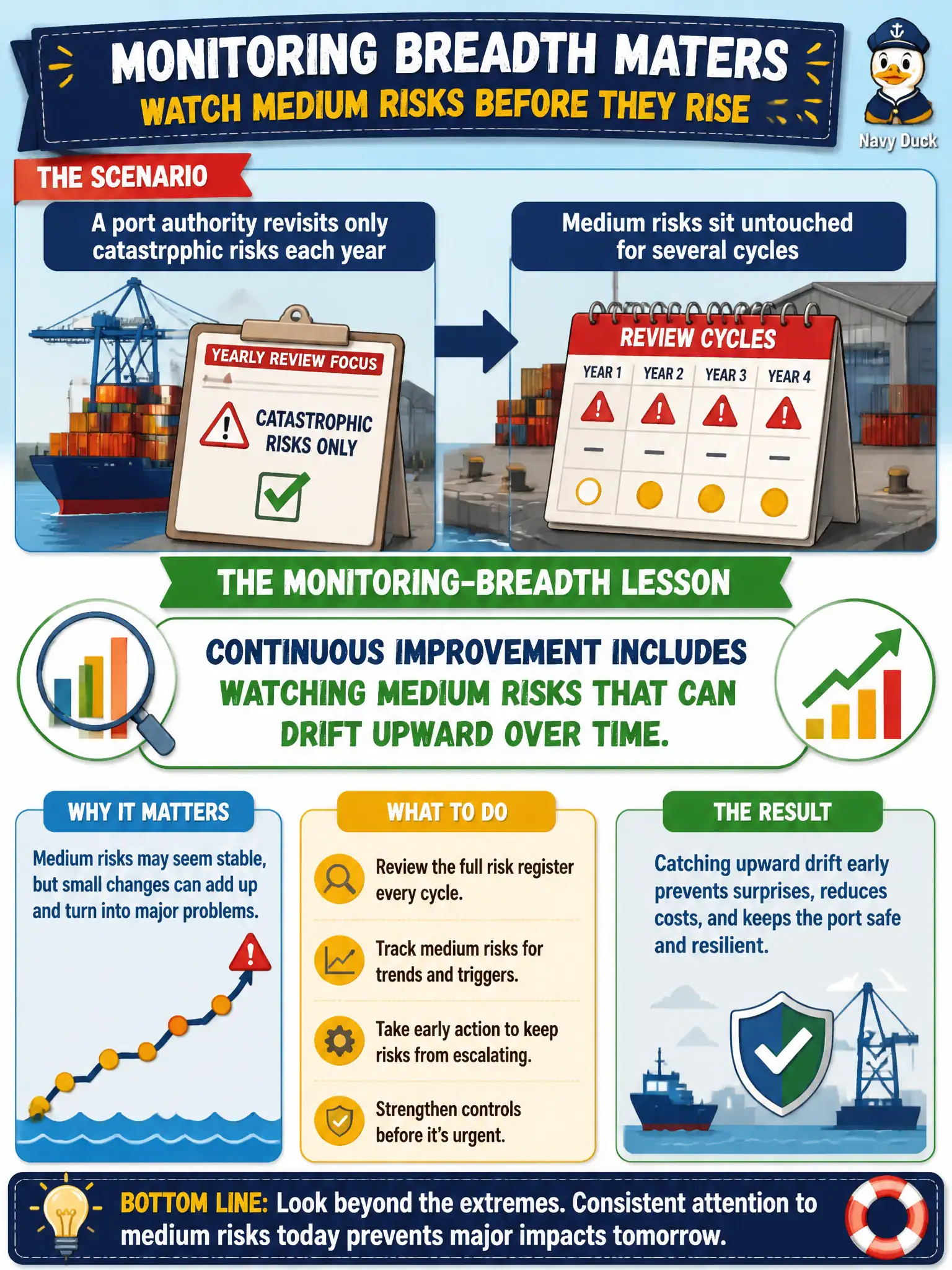
A port authority revisits only catastrophic risks each year while medium risks sit untouched for several cycles. What monitoring-breadth lesson applies?
Select an answer to reveal the explanation.
Short Explanation
Medium risks are the slow leaks—ignore them long enough and they become the flood. Catastrophe watch is necessary, but not enough. Keep an eye on the middle tier before it graduates to disaster.
Full Explanation
Risk profiles change as operations, environments, and controls age. Focusing exclusively on catastrophic risks each year while medium risks sit untouched for several cycles allows medium exposures to drift upward unnoticed. Continuous improvement includes watching medium risks that can escalate over time, not only the catastrophic tier on the municipal register.
Archiving medium risks permanently once labeled below catastrophic freezes a snapshot that may become wrong. Claiming only catastrophic items belong on any monitoring calendar by definition discards portfolio breadth. Assuming medium risks improve automatically if catastrophic risks are managed well invents spillover benefits without evidence.
Exam caveat: monitoring breadth matters. Catastrophic focus alone is not a complete continuous-improvement program.
Operational check: schedule periodic review of medium-rated risks; look for drift indicators (near misses, control failures, volume changes); escalate items that trend upward; report medium-tier movement alongside catastrophic status to leadership. Include a medium-risk watch list in the annual monitoring plan with lighter but real check-ins. Escalate any medium item that shows rising near misses or weakening controls into the active treatment agenda.