
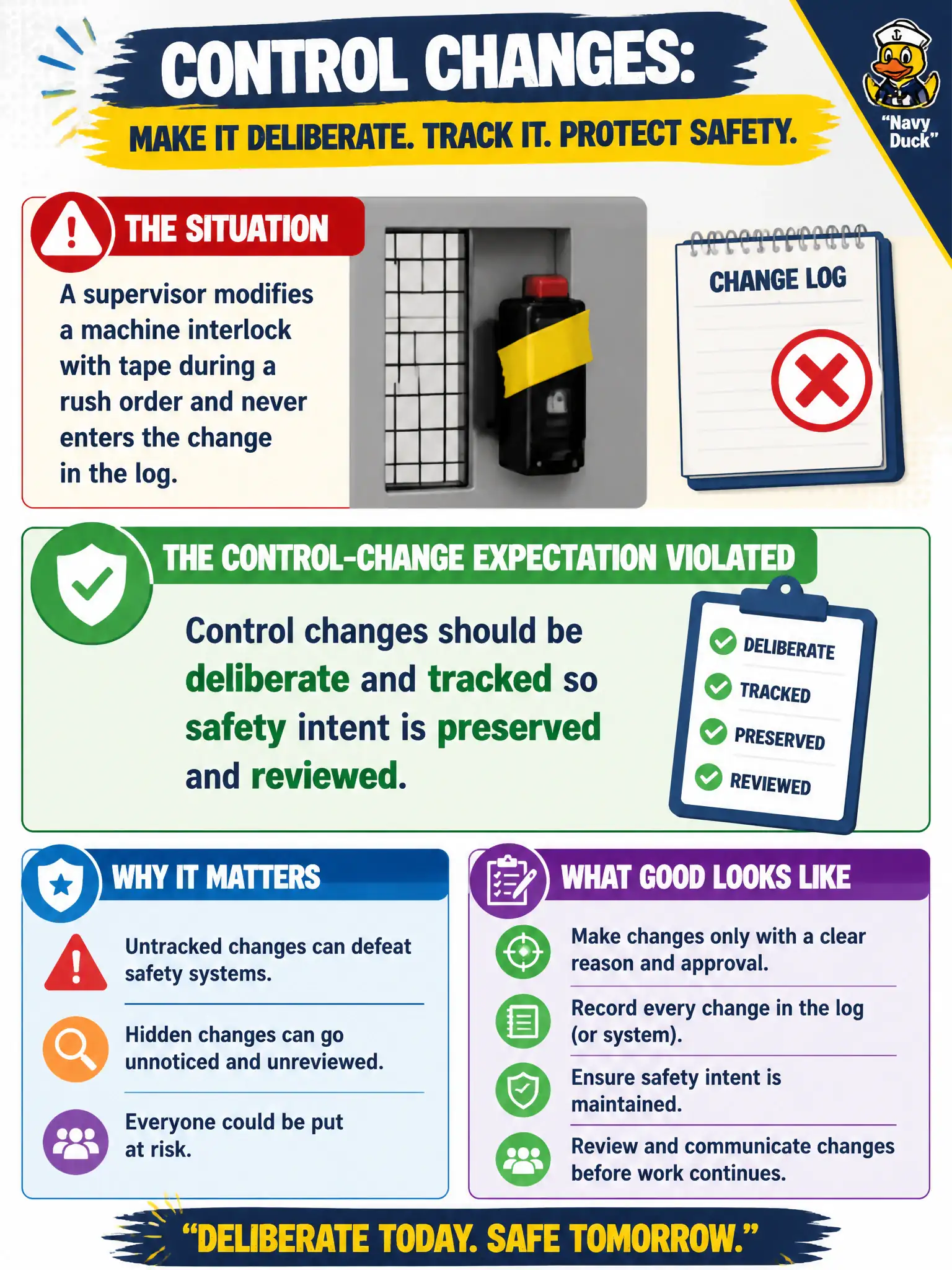
A supervisor modifies a machine interlock with tape during a rush order and never enters the change in the log. What control-change expectation was violated?
Select an answer to reveal the explanation.
Short Explanation
Tape is not a change-control system. If you alter a safeguard, write it down, get it approved, and make sure the “temporary” fix does not become invisible forever. Deliberate tracking beats silent improvisation.
Full Explanation
Controls that are altered without documentation create unrecognized residual risk. A supervisor who modifies a machine interlock with tape during a rush order and never logs the change violates the expectation that control changes should be deliberate and tracked so safety intent is preserved and reviewed. Informal bypasses under production pressure are a common path to serious harm in civic workshops and industrial settings.
Preferring tape modifications because they prove creativity under pressure romanticizes unsafe improvisation. Treating change logs as optional when a modification lasts less than one shift ignores that brief bypasses still disable protection. Allowing informal bypasses whenever production metrics improve that day subordinates safety controls to short-term output.
Exam caveat: temporary bypasses still require authorization, tracking, and restoration. Undocumented control changes are a continuous-improvement and safety failure.
Operational check: require documented authorization for interlock or guard bypasses; log start/stop and compensatory measures; verify restoration after the rush; audit for informal tape or jumper modifications during walkthroughs. Treat undocumented interlock bypasses as reportable control failures in the safety system, even if production finished on time. Restore protective function and record supervisory review before the next shift.