
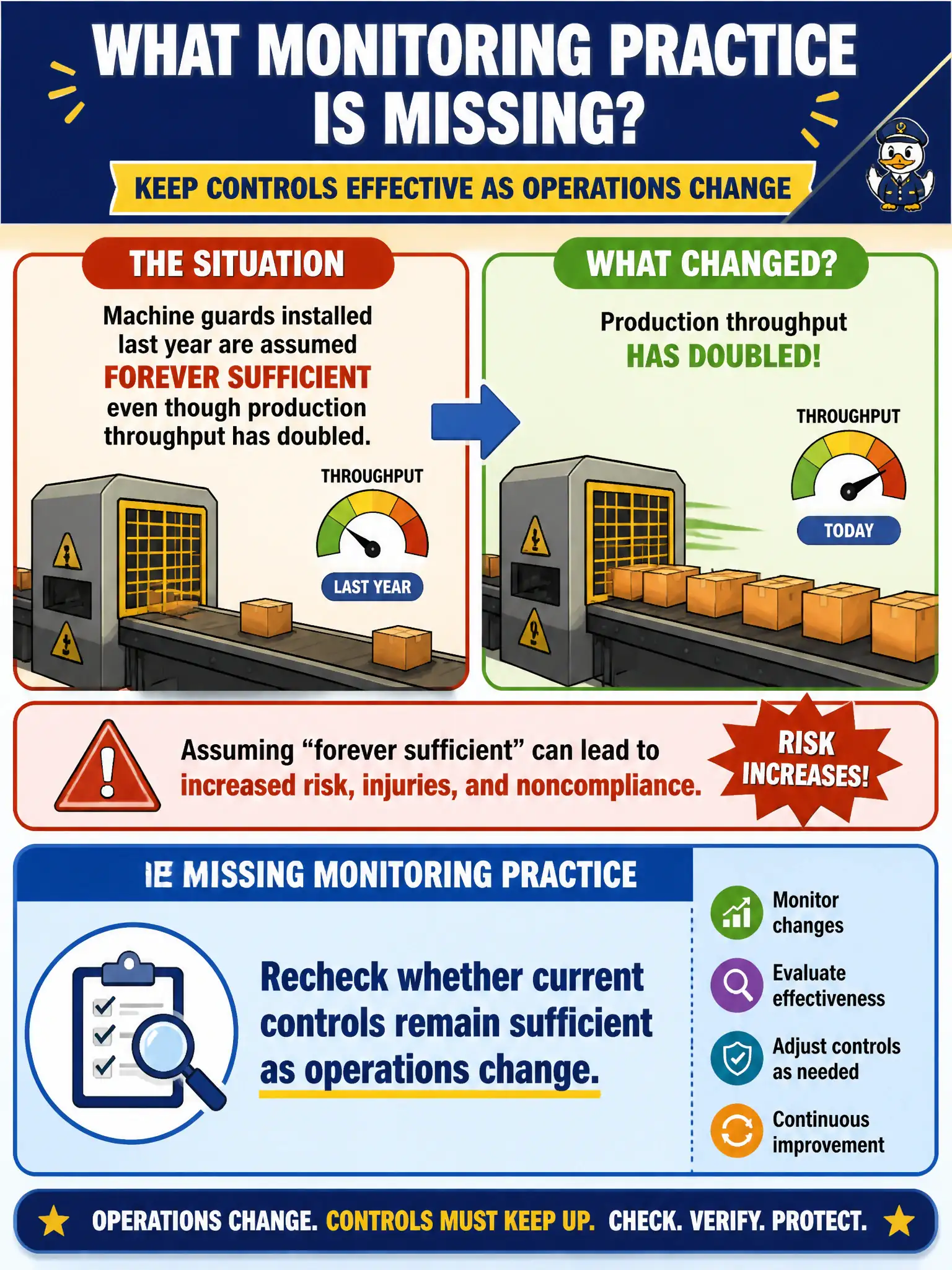
Machine guards installed last year are assumed forever sufficient even though production throughput has doubled. What monitoring practice is missing?
Select an answer to reveal the explanation.
Short Explanation
Last year’s guard was sized for last year’s pace. Double the throughput and you may have outgrown the protection like shoes from middle school. Recheck controls when the operation speeds up.
Full Explanation
Control sufficiency is relative to current operating conditions. Machine guards installed last year may be inadequate after production throughput doubles. Rechecking whether current controls remain sufficient as operations change is the monitoring practice civic and industrial sites need so yesterday’s safeguard is not assumed forever adequate.
Assuming guards never need review once install photos are filed treats documentation as ongoing assurance. Believing higher throughput always reduces risk because cycles finish faster confuses speed with exposure intensity and frequency. Limiting sufficiency reviews to software patches and excluding physical guards invents a false IT-only monitoring boundary.
Exam caveat: controls age relative to operations. Throughput and process changes are classic sufficiency-review triggers.
Operational check: tie significant production or staffing changes to a control sufficiency review; inspect guards under current cycle rates; document pass/fail and remediation; update monitoring schedules for similar equipment across municipal shops or contractors. Trigger sufficiency reviews when throughput, staffing, or product mix changes by defined thresholds, not only on anniversary dates. Photograph and re-validate guards under the new operating rate.