
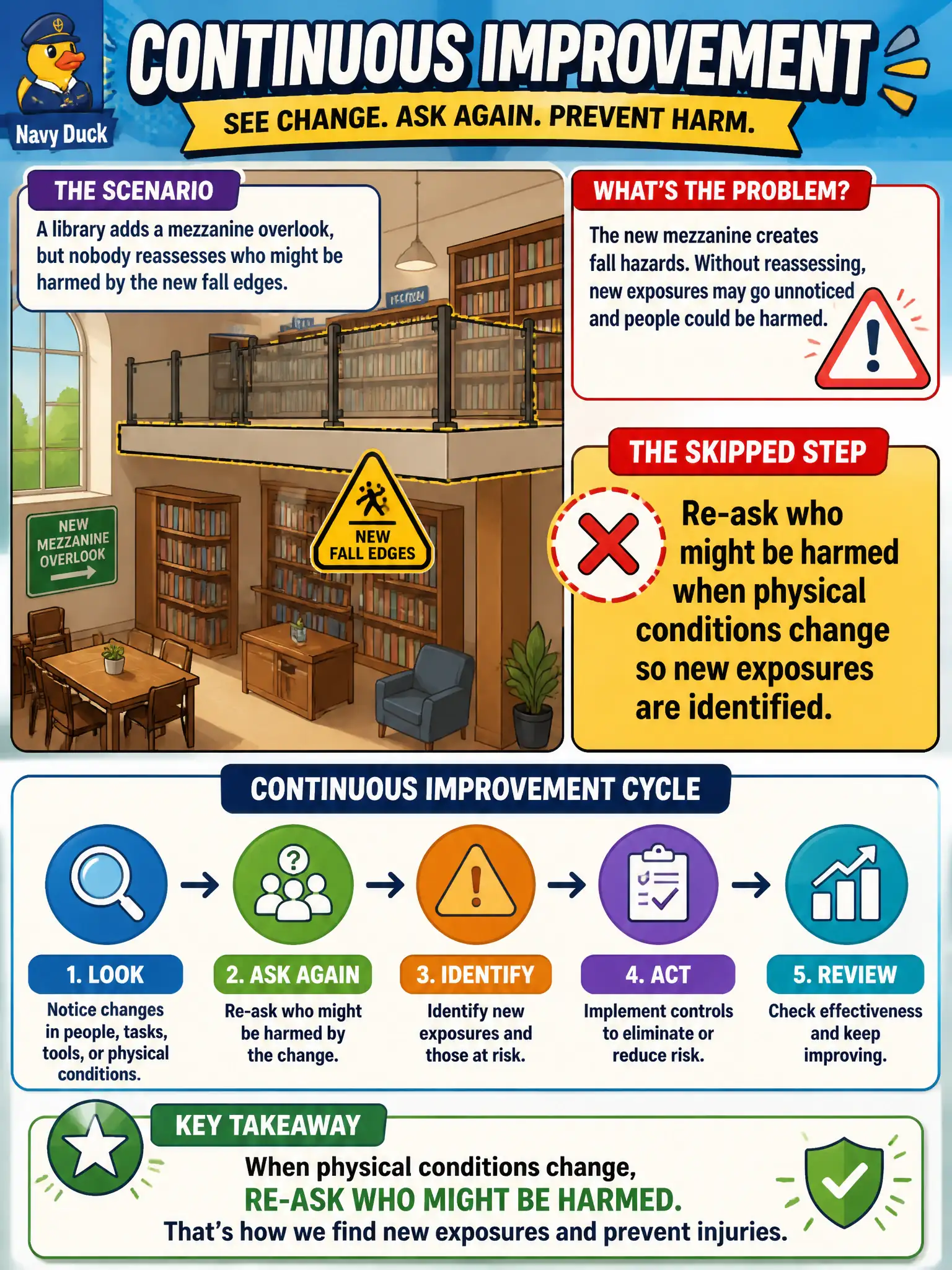
A library adds a mezzanine overlook, but nobody reassesses who might be harmed by the new fall edges. What continuous-improvement step was skipped?
Select an answer to reveal the explanation.
Short Explanation
New architecture equals new ways to get hurt. When the floor plan grows a mezzanine, ask again who could tumble—patrons, staff, contractors—not last year’s list. Change the space, refresh the who.
Full Explanation
Risk identification is iterative. Facility modifications introduce new populations, edges, and exposure patterns that prior approvals do not automatically cover. When a library adds a mezzanine overlook and nobody reassesses who might be harmed by new fall edges, the skipped continuous-improvement step is to re-ask who might be harmed when physical conditions change so new exposures are identified for civic visitors and staff.
Assuming mezzanines never create new harm profiles if the original floor plan was approved years ago freezes identification in the past. Claiming fall-edge risks only matter for construction crews, not later public visitors, truncates the exposed population. Treating who-might-be-harmed analysis as a one-time intake form that never needs updating contradicts continuous improvement.
Exam caveat: physical change is a trigger for refreshed identification. Prior approval is not perpetual coverage of new edges and users.
Operational check: after facility modifications, update who-might-be-harmed worksheets; walk the new mezzanine for visitor and staff exposures; assign controls or interim protections; record the reassessment date in the municipal risk file. Tie facility work orders that alter public circulation or fall exposures to an automatic who-might-be-harmed refresh task. Close the modification only after the refreshed identification is filed.