
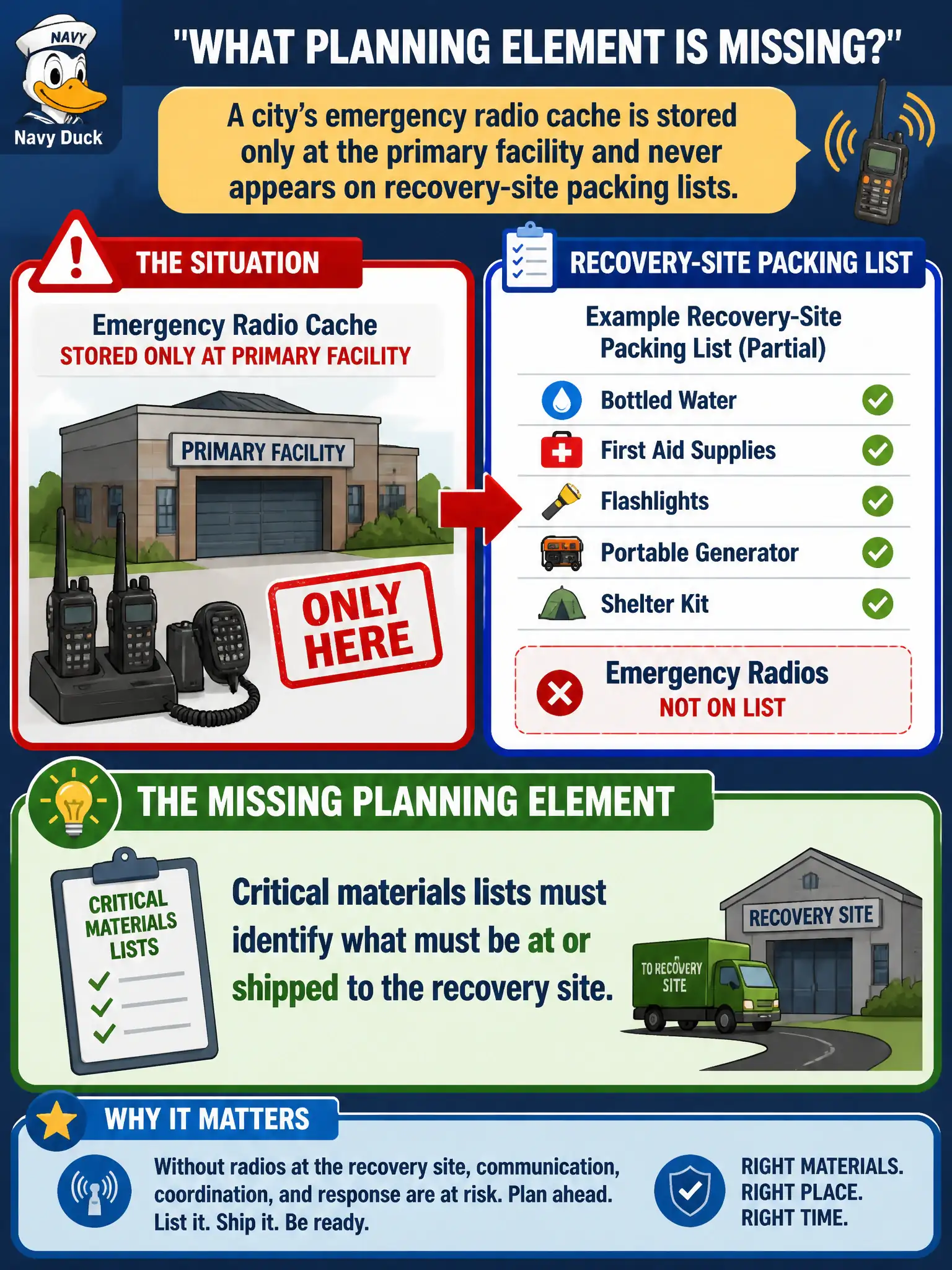
A city’s emergency radio cache is stored only at the primary facility and never appears on recovery-site packing lists. What planning element is missing?
Select an answer to reveal the explanation.
Short Explanation
If the radios live only at HQ and HQ is underwater, your recovery site goes silent. Packing lists are the shopping list for survival gear—write down what must move or already sit at the alternate. Critical gear that stays behind is gear you do not have.
Full Explanation
Recovery readiness includes identifying materials, equipment, and supplies that must be at or shipped to the recovery site. When a city’s emergency radio cache lives only at the primary facility and never appears on recovery-site packing lists, responders may reach an alternate site without communications gear. Critical materials lists that identify what must be present or transported close that planning gap.
Assuming radios at the primary site automatically teleport when a disaster is declared is magical thinking. Treating packing lists as optional if the alternate site already has Wi-Fi ignores that municipal radio caches may be essential when data networks fail. Keeping radios locked only at primary to prevent off-site misuse without an alternate access plan prioritizes loss prevention over emergency communications capability.
Exam caveat: packing and materials lists are part of DR logistics, not optional admin. Primary-only caches are correlated failure points.
Operational check: build a critical materials list for radios and similar caches; decide pre-stage at recovery site versus grab-and-go kits; assign owners; verify items appear on activation checklists and in the next alternate-site exercise.