
An annual drill walks staff through a hot-site script even though the real contract only provides a cold site. What exercise design problem does this create?
Select an answer to reveal the explanation.
Short Explanation
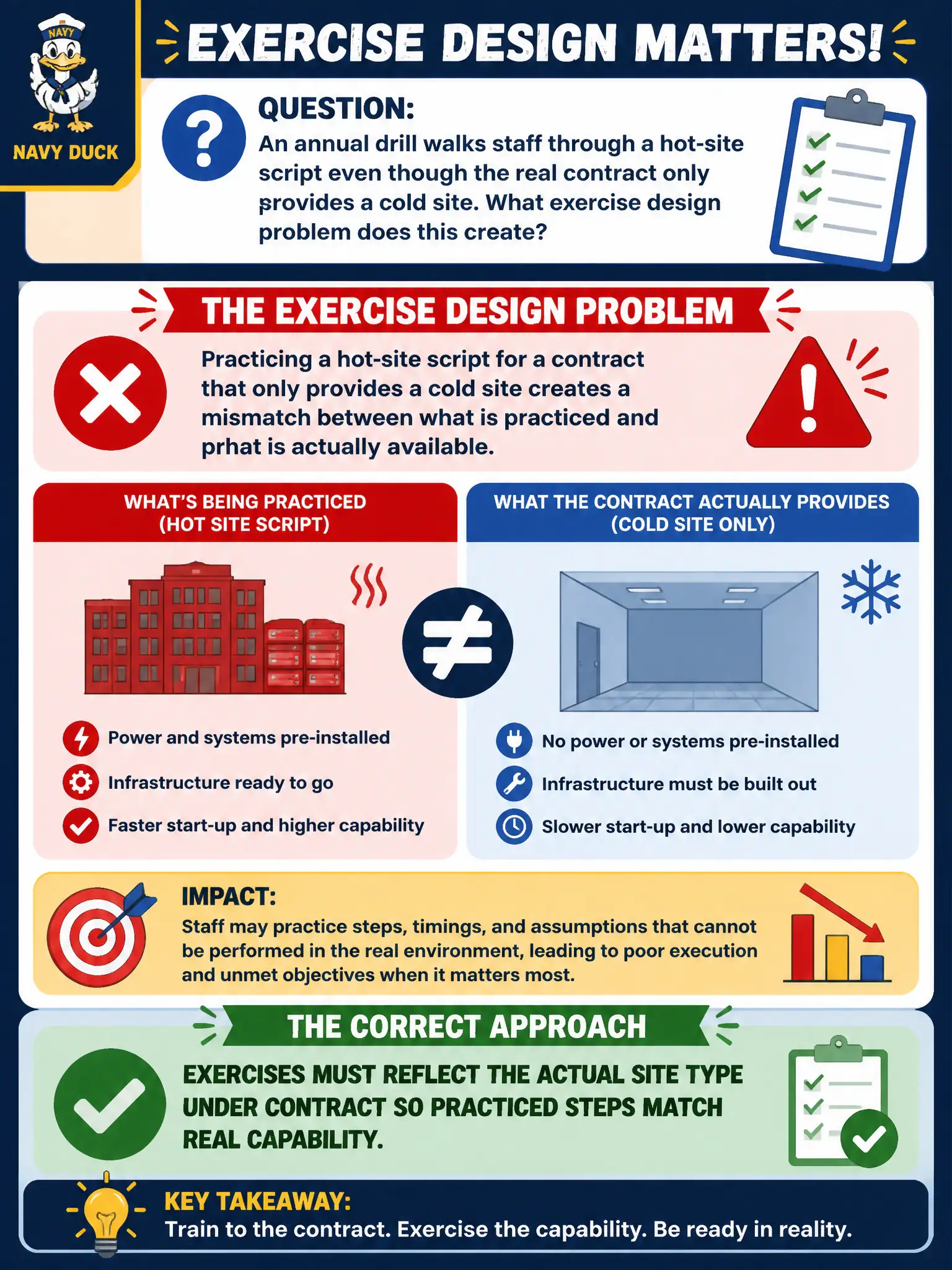
Practicing a Ferrari pit stop when you only leased a bicycle is theater, not readiness. Match the drill to the site you actually bought—cold means build-from-scratch steps, not pretend-everything-is-live. False scripts train the wrong muscle memory.
Full Explanation
Exercise realism depends on aligning scenarios with contracted recovery capabilities. An annual drill that walks staff through a hot-site script while the real contract only provides a cold site practices steps the organization cannot perform and breeds false confidence. Exercises must reflect the actual site type under contract so practiced steps match real municipal capability.
Using the most optimistic script to boost morale regardless of contracts trades honesty for temporary comfort. Believing cold-site contracts automatically upgrade during drills if participants role-play hot-site steps confuses training theater with capability change. Treating hot-site and cold-site procedures as interchangeable because both use building keys ignores setup time, equipment, and data differences that define site class.
Exam caveat: drill design must match contracted readiness. Optimistic role-play is not a capability upgrade.
Operational check: confirm current alternate-site contract class; rewrite drill objectives and scripts for cold/warm/hot reality; measure setup tasks that actually apply; brief leadership on results without claiming hot-site performance from a cold-site contract. Label every drill scenario with the actual contracted site class in the objectives statement. Disallow hot-site scripts when only cold-site capability is purchased, except as explicitly labeled aspirational training.