
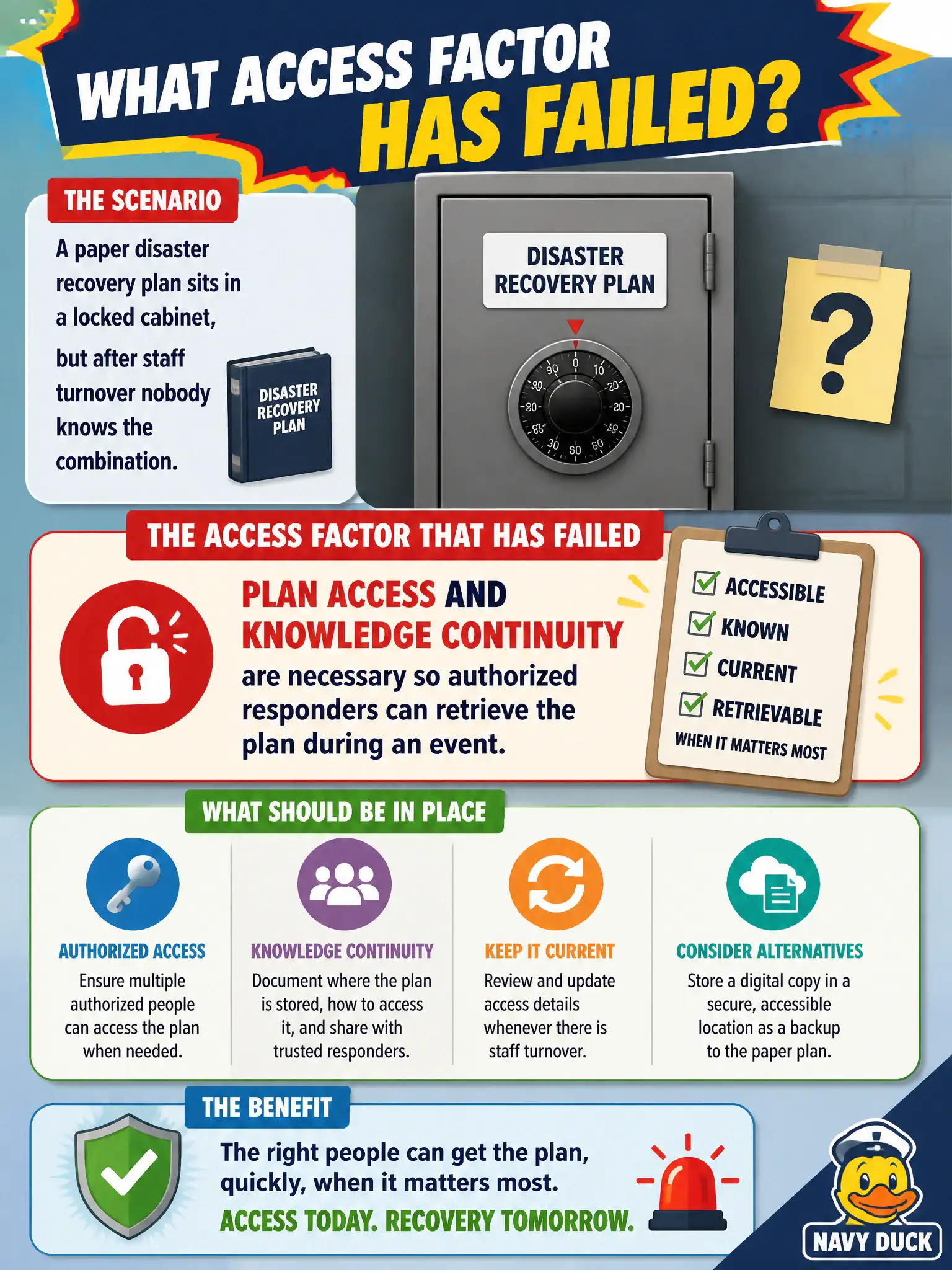
A paper disaster recovery plan sits in a locked cabinet, but after staff turnover nobody knows the combination. What access factor has failed?
Select an answer to reveal the explanation.
Short Explanation
A plan you cannot open is a plan you do not have. Turnover empties heads and combinations—so share access, back up digital copies, and keep recovery knowledge alive past one person’s badge. Continuity includes getting into the cabinet.
Full Explanation
Disaster recovery documents must remain retrievable by current responders. A paper plan in a locked cabinet whose combination is unknown after staff turnover fails access and knowledge continuity. Plan access procedures and continuity of who can retrieve the plan during an event are necessary so authorized municipal responders are not locked out of their own procedures.
Treating paper plans as intentionally inaccessible so competitors cannot steal recovery secrets overprioritizes secrecy relative to operational retrieval by authorized staff. Keeping combinations known only to the original author forever creates a single point of human failure. Assuming printed plans no longer require access procedures ignores keys, cabinets, distribution lists, and succession after turnover.
Exam caveat: availability to authorized responders beats archival security theater. Access control must still allow crisis retrieval.
Operational check: maintain a controlled list of who can access DR plan copies; store combinations or keys with dual control and succession; verify a backup responder can retrieve the plan without the original author; refresh access after each relevant turnover. Dual-control access to cabinets or encrypted offline copies, plus a succession note after turnover, keeps retrieval workable. Test that a backup duty officer can open the plan without the original author present.