
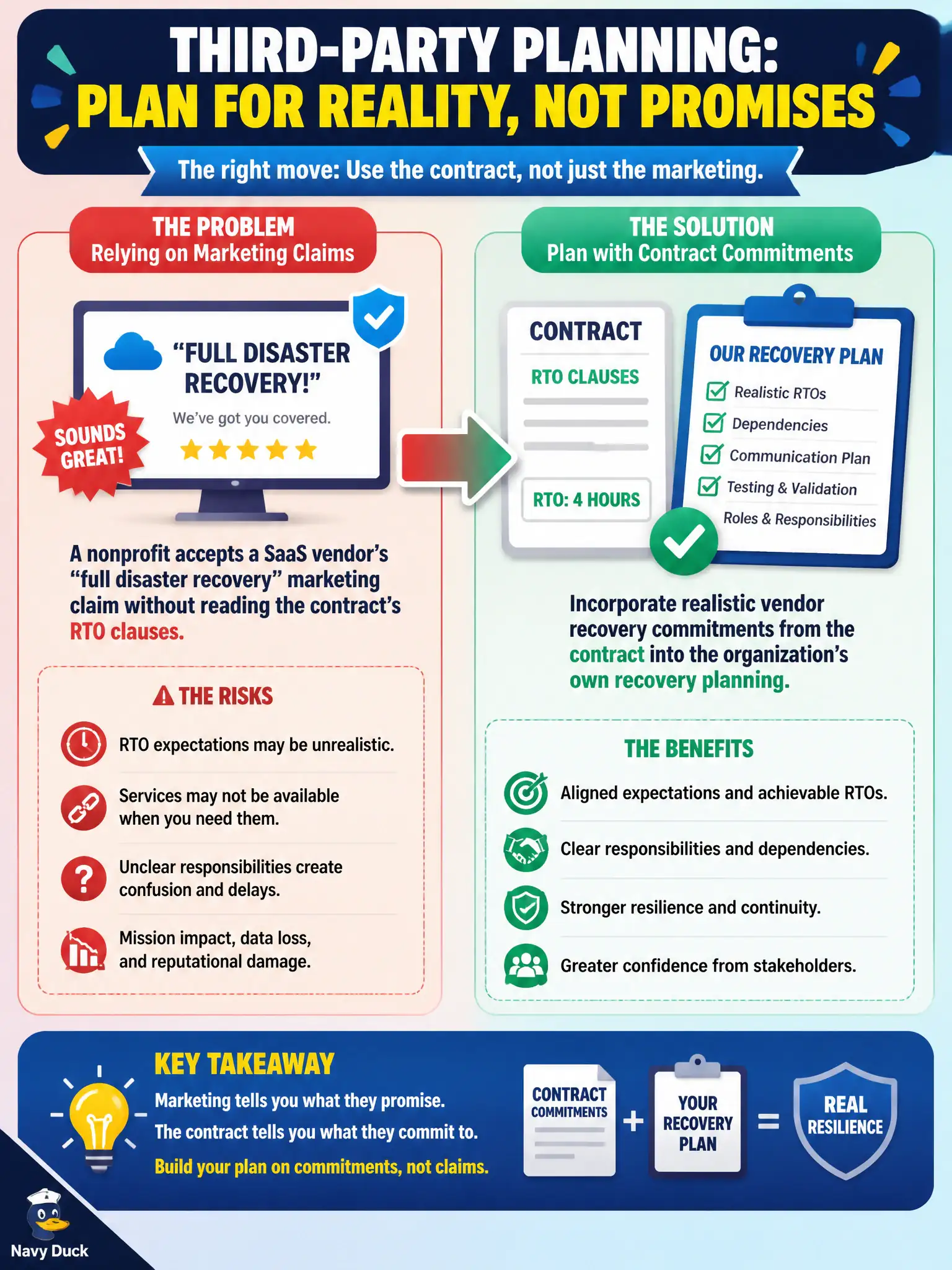
A nonprofit accepts a SaaS vendor’s “full disaster recovery” marketing claim without reading the contract’s RTO clauses. What third-party planning practice should replace that approach?
Select an answer to reveal the explanation.
Short Explanation
“Full disaster recovery” on a slide deck is not an RTO. Dig into the contract clock—then build your plan around what the vendor actually promises, not the brochure sunshine. Third-party recovery only counts if the hours match your needs.
Full Explanation
Vendor recovery marketing often exceeds contractual commitments. Planners must incorporate realistic vendor recovery commitments from the signed contract—RTO, RPO, responsibilities, and exclusions—into the organization’s own recovery planning rather than accepting brochure claims. For a nonprofit dependent on SaaS, contract-grounded planning prevents false confidence about citizen-facing or mission systems.
Treating marketing brochures as binding recovery times that override the signed schedule elevates advertising over enforceable terms. Ignoring vendor RTOs because nonprofits are exempt from dependency planning invents a false exemption. Assuming every SaaS vendor restores critical data within fifteen minutes by industry custom substitutes folklore for contract evidence.
Exam caveat: marketing ≠ contract. CRMC third-party DR items expect planning from enforceable commitments.
Operational check: extract RTO/RPO and recovery clauses from the SaaS agreement; map them into the nonprofit’s BIA and DR plan; identify gaps versus business needs; escalate residual risk or negotiate stronger terms before claiming full vendor DR coverage. File excerpted contract RTO/RPO clauses next to the internal DR objectives they support, and escalate gaps where business needs are tighter than vendor commitments. Brochure language should not appear in capability statements.