
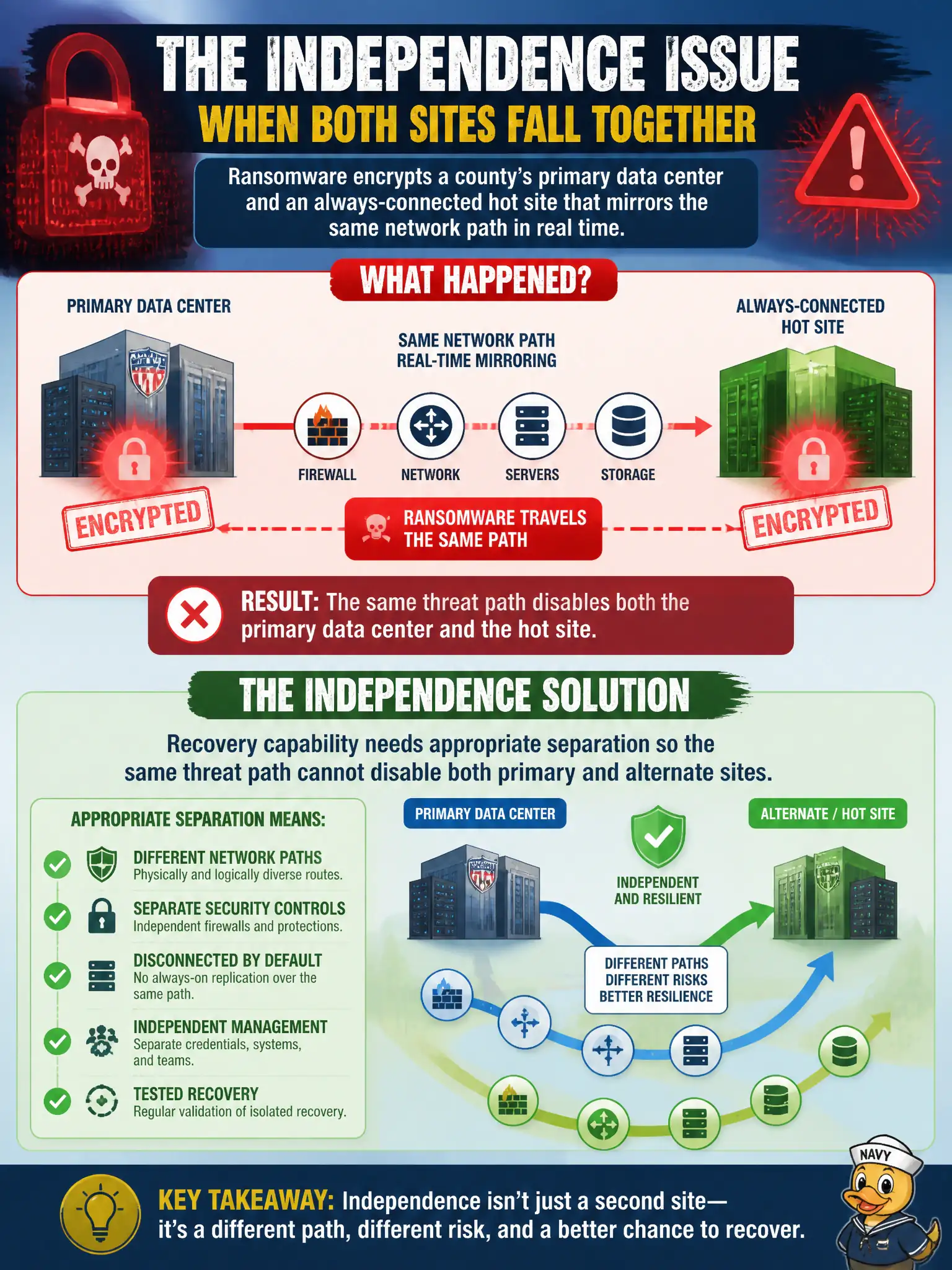
Ransomware encrypts a county’s primary data center and an always-connected hot site that mirrors the same network path in real time. What independence issue does this expose?
Select an answer to reveal the explanation.
Short Explanation
If your hot site drinks from the same infected straw as production, ransomware gets a two-for-one special. Separation is not paranoia—it is why you paid for a second site. Isolate recovery paths so one blast radius cannot wipe both.
Full Explanation
Hot-site value depends on surviving the same event that takes down the primary environment. When ransomware encrypts a county’s primary data center and an always-connected hot site that mirrors the same network path in real time, the independence failure is clear: recovery capability needs appropriate separation so the same threat path cannot disable both primary and alternate sites. Geographic or logical isolation, delayed replication, or segmented admin paths may be required for civic cyber resilience—not only synchronous mirroring.
Claiming always-connected hot sites are immune to ransomware if the vendor logo appears on the rack doors confuses branding with threat separation. Interpreting identical encryption of both sites as proof the hot site is working as designed mistakes replication fidelity for recovery independence. Asserting independence only matters for flood risk, not cyber threat paths, ignores modern municipal threat reality.
Exam caveat: diversity applies to cyber paths as well as physical hazards. Always-on mirroring can propagate malware as efficiently as data.
Operational check: review replication and admin connectivity between primary and hot site; identify shared identity, network, or backup paths; introduce compensating controls (segmentation, immutable/offline copies, delayed replicas) and document residual correlated-failure risk for leadership.