
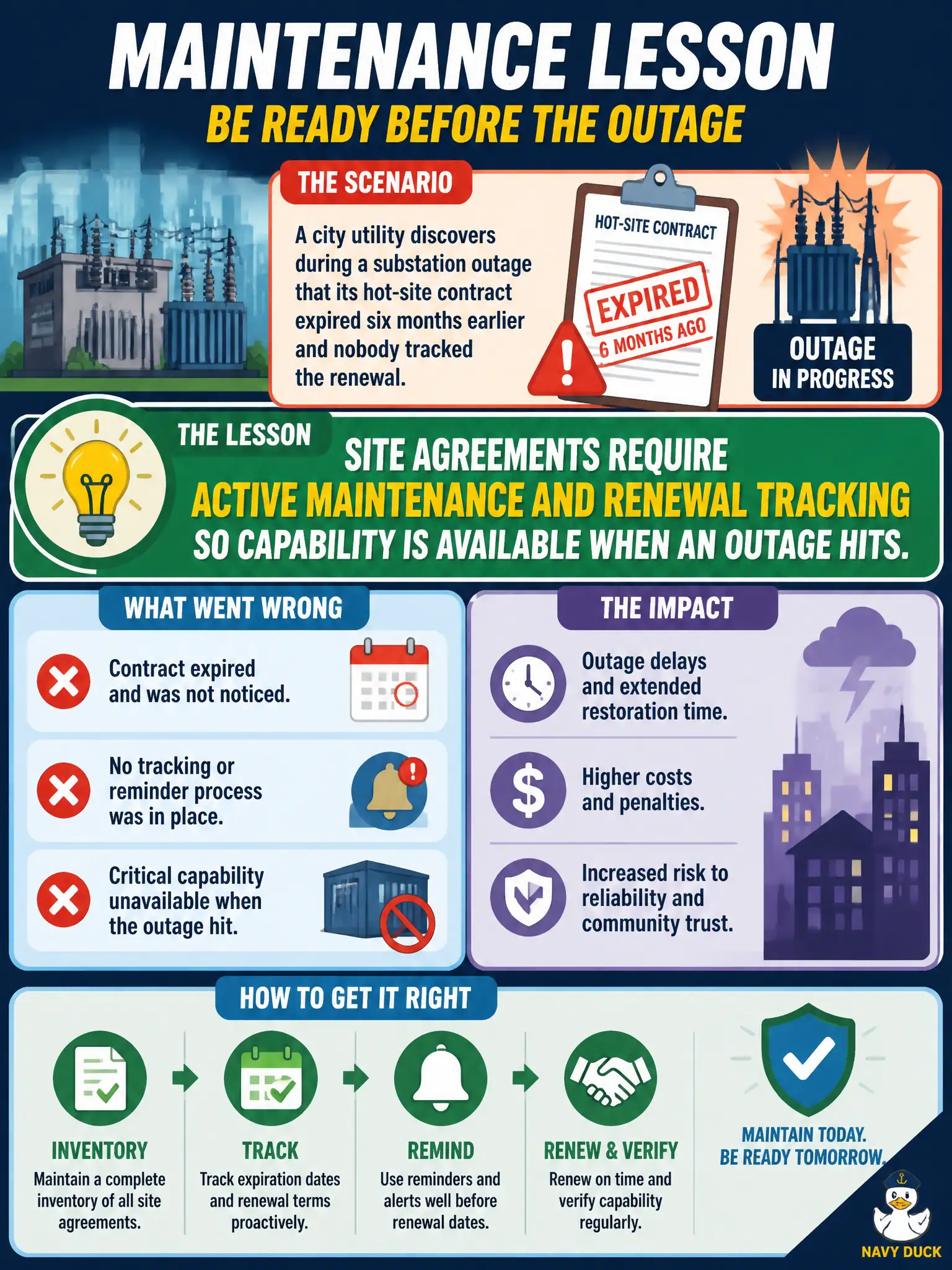
A city utility discovers during a substation outage that its hot-site contract expired six months earlier and nobody tracked the renewal. What maintenance lesson should leadership take from the lapse?
Select an answer to reveal the explanation.
Short Explanation
A hot site on paper that nobody renewed is just a binder and a hope. Treat the contract like a smoke detector battery—if you don’t check the date, it fails the day you need it. Active renewal tracking keeps the recovery door unlocked.
Full Explanation
Disaster recovery site arrangements are not set-and-forget procurements. Hot-site and alternate-site contracts require active maintenance and renewal tracking so capability is available when an outage hits. When a city utility discovers during a substation outage that its hot-site contract expired months earlier with no renewal tracked, leadership should treat calendar ownership, renewal alerts, and periodic capability confirmation as part of municipal DR readiness—not optional paperwork.
Assuming hot-site contracts are self-renewing so calendar reminders waste staff time leaves the city exposed to silent expiry. Making renewal the vendor’s sole duty based on an old purchase order abandons buyer accountability for continuity capability. Believing expired contracts still obligate the vendor during disasters under “common courtesy” confuses goodwill with enforceable recovery rights.
Exam caveat: contracted recovery capability must be currently in force. CRMC items often pair an outage discovery with an unnoticed contract lapse.
Operational check: inventory all alternate-site and mutual-aid agreements; record renewal dates and owners; set advance reminders; verify the contract is active before declaring DR readiness in exercises or board materials.