
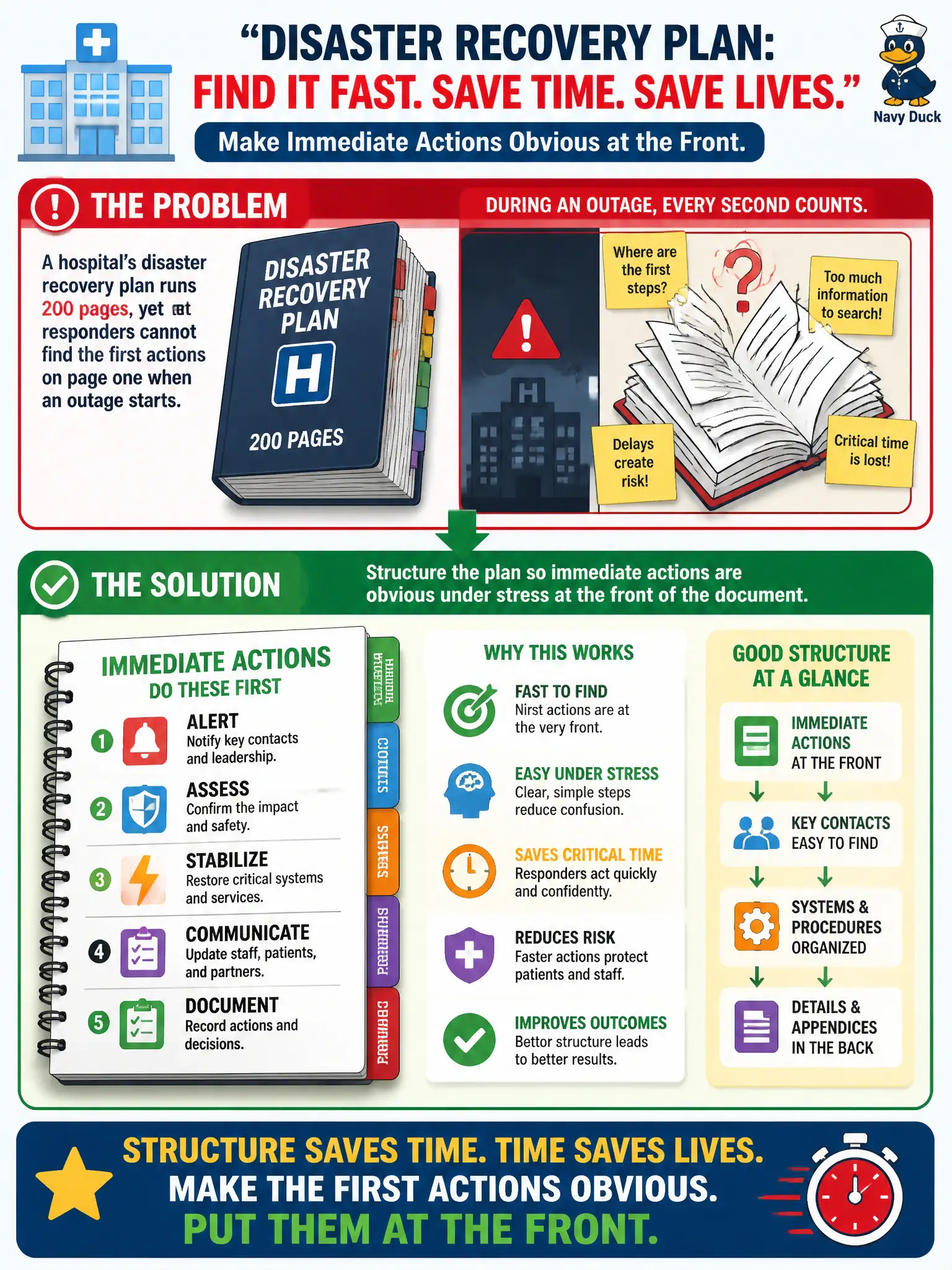
A hospital’s disaster recovery plan runs 200 pages, yet responders cannot find the first actions on page one when an outage starts. What structural improvement is most needed?
Select an answer to reveal the explanation.
Short Explanation
A 200-page plan that hides “do this now” is a doorstop, not a playbook. Under stress, people need the first moves up front—not a scavenger hunt through appendices. Lead with clear immediate actions, then store the deep detail behind them.
Full Explanation
Disaster plans must be usable when time pressure and cognitive load are highest. A 200-page hospital DR document that buries first actions fails responders who need immediate steps on page one. Structuring the plan so immediate actions are obvious under stress at the front of the document improves operational use without discarding necessary appendices that belong later.
Adding more appendices so every policy citation appears before any operational step worsens findability under outage stress. Removing all action lists and relying on executives to improvise from memory abandons procedure when improvisation is most dangerous. Publishing the plan only as a scanned image so page numbers cannot drift creates an inaccessible artifact rather than a usable runbook.
Exam caveat: plan usability under stress is distinct from plan completeness. CRMC favors clear immediate-action fronts over policy-first binders.
Operational check: rewrite the opening section as a one- to two-page immediate-action checklist for priority clinical systems; move citations to appendices; time a responder finding first actions in a drill; revise until retrieval is reliable without hunting. Place a laminated immediate-action card or first-page checklist with the plan’s primary copy used by house supervisors. Completeness in appendices must never bury the first five actions responders need.