
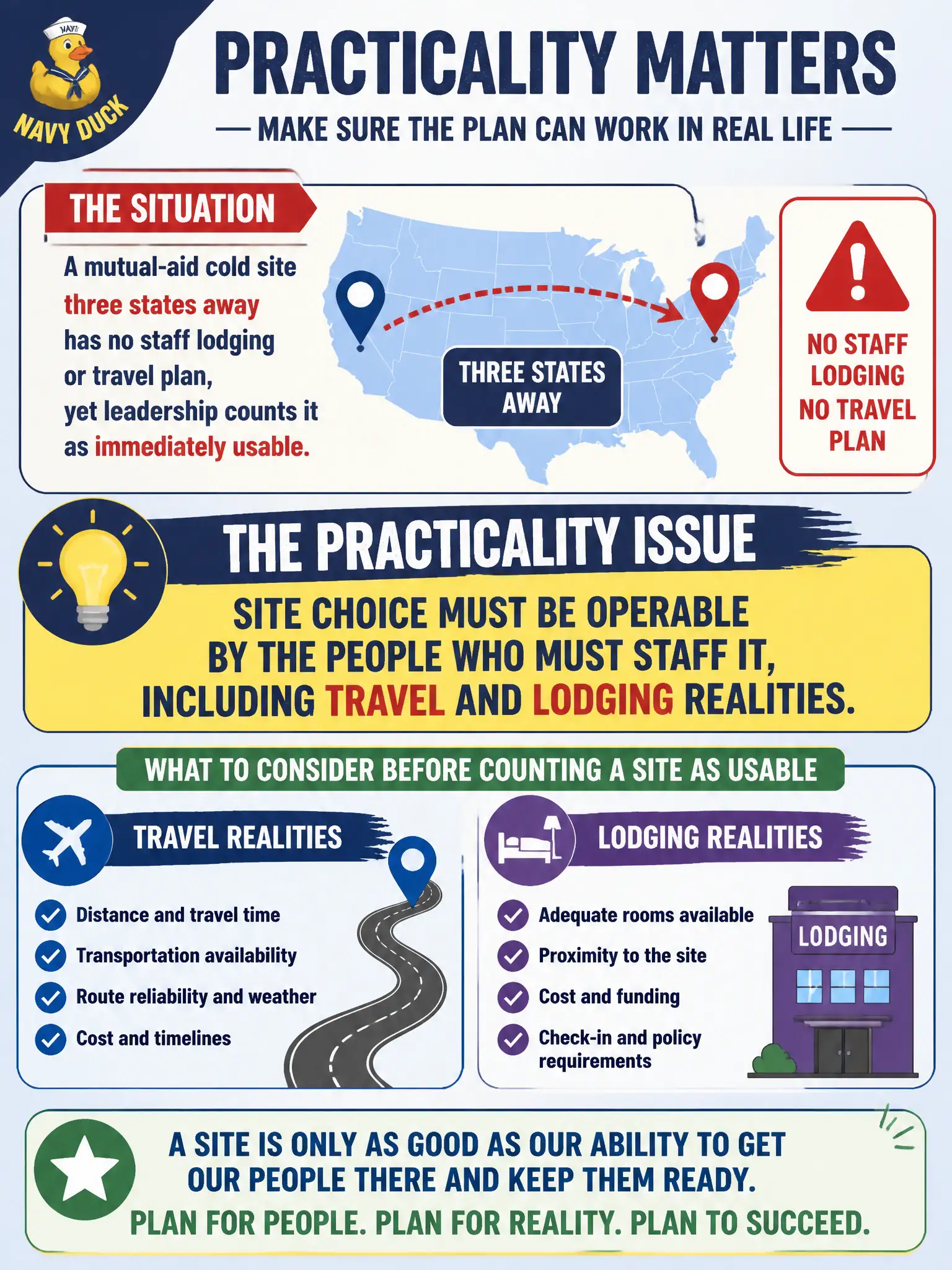
A mutual-aid cold site three states away has no staff lodging or travel plan, yet leadership counts it as immediately usable. What practicality issue should be raised?
Select an answer to reveal the explanation.
Short Explanation
A spare kitchen three states away does not help dinner tonight if the cooks cannot get there or sleep. Paper MOUs do not teleport people. Make the site operable for the humans who must run it.
Full Explanation
Alternate sites are only useful if designated staff can reach, enter, and sustain operations there. A mutual-aid cold site three states away with no staff lodging or travel plan is not immediately usable for a municipal workforce despite a paper memorandum. Site choice must be operable by the people who must staff it, including travel and lodging realities.
Claiming distance never matters if a memorandum of understanding exists on paper confuses legal courtesy with operational logistics. Eliminating mutual aid because any remote site is automatically unusable overcorrects; remote sites can work with planned travel support. Requiring staff to self-fund emergency travel without documenting lodging support shifts unplanned personal burden onto responders and risks no-shows.
Exam caveat: geographic options must be paired with staffing practicality. MOUs alone do not move people.
Operational check: for each remote recovery option, document travel time, lodging, access credentials, and who deploys; include those logistics in activation checklists; exercise a deployment tabletop before counting the site as ready for citizen-service recovery. Cost the travel and lodging package into activation planning so remote mutual aid is not an unfunded assumption. If logistics cannot be met in required time, downgrade the site’s credited readiness accordingly.