
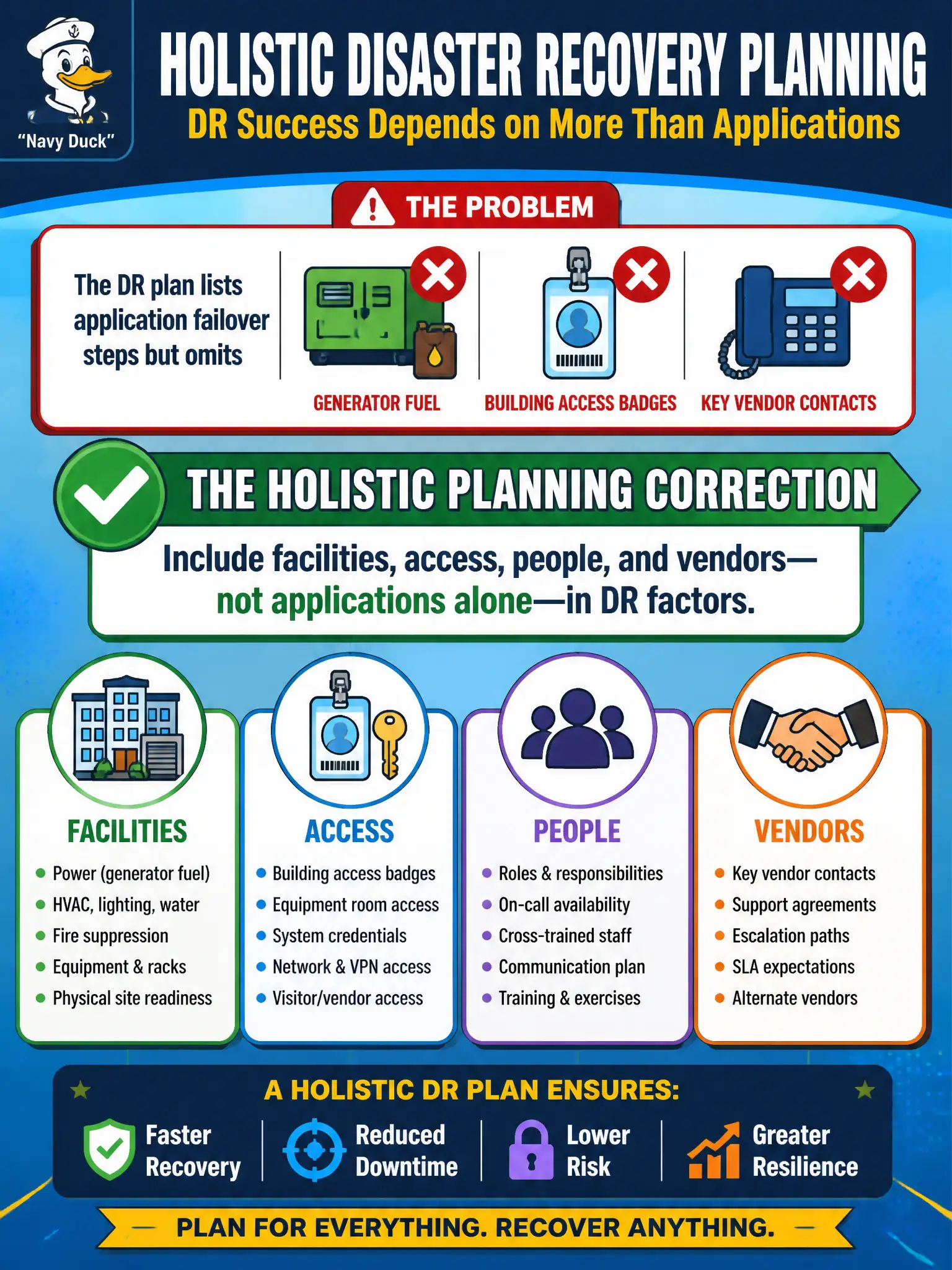
The DR plan lists application failover steps but omits generator fuel, building access badges, and key vendor contacts. What holistic planning correction is needed?
Select an answer to reveal the explanation.
Short Explanation
Apps do not walk themselves into a dark building with empty fuel tanks and locked doors. Recovery needs power, access, people, and vendors too. Widen the plan past the server list.
Full Explanation
Holistic disaster recovery planning addresses facilities, utilities, physical and logical access, people, and vendors—not application failover scripts alone. A plan that lists software steps but omits generator fuel, building access badges, and key vendor contacts will stall when civic responders cannot enter, power, or support the recovered environment. Including facilities, access, people, and vendors among DR factors corrects that narrowness.
Limiting DR documentation to software restart scripts only ignores the physical and human conditions apps need. Assuming badges and fuel appear automatically whenever apps fail over treats logistics as magic. Removing human staffing considerations because DR is purely a technology checklist erases who must actually operate recovered municipal services.
Exam caveat: technology failover is necessary but not sufficient. CRMC holistic DR items expect people, facilities, and vendors in scope.
Operational check: extend the DR checklist to fuel, badges, keys, lodging/travel if needed, and vendor escalation contacts; assign owners; verify each item in the next alternate-site exercise for priority civic functions. Walk the alternate site with facilities and security partners to validate fuel, badges, and vendor reachability alongside app steps. Close gaps before the next declared exercise counts as a full municipal DR rehearsal.