
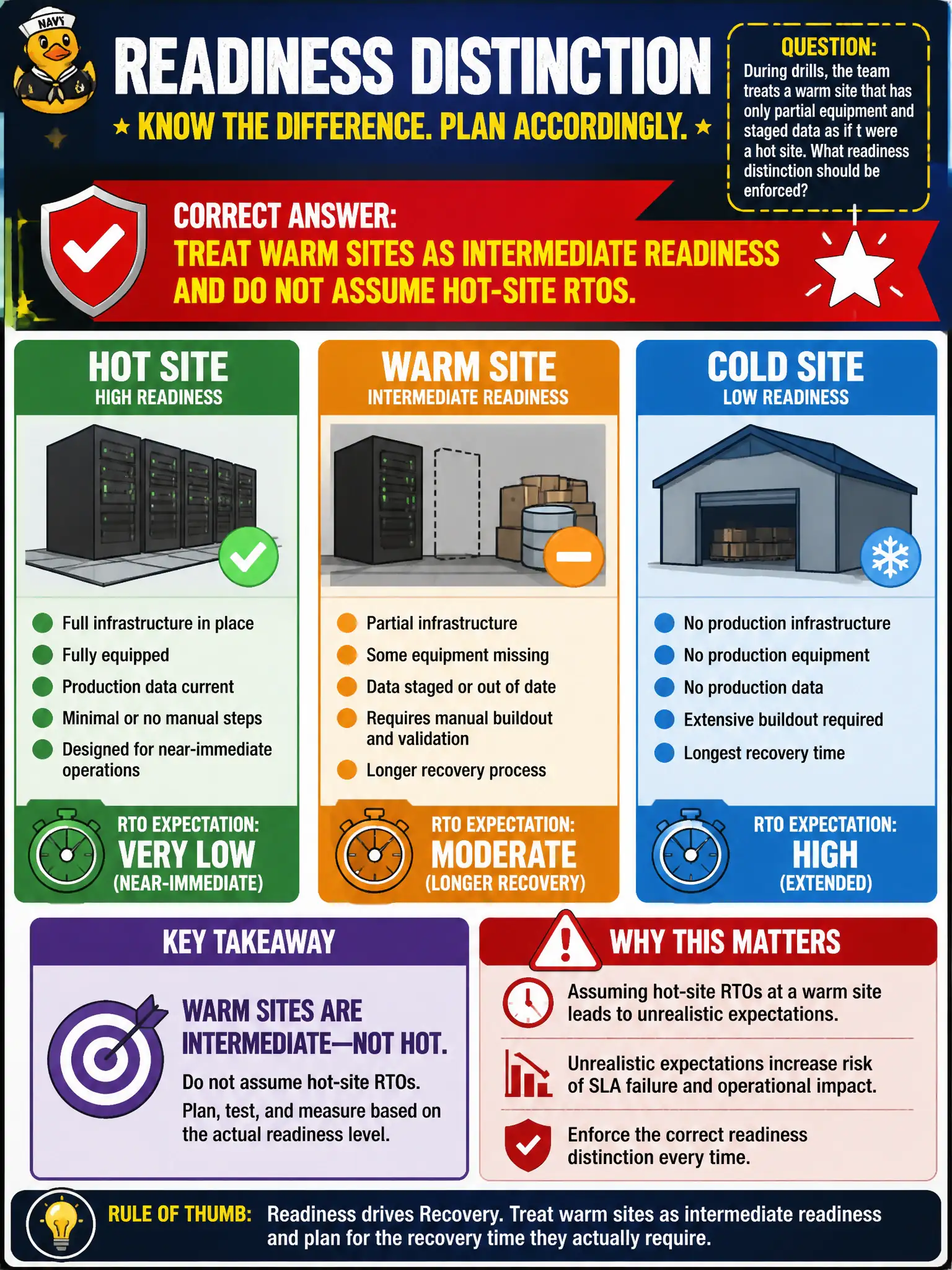
During drills, the team treats a warm site that has only partial equipment and staged data as if it were a hot site. What readiness distinction should be enforced?
Select an answer to reveal the explanation.
Short Explanation
A warm site is half-packed luggage—you are closer than cold, but you are not wheels-up. Do not run the stopwatch like a hot site if gear and data still need finishing. Match the drill RTO to intermediate readiness.
Full Explanation
Warm sites sit between cold and hot readiness: some equipment and data staging exist, but additional setup work remains before full operations. Treating a warm site with only partial equipment and staged data as if it were a hot site during drills invents recovery speed the site cannot deliver. Enforcing that warm sites are intermediate readiness—and not assuming hot-site RTOs—keeps municipal exercise metrics honest.
Treating warm and hot sites as identical so drill clocks ignore setup work falsifies timing. Downgrading every hot site to warm status whenever any cable is missing overreacts to minor defects instead of managing true readiness class. Skipping timing metrics in warm-site drills because intermediate sites need no targets abandons measurement when setup duration is exactly what must be learned.
Exam caveat: warm ≠ hot. CRMC DR taxonomy items punish collapsing intermediate readiness into hot-site assumptions.
Operational check: list remaining setup tasks at the warm site; time those tasks in drills; set RTOs that include setup; brief leadership that warm-site exercises measure build-out work, not instant failover. Document warm-site setup tasks as timed work packages in the drill after-action report. Do not report hot-site RTO achievement unless the contracted and configured capability truly matches that class.