
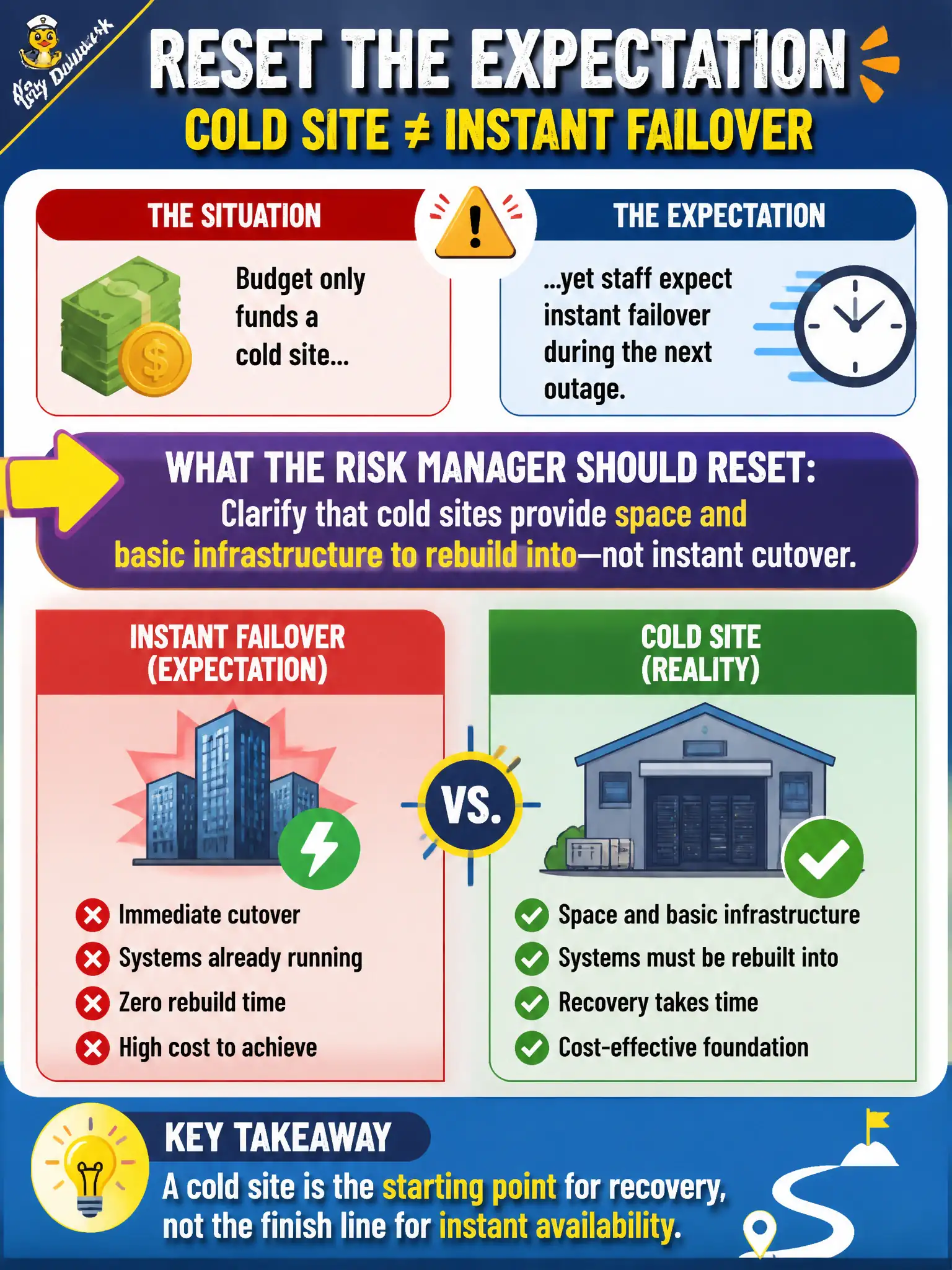
Budget only funds a cold site, yet staff expect instant failover during the next outage. What expectation should the risk manager reset?
Select an answer to reveal the explanation.
Short Explanation
A cold site is an empty stage—you still have to haul in the band and plug things in. Instant failover is a hot-site fantasy on a cold-site budget. Reset expectations to rebuild time, not flip-a-switch time.
Full Explanation
Cold sites typically supply facility space and foundational infrastructure so operations can be rebuilt—not instant cutover. When budget only funds a cold site yet staff expect instant failover, the risk manager must reset expectations: cold sites provide space and basic infrastructure to rebuild into, with longer setup times than hot or warm arrangements. Clear expectation management prevents civic teams from planning citizen-service recovery against capability the contract does not buy.
Promising hot-site failover timing while delivering only an empty cold site creates a dangerous capability gap. Telling staff that cold sites automatically mirror production every minute invents hot-site attributes the cold site does not have. Eliminating all alternate sites because expectation gaps cannot be managed avoids communication work by removing recovery options entirely.
Exam caveat: site type determines realistic RTO bands. CRMC tests whether candidates match expectations to cold/warm/hot definitions.
Operational check: brief stakeholders on cold-site rebuild timelines; revise DR procedures and RTOs to match cold-site reality; document what must be shipped, installed, and configured before civic services resume at the alternate location.