
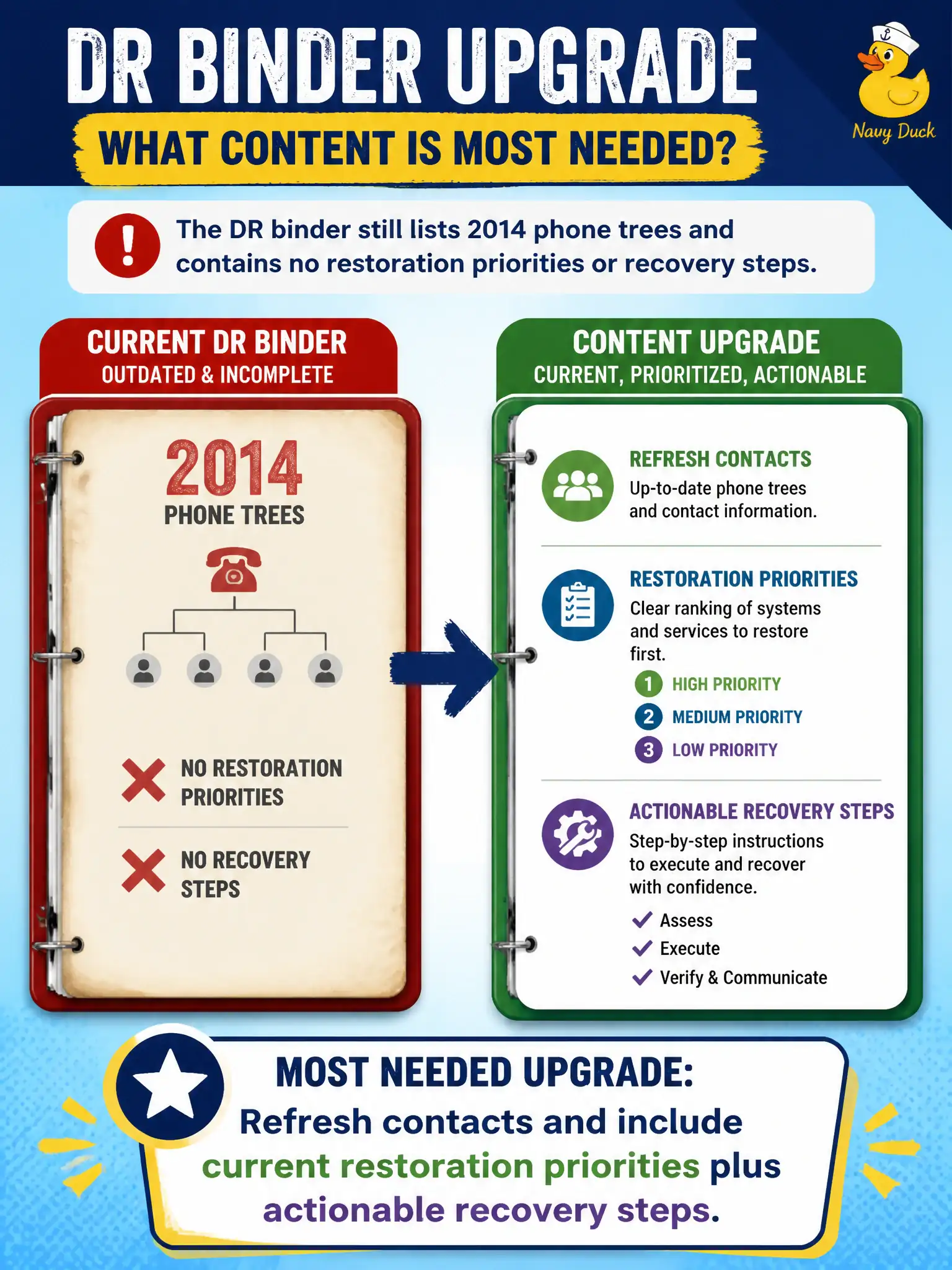
The DR binder still lists 2014 phone trees and contains no restoration priorities or recovery steps. What content upgrade is most needed?
Select an answer to reveal the explanation.
Short Explanation
A phone book from 2014 without a 'what to restore first' list is a relic, not a plan. People need current contacts and a real recovery sequence. Update the binder so it works on game day.
Full Explanation
Usable disaster recovery plans require current notification contacts, clear restoration priorities, and actionable recovery steps. A binder that still lists 2014 phone trees and omits ordered recovery actions cannot guide municipal responders under time pressure. Refreshing contacts and including current restoration priorities plus actionable recovery steps is the content upgrade most needed.
Keeping only nostalgic contact lists and omitting ordered recovery actions preserves history without operational utility. Replacing the binder with a single motivational slogan about teamwork substitutes culture messaging for procedures. Archiving the binder permanently so outdated phone trees cannot confuse anyone removes a broken artifact without creating a usable replacement plan.
Exam caveat: contacts alone are not a DR plan. CRMC expects priorities and steps alongside reachability information.
Operational check: verify every contact against current roster and on-call lists; add restoration priority order tied to BIA; write first-hour and subsequent recovery steps; place an accessible current copy where responders can retrieve it during outages. After the refresh, have an off-shift responder locate contacts and first recovery steps without coaching. Fix any findability gaps before the binder or digital copy is declared current for municipal use.