
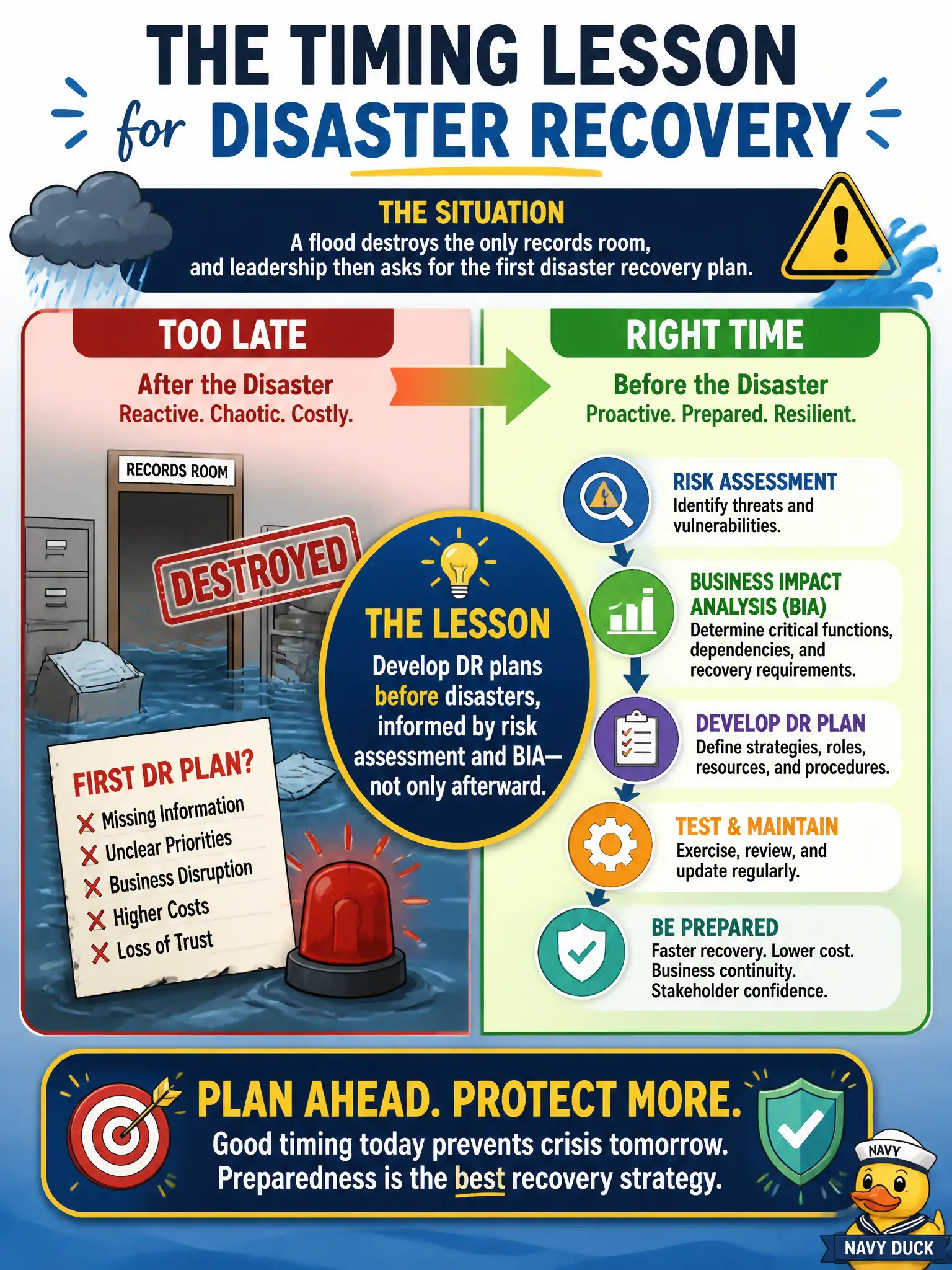
A flood destroys the only records room, and leadership then asks for the first disaster recovery plan. What timing lesson should the risk manager reinforce?
Select an answer to reveal the explanation.
Short Explanation
Writing the fire escape map after the building burned is a hard way to learn. DR plans belong in place before the flood, guided by risk and BIA. Build them early so the first crisis is not also the first draft.
Full Explanation
Disaster recovery planning is a preparedness activity that should precede major loss events and be informed by risk assessment and business impact analysis. When a flood destroys the only records room and leadership then asks for the first DR plan, the timing lesson is that plans developed only afterward leave the organization improvising under crisis. Civic risk managers reinforce developing DR plans before disasters—not only after catastrophe proves which rooms mattered.
Writing DR plans only after catastrophic loss proves which rooms mattered institutionalizes late learning at citizen expense. Relying solely on insurance claims staff to invent recovery procedures during the event confuses claims adjustment with operational recovery design. Delaying planning until every possible disaster type has already occurred once is an impossible and harmful completeness criterion.
Exam caveat: DR planning is proactive preparedness, not a post-loss documentation exercise. CRMC timing items often pair recent disasters with missing prior plans.
Operational check: confirm BIA and risk assessment inputs exist for priority facilities; draft or refresh DR procedures for records and alternate processing before the next season of elevated flood risk; schedule a tabletop that exercises first actions without waiting for another loss.