
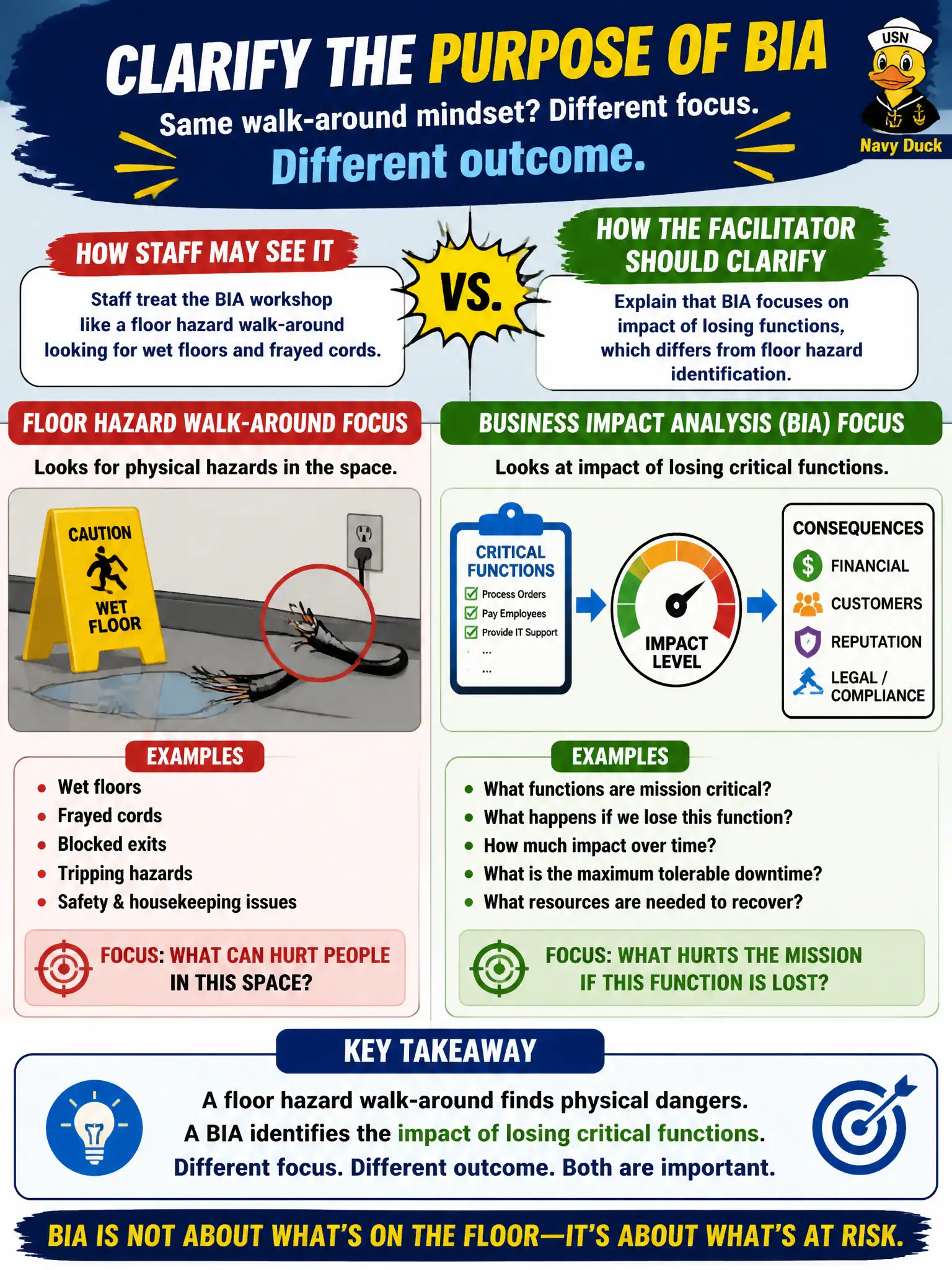
Staff treat the BIA workshop like a floor hazard walk-around looking for wet floors and frayed cords. How should the facilitator clarify BIA purpose?
Select an answer to reveal the explanation.
Short Explanation
Spotting a wet floor is housekeeping; asking what breaks if payroll dies for three days is BIA. Both matter, but they are different tools. Keep the workshop on function-loss impact, not mop routes.
Full Explanation
Hazard identification finds sources of harm in the environment; business impact analysis estimates consequences if critical functions are interrupted. When staff treat a BIA workshop like a floor hazard walk-around for wet floors and frayed cords, the facilitator should explain that BIA focuses on impact of losing functions, which differs from floor hazard identification. Keeping the tools distinct produces better continuity priorities without dismissing workplace safety work that belongs in its own process.
Converting the BIA entirely into a slip-and-fall inspection checklist abandons function-loss analysis. Canceling continuity analysis because hazard hunts already cover every risk topic overclaims the scope of floor walks. Ranking wet floors as the organization’s single maximum tolerable downtime driver confuses a common workplace hazard with enterprise function criticality.
Exam caveat: CRMC candidates must separate hazard ID from BIA purpose. Both are valuable; they answer different questions.
Operational check: open the workshop with a one-slide purpose statement contrasting hazard ID versus function-impact BIA; run the session on downtime consequences for civic functions; route floor-hazard findings to the safety identification process instead of forcing them into BIA scoring.