
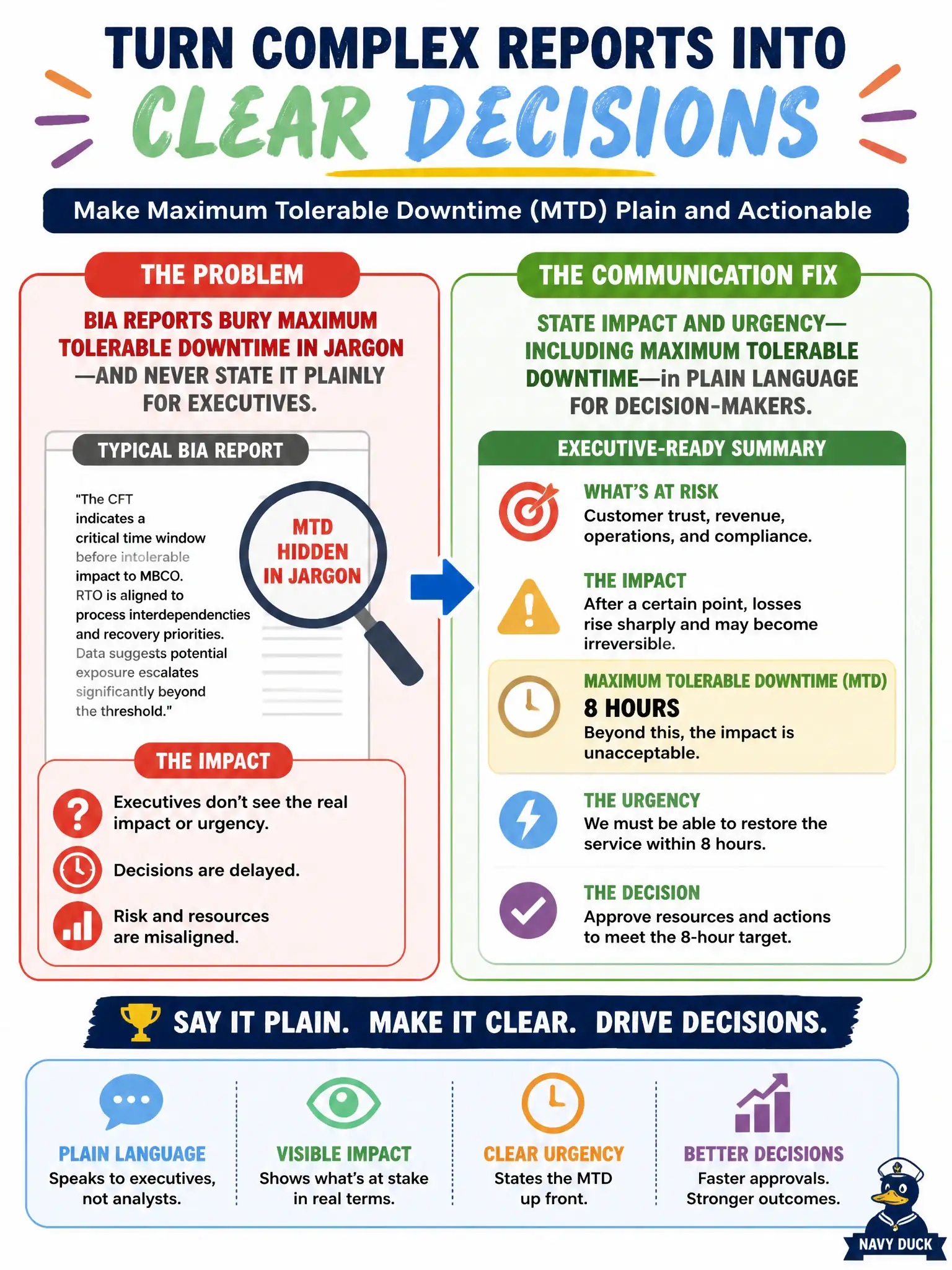
BIA reports bury maximum tolerable downtime in jargon and never state it plainly for executives. What communication fix should the risk manager apply?
Select an answer to reveal the explanation.
Short Explanation
If the board cannot tell how long 'too long' is, the binder failed its job. Plain language on maximum tolerable downtime is the punchline executives need. Say the urgency out loud so funding and priorities follow.
Full Explanation
BIA results must be usable by decision-makers who approve recovery investment and priorities. Maximum tolerable downtime and related impact findings should be stated in plain language for executives, not buried only in specialist jargon. Clear communication of impact and urgency enables funding, sequencing, and accountability in civic continuity programs.
Hiding downtime limits in technical appendices executives are not expected to read defeats the purpose of executive decision support. Replacing impact findings with motivational posters about resilience culture substitutes slogans for analysis. Presenting only raw system inventories without any time-based impact statements lists assets without answering how long the city can tolerate their loss.
Exam caveat: CRMC emphasizes usable BIA outputs for leaders. Jargon density is not rigor if decision-makers cannot act on the findings.
Operational check: rewrite the executive BIA summary so each critical function shows plain-language maximum tolerable downtime and primary impact types; test comprehension with one non-technical leader; revise until urgency is unambiguous. Ask one non-technical executive to paraphrase maximum tolerable downtime after reading the summary; rewrite any phrase they cannot restate. Keep specialist appendices available without forcing leaders to mine them for the decision.