
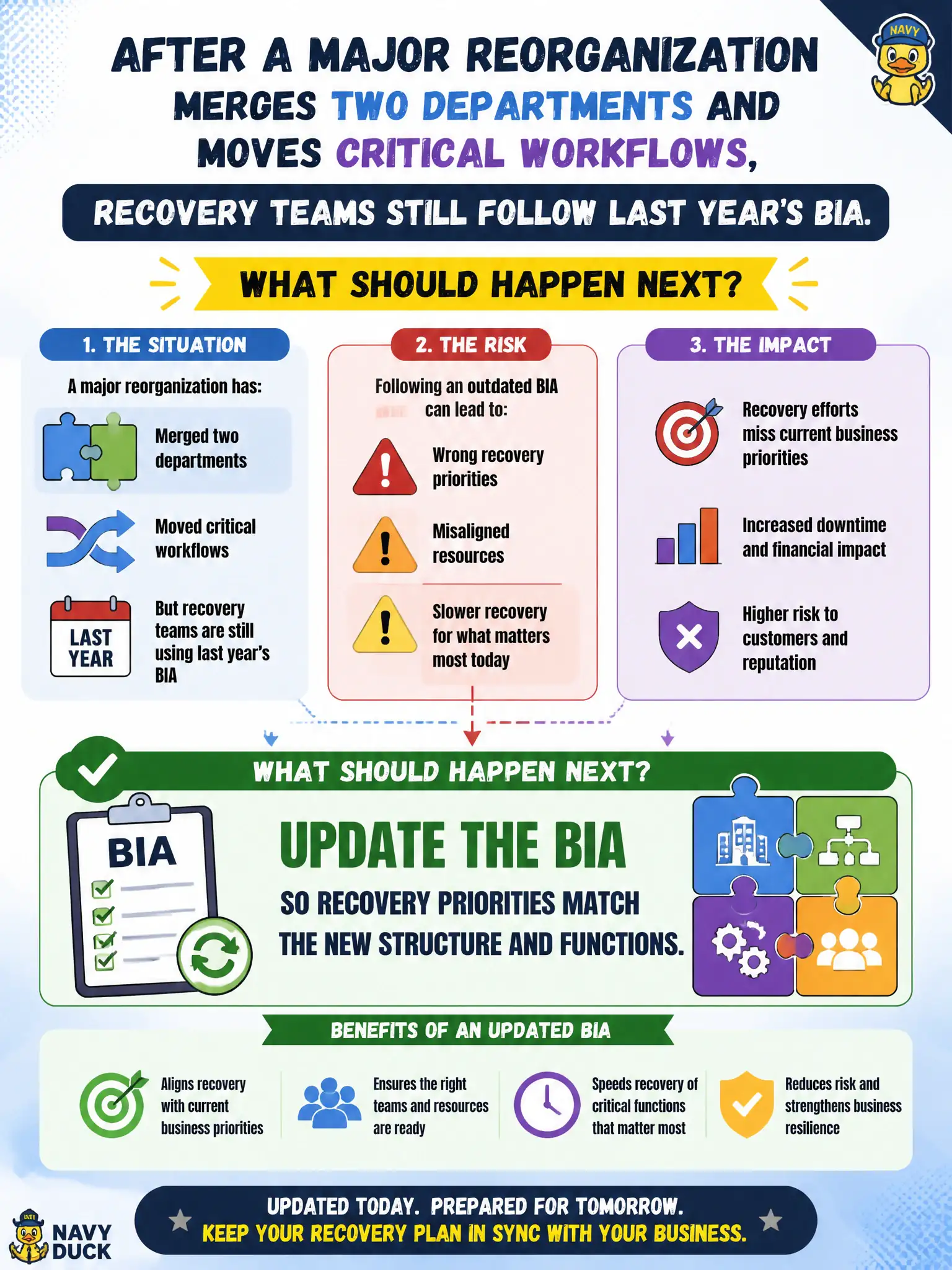
After a major reorganization merges two departments and moves critical workflows, recovery teams still follow last year's BIA. What should happen next?
Select an answer to reveal the explanation.
Short Explanation
Using last year's seating chart after a merger is how people sit on missing chairs. Org charts and workflows moved—so must the BIA. Refresh it so recovery still aims at what matters now.
Full Explanation
Business impact analyses become stale when organizational structure, ownership, or critical processes change. After a major reorganization merges departments and moves workflows, recovery teams that still follow last year’s BIA risk protecting retired functions while underprotecting new ones. Updating the BIA so recovery priorities match the new structure and functions restores alignment between continuity plans and how the municipality actually operates.
Keeping the old BIA frozen until the next insurance renewal cycle ties criticality refresh to an unrelated procurement calendar. Discarding all prior BIA work permanently and never reassessing criticality throws away reusable method and evidence instead of revising it. Letting each team invent private recovery priorities without a refreshed enterprise BIA fragments municipal recovery order.
Exam caveat: organizational change is a standard BIA refresh trigger. Insurance cycles are not a substitute for operational change management.
Operational check: after reorganization, remap owners and critical workflows; revise BIA rankings and dependencies; redistribute recovery priorities to the teams now accountable; confirm DR documents cite the updated BIA version.