
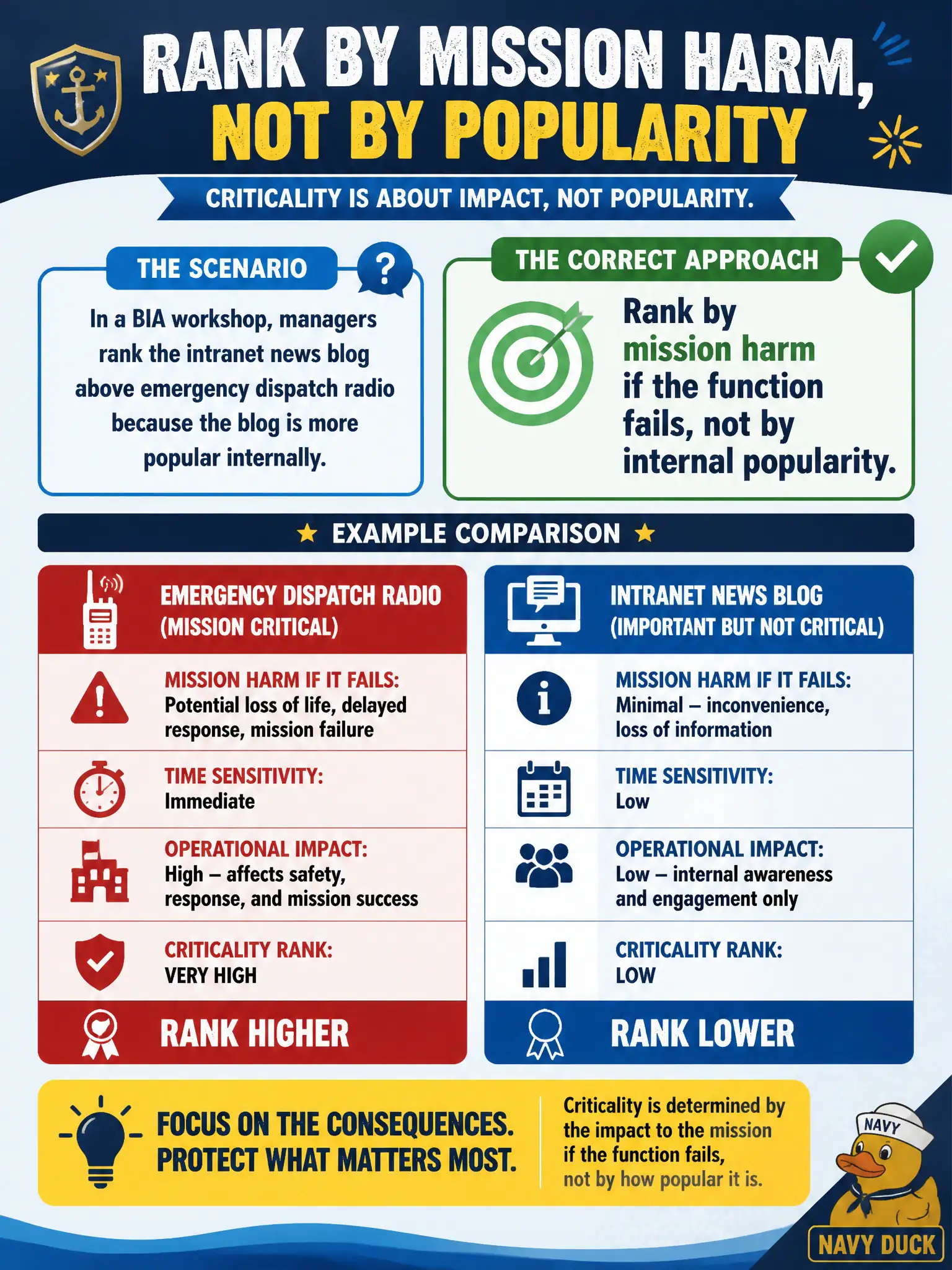
In a BIA workshop, managers rank the intranet news blog above emergency dispatch radio because the blog is more popular internally. How should criticality be ranked?
Select an answer to reveal the explanation.
Short Explanation
Popularity contests pick homecoming kings, not which radio keeps ambulances moving. Criticality is about mission harm when something dies—not who likes the intranet. Put dispatch ahead of nice-to-have news feeds.
Full Explanation
Business impact prioritization must reflect harm to mission, life safety, legal obligations, and stakeholders if a function is lost—not internal popularity. In a BIA workshop, ranking an intranet news blog above emergency dispatch radio because the blog is more popular internally biases recovery order toward visibility rather than civic consequence. Ranking by mission harm if the function fails keeps life-safety and statutory services ahead of convenience channels.
Ranking by internal popularity surveys so staff morale drives recovery order confuses engagement metrics with criticality. Prioritizing whichever system has the largest marketing budget that quarter substitutes spend for impact. Giving every system identical priority so workshops never need hard choices abandons BIA’s purpose.
Exam caveat: CRMC expects criticality tied to consequence of loss, not social or political popularity inside the organization.
Operational check: re-score workshop items using explicit harm criteria (life safety, legal, mission, stakeholder); demote high-visibility low-harm tools; elevate dispatch and similar functions; document the criteria used so future workshops resist popularity bias. In municipal workshops, record the scoring criteria on the flip chart before ranking begins so popularity arguments are visibly out of scope. Revisit the ranked list after the session with a life-safety and statutory lens before publishing recovery order.