
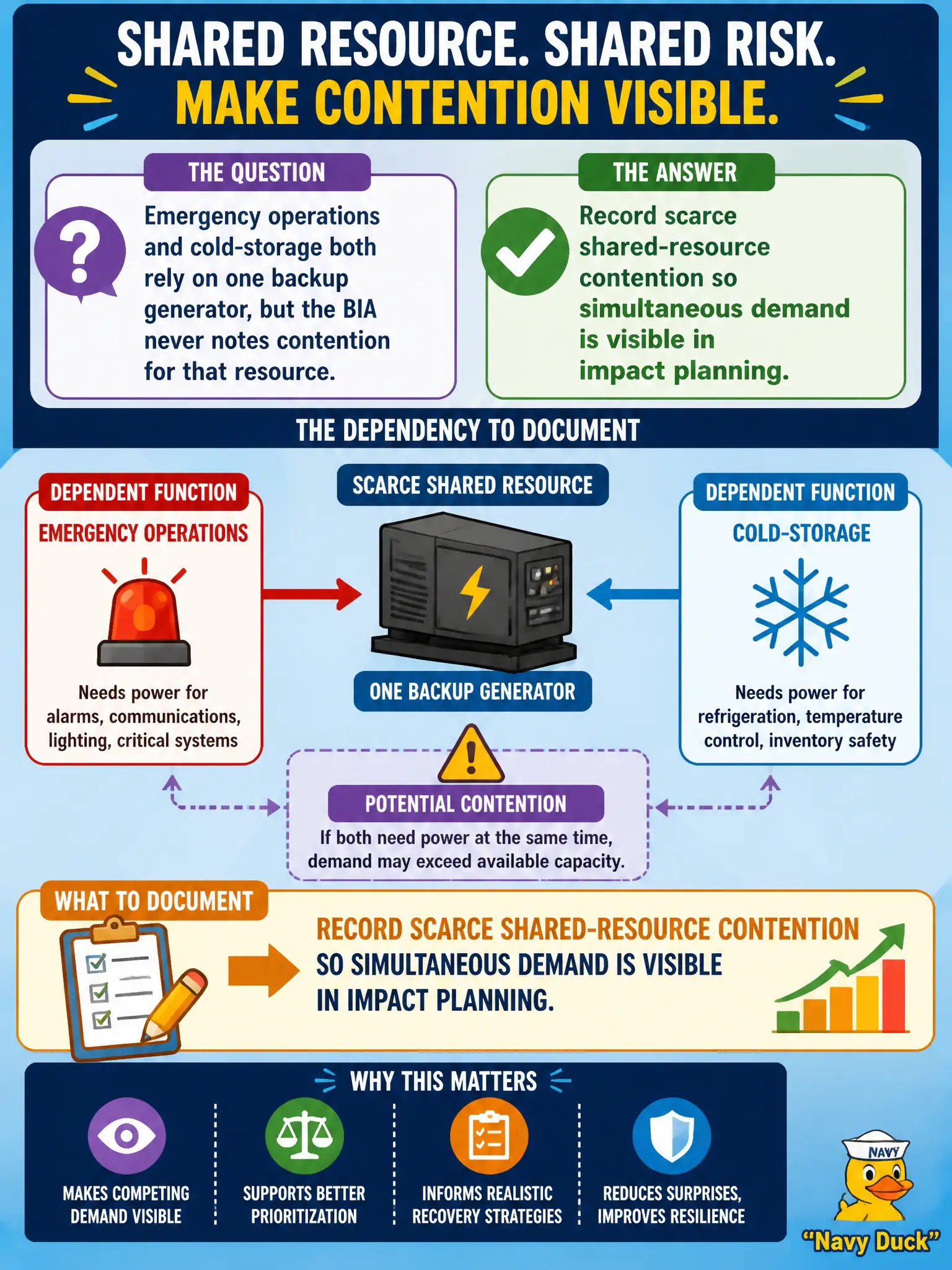
Emergency operations and cold-storage both rely on one backup generator, but the BIA never notes contention for that resource. What dependency should be documented?
Select an answer to reveal the explanation.
Short Explanation
Two thirsty plants and one watering can means someone goes dry if both wilt at once. A single generator behind two 'critical' loads is a fight waiting to happen. Write the contention into the BIA so leaders pick who gets power first.
Full Explanation
Dependencies in a BIA include scarce shared resources that cannot fully support all critical loads at once. When emergency operations and cold-storage both rely on one backup generator, failing to record contention understates simultaneous recovery demand and forces improvisation during an event. Documenting scarce shared-resource contention makes prioritization and capacity decisions visible in municipal impact planning.
Assuming shared generators can always supply every critical load without conflict is an independence fantasy. Removing generator capacity from BIAs because facilities equipment is “not a business concern” splits technical reality from function impact. Assigning both functions infinite backup power in the BIA avoids hard prioritization by falsifying capacity.
Exam caveat: shared-resource contention is a classic BIA dependency theme. Parallel “critical” labels without capacity math are incomplete.
Operational check: inventory shared generators, HVAC, network uplinks, and similar scarce assets behind multiple critical civic functions; note simultaneous-demand conflicts; assign priority rules or capacity upgrades; record the contention in the BIA for leadership review.