
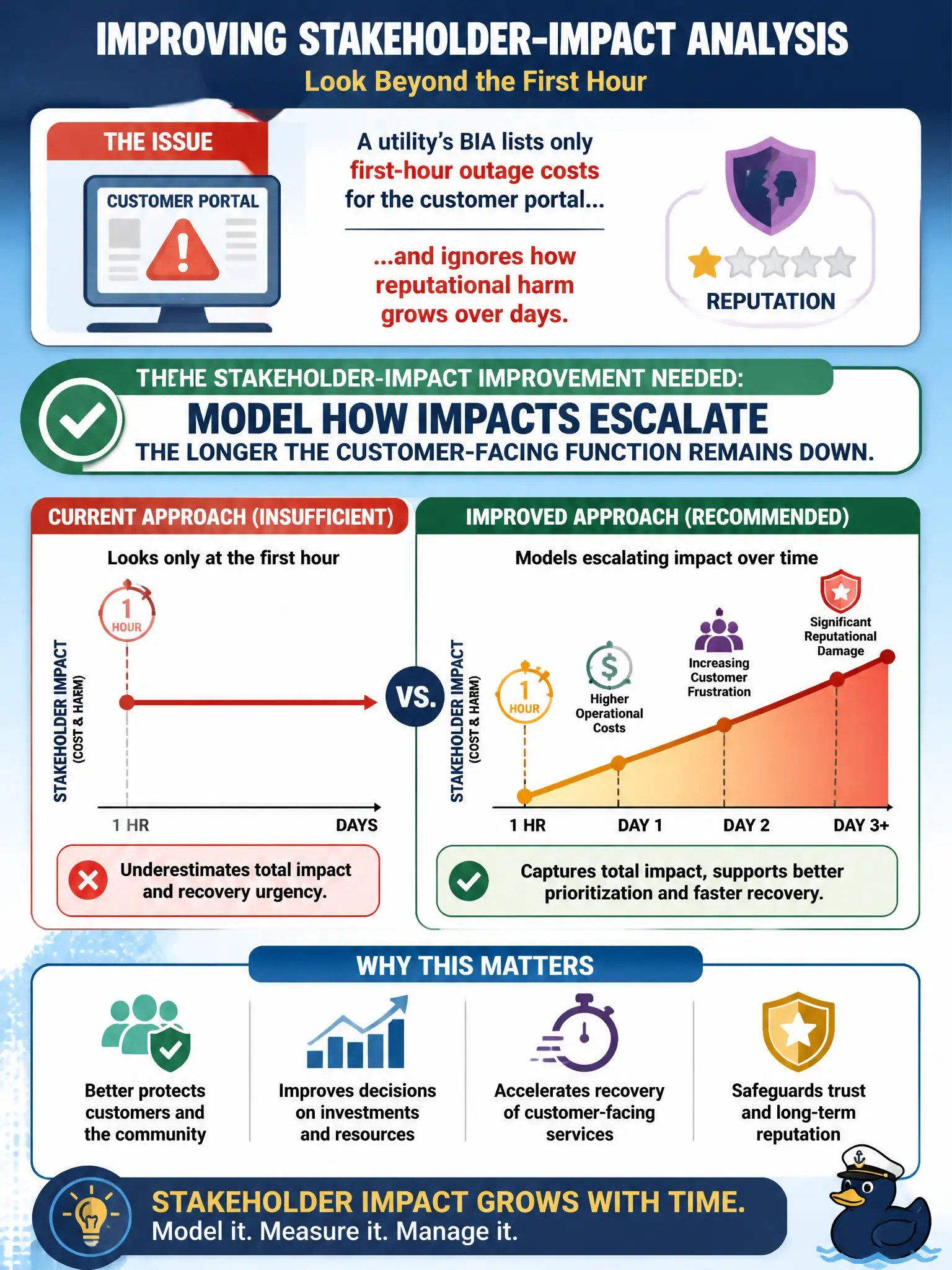
A utility's BIA lists only first-hour outage costs for the customer portal and ignores how reputational harm grows over days. What stakeholder-impact improvement is needed?
Select an answer to reveal the explanation.
Short Explanation
A short blackout is annoying; a week of silence becomes a brand scar. Impact is not a flat line—it often climbs the longer you are dark. Show how stakeholder harm grows over time so leaders fund the right recovery speed.
Full Explanation
Business impact analysis should examine how impacts escalate the longer a customer-facing function remains down, not only first-hour outage costs. For a utility customer portal, reputational, regulatory, and service harms often compound over days. Modeling impact trajectories over time gives decision-makers a truer picture of why faster recovery may be worth funding for municipal trust and compliance.
Limiting BIA scoring to the first fifteen minutes of any outage truncates the trajectory that usually drives major stakeholder harm. Ignoring reputation because it “cannot be measured” discards a material civic impact dimension that boards still face. Assuming customer trust returns automatically after any multi-day outage substitutes hope for analysis.
Exam caveat: distinguish initial impact snapshots from time-dependent escalation. CRMC items may tempt candidates to accept only immediate dollar loss as complete BIA content.
Operational check: for the customer portal, score impacts at multiple time horizons (hours, days, week-plus); include reputational and regulatory dimensions alongside financial loss; present the trajectory in the BIA package used for recovery investment decisions.