
A mid-year BIA snapshot ranks election support systems as low priority because ballots are months away. What time-varying criticality issue should be corrected?
Select an answer to reveal the explanation.
Short Explanation
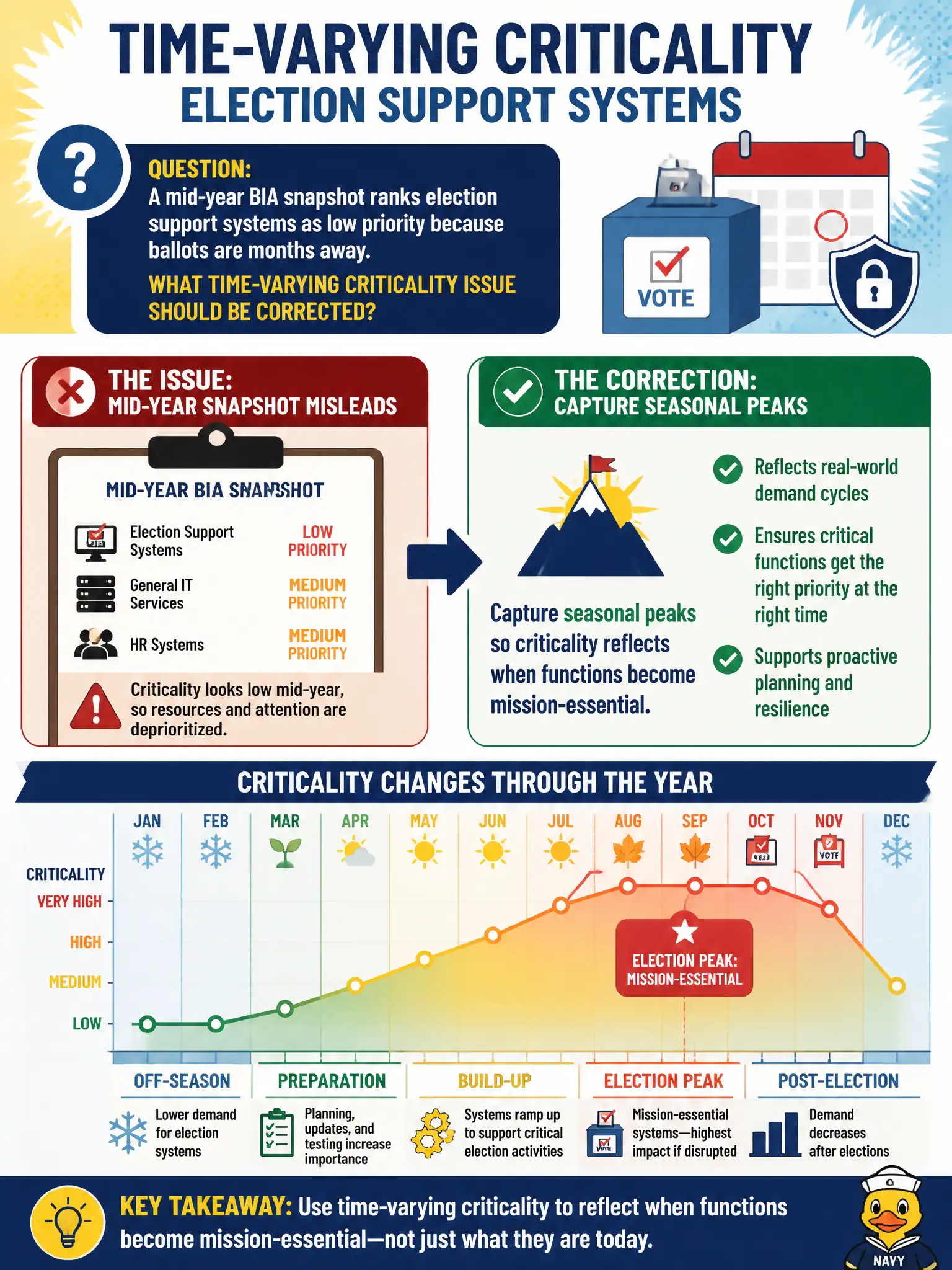
Judging a snowplow in July and calling it low priority misses winter. Election ops look quiet mid-year and then become the whole show. Bake seasonal peaks into the BIA so recovery plans wake up when the calendar does.
Full Explanation
Function criticality can vary over time with statutory calendars, peak seasons, and event-driven demand. Election support systems may look low priority in a mid-year BIA snapshot and become mission-essential near ballot deadlines. Capturing seasonal peaks so criticality reflects when functions become mission-essential corrects static rankings that would under-resource recovery when the civic calendar actually spikes.
Freezing mid-year rankings permanently so seasonal peaks never change priorities institutionalizes blind spots. Removing election systems from continuity planning because they are not year-round offices confuses office occupancy with statutory criticality. Treating every system as equally critical every day avoids seasonal analysis by destroying prioritization altogether.
Exam caveat: CRMC BIA questions often include time-varying criticality. A single off-peak snapshot is insufficient for functions with known calendar peaks.
Operational check: add seasonal or statutory peak flags to BIA records for election and similar civic functions; define elevated criticality windows; align recovery resources and exercise timing with those windows; brief leadership that mid-year scores are not year-round truth.