
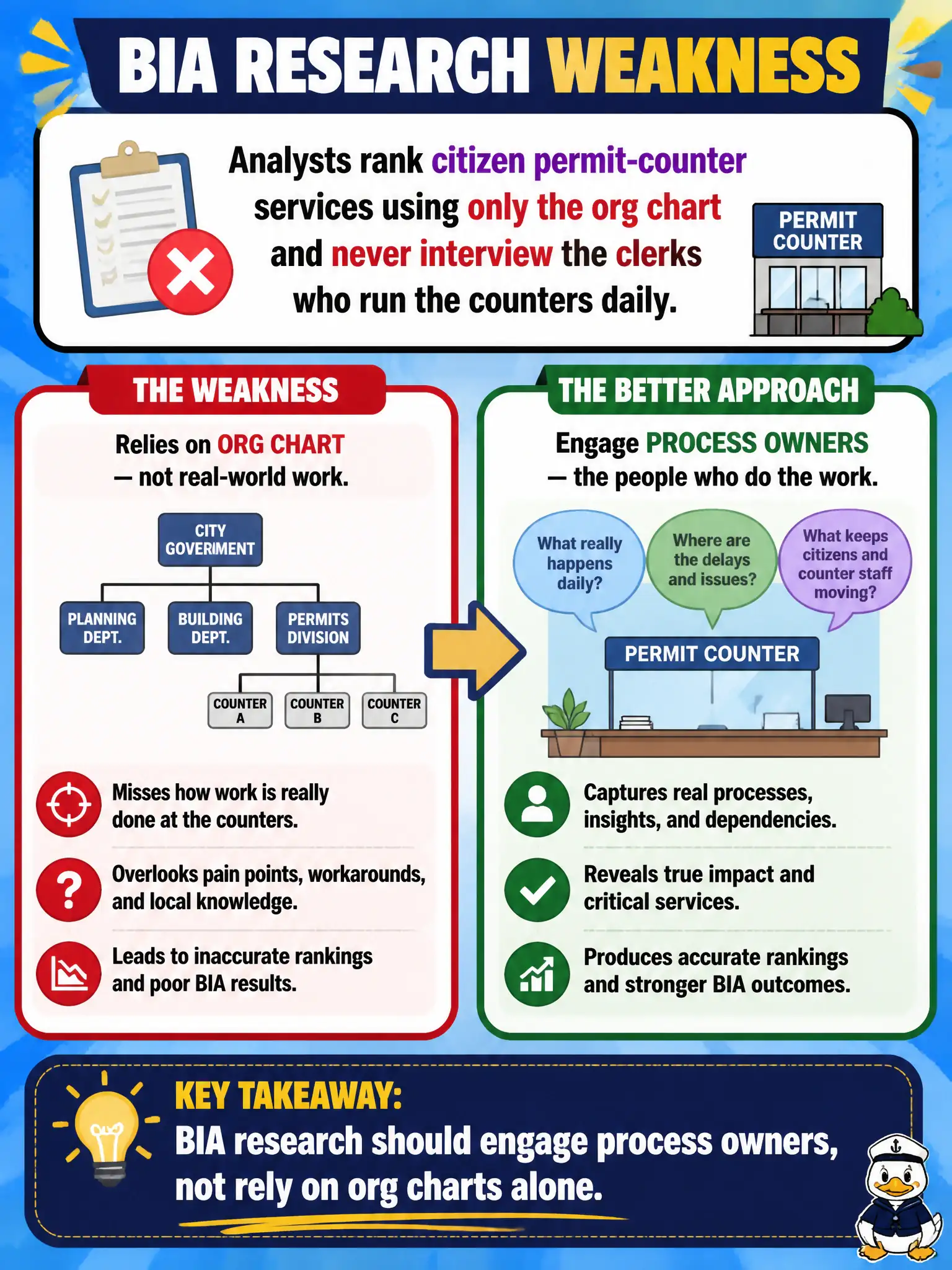
Analysts rank citizen permit-counter services using only the org chart and never interview the clerks who run the counters daily. What BIA research weakness does this show?
Select an answer to reveal the explanation.
Short Explanation
The org chart shows boxes; the clerks know which system outage actually stops the line. Skipping the people who do the work is guessing — good BIA research goes talk to process owners.
Full Explanation
BIA research should engage process owners, not rely on org charts alone is the weakness when analysts rank citizen permit-counter services using only the org chart without interviewing clerks who run the counters daily. Org charts show reporting lines, not cycle times, peak volumes, dependencies, or workarounds. Civic BIAs need conversations with the people who perform the service.
Claiming org charts alone always contain complete recovery time and dependency data fails by concept because charts lack operational timing, system dependencies, and customer-impact detail. Claiming process-owner interviews are forbidden because they bias rankings fails because structured owner input is primary evidence; excluding it increases bias from hierarchy assumptions. Claiming citizen services are out of scope for BIA in municipal organizations fails because citizen-facing services are often core mission functions for cities and counties.
Exam caveat: CRMC BIA research methods include engaging process owners and operators. Hierarchy documents are inputs, not complete research.
Operational check: Interview permit-counter clerks and supervisors about volumes, systems, cash handling, and downtime effects; revise criticality and dependencies accordingly; keep interview notes as BIA evidence.