
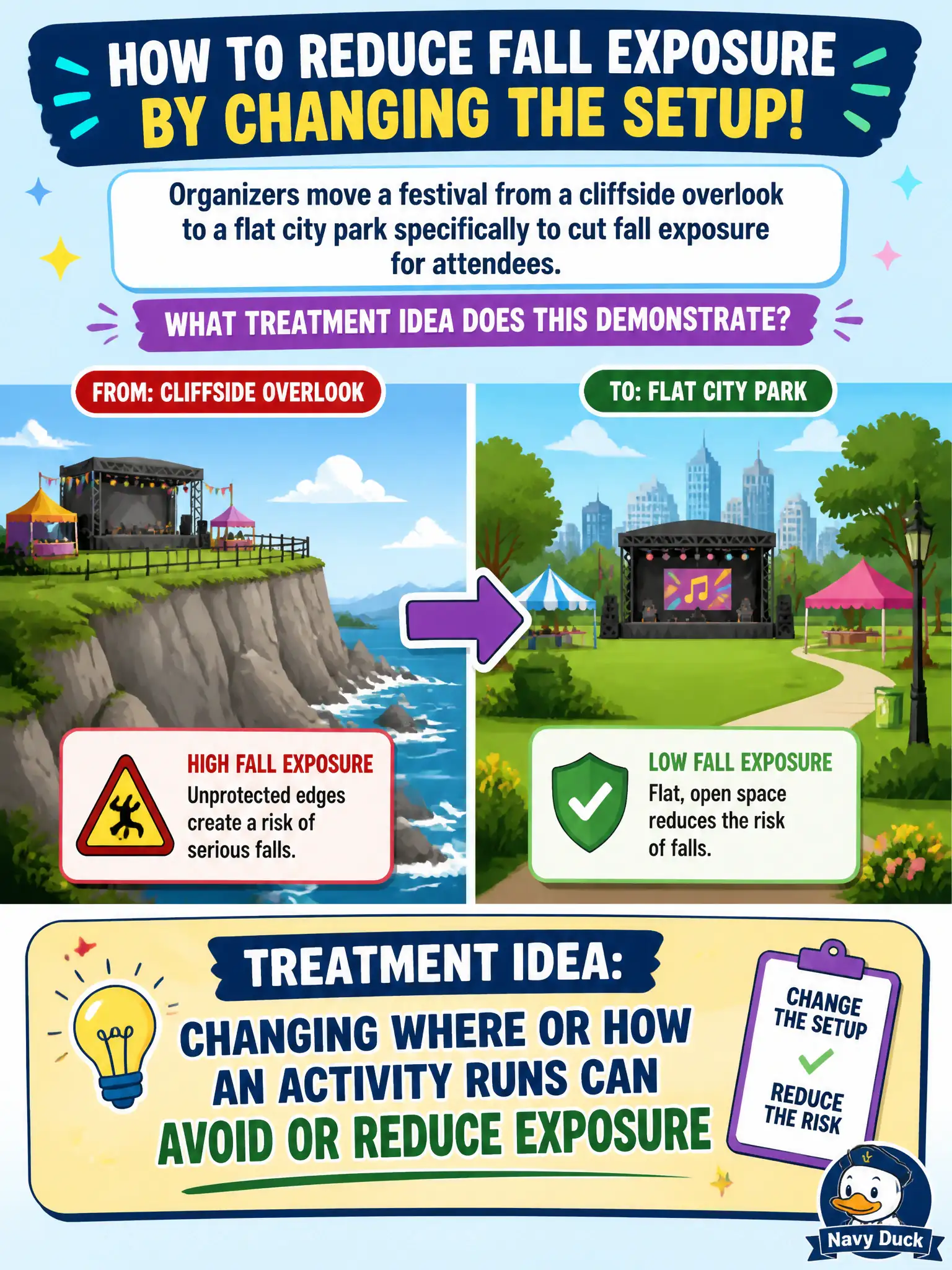
Organizers move a festival from a cliffside overlook to a flat city park specifically to cut fall exposure for attendees. What treatment idea does this demonstrate?
Select an answer to reveal the explanation.
Short Explanation
Same party, safer stage. Moving off the cliff is a classic "change the setup" move — you dodge or shrink the fall risk by changing the context, not by hoping harder.
Full Explanation
Changing where or how an activity runs can avoid or reduce exposure is demonstrated by moving a festival from a cliffside overlook to a flat city park to cut fall exposure. Location and design choices are legitimate treatment levers. Civic event planners should prefer venues that remove unnecessary fall hazards when the experience can still meet mission goals.
Claiming location changes are never risk treatments because weather risk always remains identical fails by concept because treatments are exposure-specific; cutting fall risk is valid even if weather risk persists and needs separate handling. Claiming only insurance purchases count as treatment for outdoor events fails because reduction/avoidance via venue choice is core risk management, not a non-treatment. Claiming acceptance requires keeping the cliffside venue while increasing ticket prices fails because raising prices is not acceptance of fall risk and keeping the hazardous venue forgoes the available location control.
Exam caveat: CRMC reduction/avoidance includes changing location, timing, or method. Venue moves that remove hazards are credited treatments.
Operational check: In festival site selection, score fall, crowd, and access hazards; prefer flat park sites when cliff edges add nonessential exposure; document the venue decision as a risk treatment in the event plan.